Q: You say that there is a dual collapse – of an international system as well as of a civilisational order. That is a very rare event. In that sense, Donald Trump is not a cause of these collapses, rather a response to them – would you agree?
Wadah Khanfar: It is a manifestation of the collapse itself. At some particular period of time in the recent past, America used to be headed by statesmen like Roosevelt, Eisenhower, Kennedy, etc. which now looks like some distant past. Think about the political elite in the West. Compare Churchill and the current prime minister. Compare De Gaulle and the current president in France. The current political elite in the west is the weakest in many generations. This is another manifestation – that, not only in America, rather in most of the western countries, we are witnessing deterioration of political grand strategies, of ability to understand through statesmen not politicians, through long-term thinking not immediacy. These people are mere tacticians and they fail in them. How would you interpret the current war against Russia other than as a misjudgment, which is a manifestation of decay of the political elite. It is unbelievable that Europe follows the American footsteps in a war, which has no meaning for Europe. The civilisational decline is leading to this current manifestation of weakness of leaders. It will lead to much worse. It will lead to the rise of nationalism, xenophobia. They will need to define new enemies. West always needs an enemy – ‘the other’. Mostly, Muslims could be this ‘other’. Sometimes, it could be Hispanics or such groups. This civilisational cycle would continue to produce crises, not solutions. After Trump, the world arena does not seem to be going to be peaceful and nor America seems to be going to repulse. Whoever comes after Trump, might do things which will definitely lead to deterioration of the world order until a new world order is established – a new balance of power is born.
Q: Regarding the current trend called “Make America Great Again”, “America first” – How does that feed into this logic of dual decline? There is a tendency now in America to disentangle from the rest of the world. This has resulted in tension there between interventionists and neo-conservative “MAGA” “America First” policy supporters.
Wadah Khanfar: The first hegemon is America. Any hegemon in the world would not want to compromise their position. The other hegemon, viz. China, is trying to come up. Russia is very far from the centrestage, but eventually it is there. Democrats and Republicans in America have one goal – contain China, stop its rise and sustain American presence. The manifestation during the Biden administration was very clear towards China. Biden took the economic route. Trump is manifesting that same strategy in a very populist way which manifests in the way you mentioned. The essence of the policy and strategy is one. The state in America has decided its course of events and the way that Trump is doing it is because he has his own style. He is not going beyond the strategic direction that the state has decided before Trump. Earlier, the manifestation was more diplomatic; now it is more blunt. This is happening in the Zionist entity, by the way, by Netanyahu. Netanyahu is manifesting the actual essence of what the apartheid Zionist state is about, in a way, which does not leave doubt in anyone’s mind, about how evil the apartheid state is. In the past they would adopt the diplomatic way, project themselves as the only democratic state in an ocean of dictatorships and that they were the single country in the region which sought peace and a prosperous economic order. Now, these themes have been pushed to the past. Zionist entity now bluntly flaunts crimes and genocides unleashed to hit everyone. This is the spirit of this age. What we are witnessing in America and Zionist entity is basically the same. Zionist entity is a creation of the world order we are living in. It was created after World Wars, the rise of the West as sole dominant force and then the rise of American power. It was supported and kept strong by means of Western interference up to the last war with Iran. If the West had not supported it, it would have been impossible for them to continue with their ammunition and intelligence, etc. With the world order shifting, Zionists would not feel comfortable about their security. Their compass is being lost; they are going beyond conventional wisdom. From conventions or deceptive mechanisms to blunt, clear manifestation of power which makes most supporters of Zionist entity feel embarrassed. This is the logic of this time – of transformation in the order itself.
Q: A book did rounds a few years back in Washington DC, viz. ‘Escaping Thucydides’ Trap’ by Graham Allison. One of its subtitles was ‘Is war between China and America inevitable’. Your thoughts…
Wadah Khanfar: China is not as imperialist as the French, British and Americans; they do not basically plan in their colonial terms. They need trade routes – they have a strategy very clear – build roads and so on. Americans are currently trying to interrupt the system by putting tariffs on every country and judging everyone based on their relationship with China, trying to reduce the amount of China’s production to the world and trade with America. Worse still, they are playing a very dangerous game around Taiwan. For Americans, Taiwan is merely a card. For the Chinese, Taiwan is something unnegotiable, since Mao Tse Tung’s era. Americans are trying their best to increase their cooperation with Taiwan. They have their own interests, not related to economics. They are using it against China – as a negotiating leverage or, whenever possible, as a security threat against China. Besides, they are using some of the Japanese islands for their nuclear submarines. They have kept their weapons in South Korea. They are developing an alliance between South Korea and Japan in order to sit together, while historically they were rivals. They are doing ‘AUKUS’. American Pacific Command is putting war-plans one after another, regarding Chinese nuclear submarines, missiles, etc. If a plan like that is put, there is the possibility of being implemented as well. In geopolitics you do not act based on good intention, rather by the worst scenario and the worst case scenario for China is that they could be attacked and they could be deprived of their nuclear weapons. China’s nuclear weapons are the weakness. They had kept them on rails hidden inside tunnels. Sensing they could be attacked and destroyed or at least prevented from action, now their strategy is to keep these nuclear weapons on submarines. Submarines could fire from the sea and they could hide and survive for months and years under the water. Americans are sending drones to scan oceans and to find submarines. So, are we going to see a war? I would say yes. As to what kind of war, how, when – that would depend on many factors. Americans might think to keep China moving until it is heavily armed, which they are doing quickly, so that they cannot be defeated- that is a scary decision. It might not happen after a few years, but the course of events that we see, might lead one day into something which we do not know about. It is just like the assassination of Archduke Ferdinand triggered a war that everyone was preparing for. At some instance, either through misjudgment or over-reaction, there could be a bloody confrontation.
Q: John Mearsheimer talks about offensive realism, that in order to project power you need to have complete dominance in a region. Do you believe that for America one of the reasons why the Zionist entity exists in West Asia is to be the hegemon and to prevent the rise of an authentic Muslim hegemon?
Wadah Khanfar: Netanyahu has been declaring new West Asia-North Africa (WANA). I laugh about this. Why? Every now and then West comes up with a new map for the region. WANA is unpredictable. Zionists aim to re-engineer WANA, while they project power in ways which could never be supported by any mechanism. What are the values that the new order of Zionists seek to establish – partitions, civil wars, confrontations and weakening people. Israel has an existential fear ; they believe that every actor, every state in the region, present or future, poses a threat. Hence, make people busy in small wars, fragmentation and partition and make them ever less powerful. They seek to be much more powerful than all of them combined, and further, impoverish them too. Hence, they need a monopoly on nuclear power and threaten using nuclear weapons. As such, they gain an edge above others and feel more secure. Any state in the region deciding to have a nuclear programme would be targeted by the Zionists. We are facing an entity that is not only committing genocide of the Palestinians but also infringing on every other state’s sovereignty in the region. So, they attack Iran not merely because Iran supported Palestine but because Iran is trying to enrich Uranium. They attack Syria not because Syria is doing anything against them. Leaders of Syria, many times, said that they were not going to be a source of threat against Zionists. But Zionists work to dismantle, fragment and weaken Syria. They work to counter the power of Turkey and establish for them an issue called the ‘Kurdish problem’ in northern Syria. Pakistan nuclear weapons and that is also in the radar of Zionist action. So, Zionist entity is posing itself as a problem for every state in the region, even those which signed agreements with them. Hence, the Zionist entity is turning itself from being an enemy in the region because of the Palestinian issue and its acts against Palestinians, into an enemy because of their threat against the national security of individual current states in the region. That is what Netanyahu basically has done. This is bound to trigger reactions in the next few years. Despite the facade of Abraham Accords and other agreements, the Zionist entity has created a rift that cannot be redeemed by rhetoric, Nobel Prize, any Accords or by magnificent press conferences. Current developments are a turning point – very much significant and strategic.
Q: Circling back to where we started – A seismic shift is coming in the world order. A regional hegemon, aiming to be hedgeman, is without any cover and engaging in naked power grabs, fragmenting other states. You said earlier that Prophet ﷺ was preparing for ummatic power. How could such a preparation be done in the present?
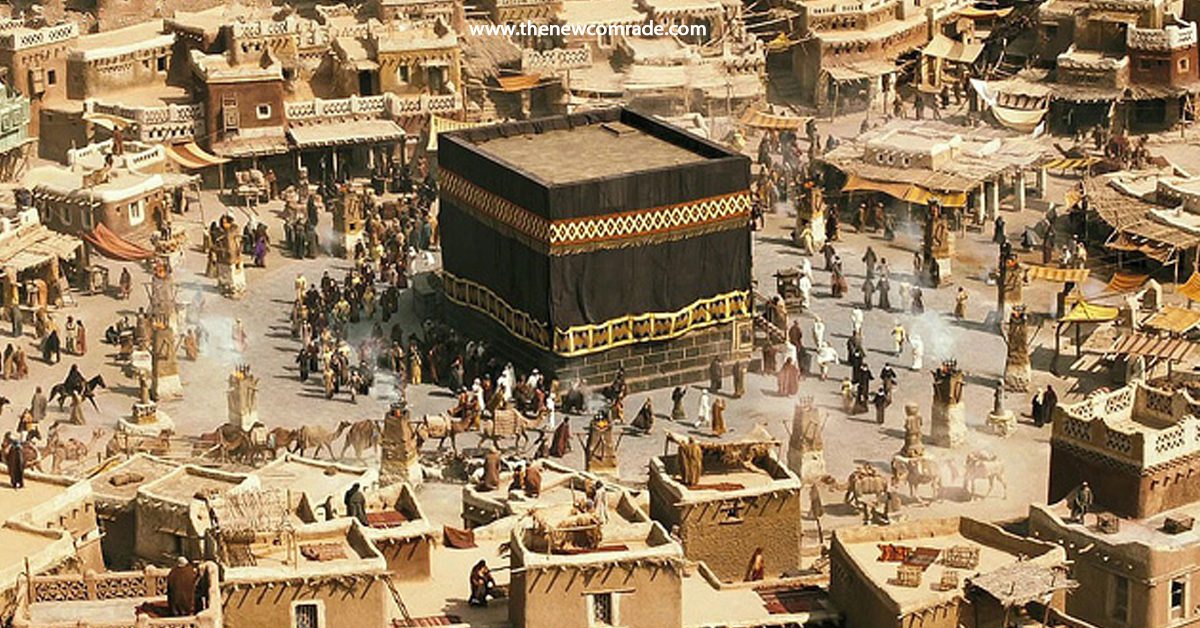
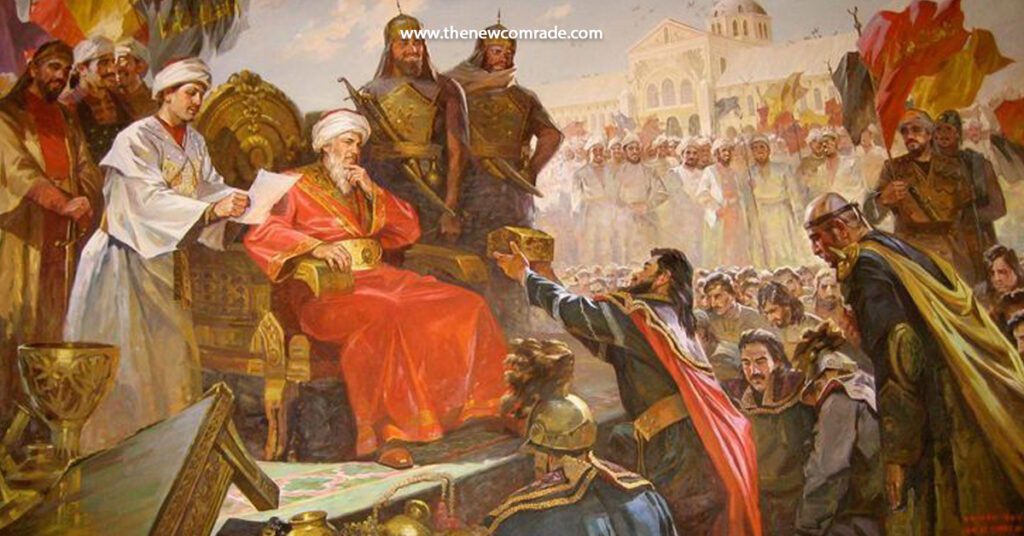
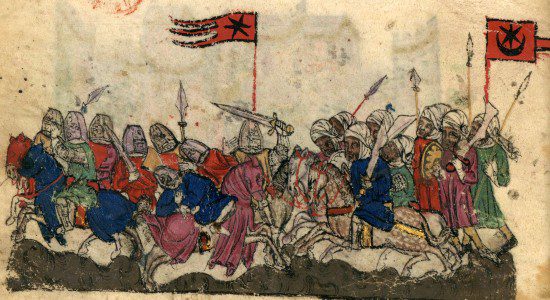
Wadah Khanfar: There are three things Prophet ﷺ did, which looks still valid for us. First, clarity of vision. Prophet ﷺ understood his mission and there was no compromise on the on that. The polytheists of Quraysh tried to extract compromises from Him, but he refused. Refer Chapter 109 of Qur’an in this context. That vision ought to sink deep down – it is your DNA, it cannot be replaced, it cannot decline. Second, next, He established a strategic direction; e.g. when the angel asks Him if he should destroy people of Quraysh he says that in the future some of their offspring would embrace His mission. In the same vein, He declared general amnesty upon conquests. Strategically, he planted such a mindset. He introduced the concept of ‘tadaf’. Tadaf means expansion in vacuum and pushing interest and attaining interests using all capabilities. This is the significance of His conquests, ‘fatah’. ‘Fatah’ is not an incubation. Contrary to what was expected, after the conquest of Makkah He installed the leaders of Makkah itself to run the affairs of Makkah. When Muslims conquered Levant, Mesopotamia, Egypt, etc. people of those places were empowered. That was important for the concept of conquest.
I have 10 points which I published in my book The First Spring: Political & Strategic Praxis Of The Prophet Of Islam . In the book i have mentioned the strategic guidelines that Prophet ﷺ put in converting vision to the third level. The third level is imagination of the future – how the world will look like, if you follow the directions. Many great thinkers and leaders think, criticise, analyse, contextualise, etc. but do not describe how their model would look, in practice. Prophet ﷺ was very clear in his discourse. So while he was building and executing his strategy, he was also giving people an idea of how the future would look like.
The first strategy is that the Muslim world, especially WANA region – the centre, should think of aggregation of power, in a sense of getting states and entities to work together like a European Union. ASEAN is a great example as well. We need to bring cooperation into a strategic level where economically, infrastructure, human interaction, etc. is maximised. That could trigger a course of events. Two trends in history affected the 13th century of Muslim power – Partition and fragmentation led to civil wars, weakness and poverty; unification led to power and some degree of dignified life for people. Once there is action, thought and behaviour based on this concept, I see lesser fights, and declined sectarianism, civil wars and tribal wars. Elites that are narrow-minded, would see small fights as grand achievements, and pave the way for fragmentation, translating to weakness and poverty.
Q: Currently, elites are deeply entrenched in their divisions – nation-states. They follow the American instruction of pursuing policy of conflict and fragmentation. Is not there a problem with this idea, with this blueprint, as long as these elites remain as they are?
Wadah Khanfar: We need not to trust the political elite. The future is important for us, that we mete out current class of politicians an upper hand in it. Forces of society, like intellectuals, intelligentsia, civil society groups, people active in various levels of sociocultural and political communities, should start imagining that kind of future and putting forth ideas. Why? These are substate actors. A moment would come when we run out of political options. Then, if ready, put the new alternatives on the table.
There was no continent in the world that was more divided than Europe. They were the source of every international war. They killed each other too. Millions of people died because of their wars. Who would have thought in 1942, for instance, that a day would come when Germans and French could live wherever they liked in both countries and have common transport, economy currency, etc. A moment in history came when there was a need for a new paradigm shift and an elite, some people, like those behind Marshall Plan, etc., introduced a concept and then it was embraced. Come to ASEAN – these countries are very diverse. Singapore is the richest in this region but does not have the muscles to defend itself. On the other side Indonesia has 200 million+ population, a huge entity, etc. They were unequal in size, weight, even in interests but in a moment there was a need for people to come together – because of the cold war and many other issues- they found it extremely useful to come together, trade, secure themselves and resolve conflicts. Myanmar was a major issue for example. ASEAN now is trying to resolve the conflicts in Myanmar. They find themselves in need of each other more, because of China. Rise of China, merits aside, presents a greater threat for Southeast Asian countries. Seeing China rise would make Singapore feel very insecure alone. China is seen rising not as a moderate, but as a hegemon. With ASEAN they get an alliance of states with consensus on certain matters. In the likely scenario of confrontation in the South China Sea, instead of individual states, there would be a collective action and negotiation with China.
WANA, currently, is not going through any of the above mentioned phases. They are still in the fragmentation phase, fighting and confronting, leading to destruction and weakness. We need a paradigm shift. Maybe a new political elite might need to emerge. When ready and proposals put forth, the economy could work collectively; cooperation could secure the region; common transport could establish a new reality above sectarianism and tribalism.
Q: I am struggling to understand one thing – ASEAN, European Union, etc. are state projects. The state is at the centre of feeding power to these organisations. You said that if elites are not going to shift then substate actors get involved in this unification. How does that look? How do substate actors cross borders and connect with one another in the Muslim world?
Wadah Khanfar: A lot of discussion that should happen, at present. Nation-state has created a lot of irrelevance to our history. Nation state in WANA, for example, and most of the Muslim populations, was a departure from the normal progress of course of events. For instance, a state like Turkey did not inherit the Ottoman state while Britain, despite explicitly relinquishing 99% of its territories, continues to maintain its core territory undivided and own their history and legacy. Same holds true for France, Germany. But in 1924, the nascent Turkish state declared that Ottoman “occupation” had ended and that they were a newborn. That implied that geopolitically there was no continuance in what they have. They did not inherit a memory, a cumulative spirit that has been in making for centuries and they sought to make a fresh start leading eventually to a lot of complications. They learnt later on to go to the same principles but after decades of experiment. In the Arab world, there was never this experience of the current type of state in the past. We have realised that if the result of this structure is chaos, civil wars, confrontations, lack of resources, it is difficult to maintain in the future or to repeat what I am speaking about the elite. We need to challenge this concept of separation. We need to think about integration and its stakeholders in different fields, like economics, education, trade unions etc. should communicate and establish the virtual ummah if not in a geopolitical sense.
Q: Explain this virtual ummah concept, i think its fascinating
Wadah Khanfar: The virtual ummah concept is what the real ummah is, basically this kind of open space where the ummah is interacting and geopolitically they are aware of their ummatic interests. That needed a political elite – currently such a class is busy toiling for the boundaries of polities and entities that they are dealing with. As for the rest of the ummah – tradesmen, students, scholars, etc., at large, could start establishing layers of cooperation.
I would like to see them having conferences and meetings and networking for new projects and the same for every sector in the society. So we elevate our identity from belonging to the narrowness of nationalisms or states to wider, bigger networks with a purpose of empowering ummah in a sense. This is how we prepare for the future. In future, if you or myself head a state, most likely, we would repeat the same sense because our populations have largely been accustomed to the pride in entities and imagined sovereignty.
Q: Do you think there is an appetite for this level of transnational connection in the ummah?
Wadah Khanfar: There is an urgent need that needs to be expressed in a form of appetite. The appetite will follow. Most of us know that our reality is bad. We are weak, divided. We are confused, uncertain, hopeless, etc. There is extreme desperation in the current generations. However, they are not promised prosperity or political liberty. Current structure is bound to produce the same problems. Integration, aggregation, and working together ought to be conceptualised, so that it becomes a reality. Our people went through collective brainwashing during the last century. Churchill was one of the major architects of this current reality following the Sykes-Picot agreement. Churchill said that tact is to send someone to hell and make him look up to the journey. They sent us to hell and made us celebrate it and think that we gained independence and some magnificent flag and lovely sovereignty while there is much more misery in the last century than any other period in fifteen centuries. Love of any land, culture, etc., should prevent integration in economics, socially, moveability, and establishing infrastructure that links people together. We would need trains moving from Istanbul to Damascus. From Damascus to Morocco or to Oman; encourage people to have cheaper flights, live wherever they like, universities to grant wider possibilities. These kinds of infrastructure would trigger processes. Then a Kurd would not need to have a Kurdish state. In a vast sphere of interaction, and benefits without boundaries, there would be no reason for Berbers, Kurds or Arabs to think in national terms. They would think of collective terms while enjoying cultural specificities and variations, rather than political disintegrations.
Q: Has Gaza become a catalyst for that? Do you think Gaza has changed the Muslim ummah?
Wadah Khanfar: Years from now, when we think about what happened in Gaza, we would definitely use it as a moment of a transformation of Muslim world. Western paradigm of thought is based on individualism. Our softwares are different. Just as they do not understand China, so is it so about most of the east. Western mind is too complicated to understand. They sometimes misunderstand or mistake silence for acceptance, which is not necessarily true. Ummah sometimes keeps silent; manifestation of its reaction might be late. But, it is going to be very powerful. This has been witnessed in modern history itself. They mistake the fact that we have leaders who try to compromise, for the sake of their private interests, with the west. These leaders do not represent the will of nations associated with them. As such, they are often encountered by surprises. They throw up questions like ‘why they hate us’, ‘why they go against us’, ‘why they do this to us’, etc. They fail to comprehend three things about us – (1) our collectivity. That we are more connected than they think, even if divided for the last century. We would still feel the pain of Gazans, as if they are next door, as if they are our family members. (2) our history. While reporting the war in Baghdad in Iraq in 2003 a Western general asked me “why are they fighting us? We came here to get rid of Saddam Hussein and establish democracy and prosperity.” I said they fight you because you are an occupation and there is something called dignity and history. This Baghdad was occupied by the Mongols and it was extremely painful in our history. We will not accept invaders even if they offer paradise on earth. He replied that I acknowledge what you say but I cannot understand it. I think he was honest. He is from a western perspective, for which, things are transactional. I get you money – you need to consider your sovereignty. What is the problem with that? It is a deal, like what Trump spoke about Gaza. (3) our faith. We feel that sacrifice is worth it because there is a hereafter, as well. There is an element that goes beyond material objectivism. There is an element that goes beyond calculations. This triangle explains what it means to be part of this psyche. The west engulfs in the noise, not in the signs.
Q: Comment on the role of western Muslims in this grand plan. Often they see themselves as probably more important in some respects, certainly incorrectly, than those in the Muslim world. However, western Muslims do have resources, expertise, knowledge, probably more of ability to network across borders sometimes than those who are stuck under authoritarian structures and regimes. How do western Muslims, in particular American Muslims – who are at the core of this empire, help the Muslim ummah?
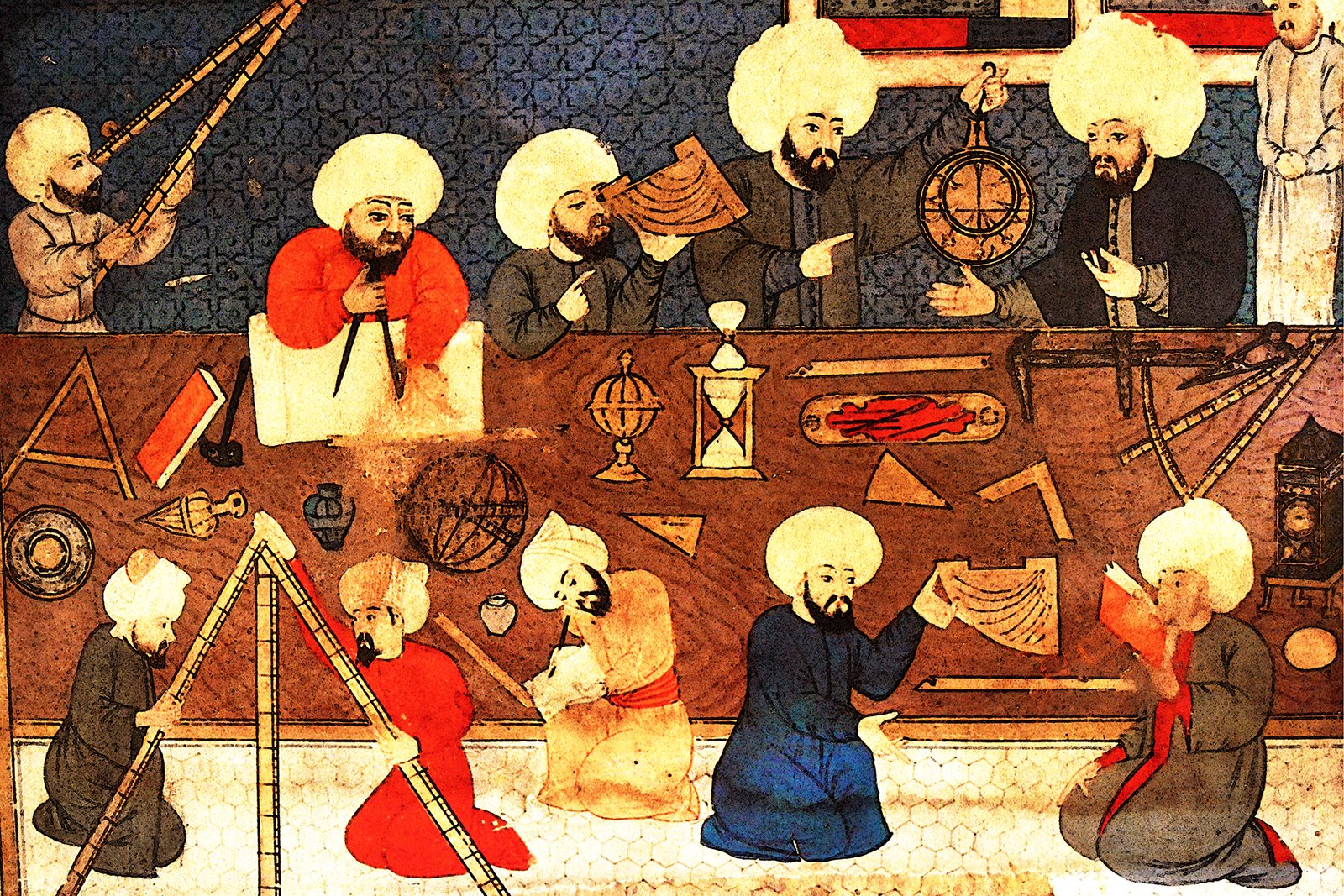
Wadah Khanfar: The key method or tactic that Muslims, in the west in particular, should embrace is alliances. They ought not to be isolated minorities trying merely to defend their rights. They need to extend their hand to those who defend shared values – justice, equity, environment, anything that makes sense within the global scale. Western civilisation, currently, is losing momentum. Emergent generation is trying to think about alternatives. The western approach to economy, which is capitalism, has led us to the current huge crisis and gap between the rich and the poor. We have the values of social justice. We need to share in that global debate and to become part of alliances to correct it. Hence, Muslims need to work with whoever shares their values, regardless of religion or ethnicity, and be part of a global alliance. Muslims have a lot to offer. We have failed to be honest with each other, to elevate our principles of faith or our religious narrative from the narrow ritualistic religious discourse to a global vast human interest. Contrary to our stances, we have the experience of Christendom and globalisation that it brought. Muslims need to elevate the principles of economic, political understanding to a much bigger scale where everyone feels comfortable to join being value centred rather than religiously expressed. We know it comes from our religion, inspired by our religion, but it addresses everyone and this is not rare in our history. This is happening now. Prophet ﷺ was declared, for the first time in history, as Prophet for humanity. (Quran 21 : 107). During the era of Muslim power, economy, culture, education, etc. were all globalised – a kind of globalisation that was value-based and not based on domination, colonisation, accumulation of wealth, centralisation of power, etc. like the western civilisation did and does in Africa and Asia. The West established its monopoly over wealth and power by its globalised mechanisms and depriving others. Muslims in history have learned from Buddhists, pagans, ancient Greeks, communicated with Chinese, adopted techniques from Africa and enriched societies everywhere. Muslim societies became part of local cultures, knowledge and traditions while they maintained the body of their faith. Our practice has been diversity, respect, and to not allow anyone to accumulate wealth or power. Muslims ought to express themselves in these kinds of terms.
Disclaimer: The opinions expressed in this article are solely the author’s and do not neccessarily reflect the opinions or beliefs of the website and its affiliates.