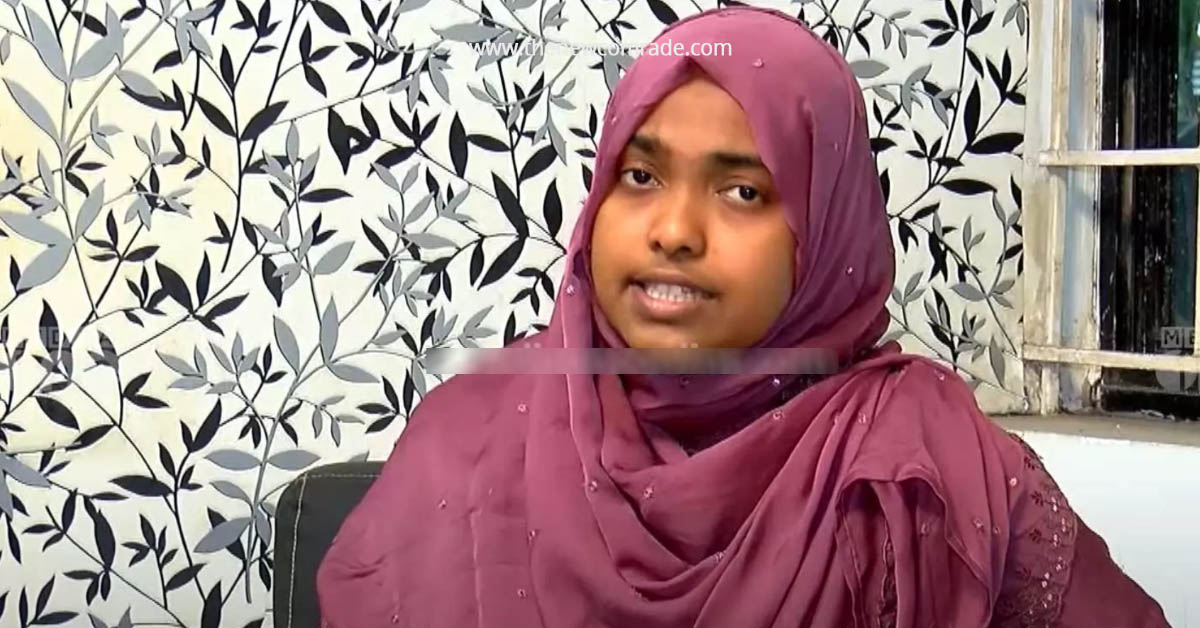
In a significant ruling yesterday, the Kerala High Court quashed a Habeas Corpus petition filed by the father of Dr. Hadiya, asserting that his daughter had been missing for the past month, and the family was unable to establish contact with her.
A division bench, comprised of Justice Anu Sivaraman and Justice C. Pratheep Kumar, rendered the decision after a thorough examination of the case. The justices determined that Hadiya is not under any unlawful detention, rendering the Habeas Corpus petition untenable. The court emphasized that Hadiya is leading her life independently and is not subjected to any illicit custody.
The dismissal of the Habeas Corpus petition hinged on a detailed statement submitted by Hadiya to the court. In her declaration, Hadiya informed the court that she had undergone a divorce, remarried, and was currently residing in Trivandrum. To substantiate her claims, she provided evidence from her call records, demonstrating regular communication with her parents. Furthermore, Hadiya furnished the court with her current address and contact information.
The court, taking cognizance of Hadiya’s statement, concluded that there was no evidence of illegal detention and affirmed that she was living according to her free will. Consequently, the Habeas Corpus petition was deemed not maintainable.
The petition was presented by Advocates C. Rajendran, B.K. Gopalakrishnan, and R.S. Sreevidya.
The legal saga surrounding Akhila’s conversion to Islam and her adoption of the name Hadiya gained widespread attention in 2017 when her father filed a habeas corpus petition, alleging coercion. In the same year, the Kerala High Court annulled Hadiya’s marriage to Shafin Jahan, conducted during the pendency of the petition, invoking its parens patriae jurisdiction.
In 2018, the Supreme Court, upholding the personal autonomy of women in choosing their life partners, overturned the Kerala High Court’s decision to annul Hadiya’s marriage. The apex court considered Hadiya’s assertion that her conversion and marriage were acts of her own volition and free will.