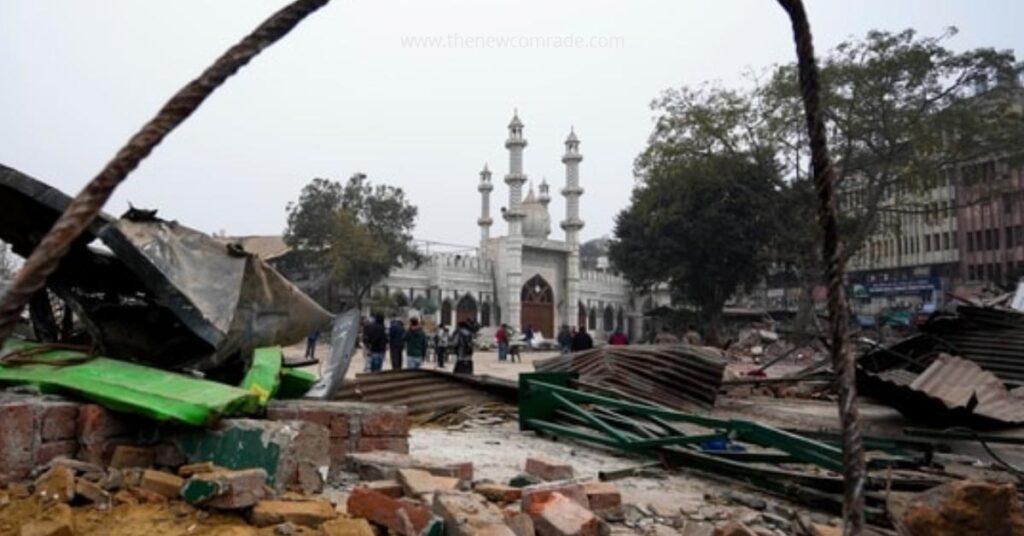
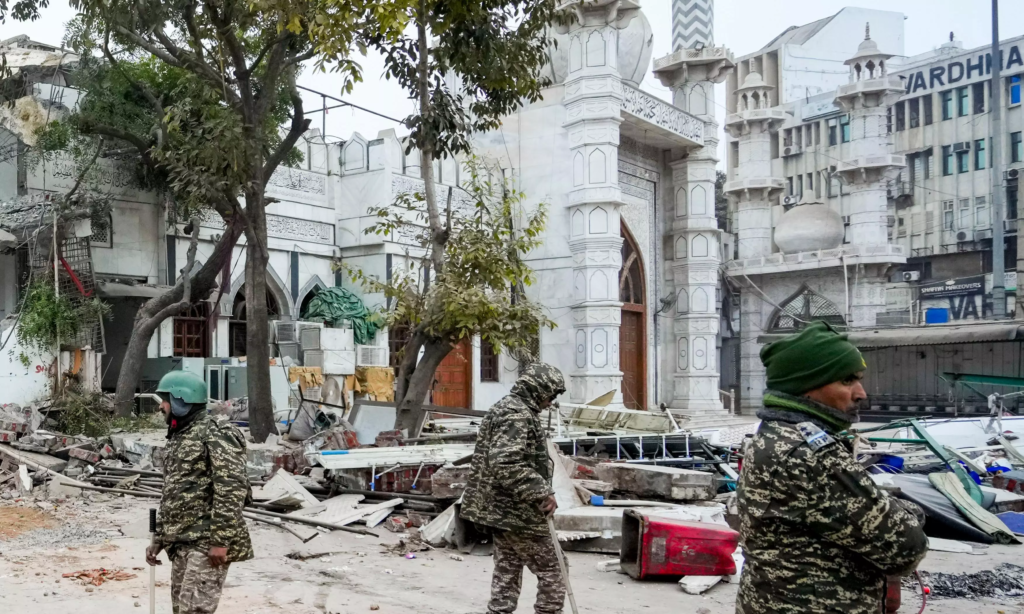
In a controversial pre-dawn operation that has sparked widespread criticism and revived painful memories of India’s Emergency period, Delhi Municipal Corporation authorities demolished structures near the Sayyid Faise Ilahi Masjid in Turkman Gate at 1:30 AM on Wednesday morning. The massive operation, involving 32 excavators (JCBs), 300 municipal workers, and a large police contingent, has drawn sharp parallels to the infamous 1976 Turkman Gate demolitions ordered by Sanjay Gandhi.
The midnight demolition has particularly resonated with elderly residents of the area who lived through the Emergency period (1975-1977), when similar tactics were employed. In April 1976, Sanjay Gandhi, son of then-Prime Minister Indira Gandhi, visited Turkman Gate and casually remarked that he wished to have a clear view of the historic Juma Masjid from that location.

His trusted lieutenant, Jagmohan Malhotra, who served as Vice Chairman of the Delhi Development Authority at the time, interpreted this wish as a direct order. What followed was one of the most brutal episodes of the Emergency — the systematic demolition of all slums and structures between Turkman Gate and Juma Masjid, displacing thousands of families overnight.
The original 1976 demolition remains one of the darkest chapters in Delhi’s history. When residents protested the destruction of their homes, authorities initially claimed they were only clearing side-walks. However, the arrival of bulldozers quickly revealed the true extent of the planned demolition.
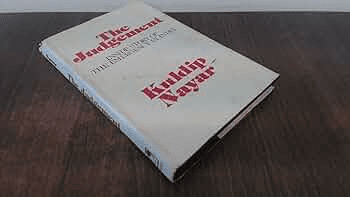
As desperate residents, including women and children, tried to protect their homes, security forces opened fire on the protesters. While official government records acknowledged only six deaths, independent accounts paint a far grimmer picture. Renowned journalist Kuldip Nayar, in his book “The Judgement,” documented that approximately 150 people were killed in the police firing — a figure that starkly contradicts the official narrative.
The incident left thousands of families homeless and became a symbol of the authoritarian excesses of the Emergency period, contributing to the eventual electoral defeat of Indira Gandhi’s government in 1977.
The Wednesday morning operation bore disturbing similarities to its historical predecessor. Under the cover of darkness, a massive convoy of 32 JCBs accompanied by hundreds of municipal workers descended upon the area. The timing — 1:30 AM — ensured minimal media presence and caught residents off-guard, preventing organised resistance.
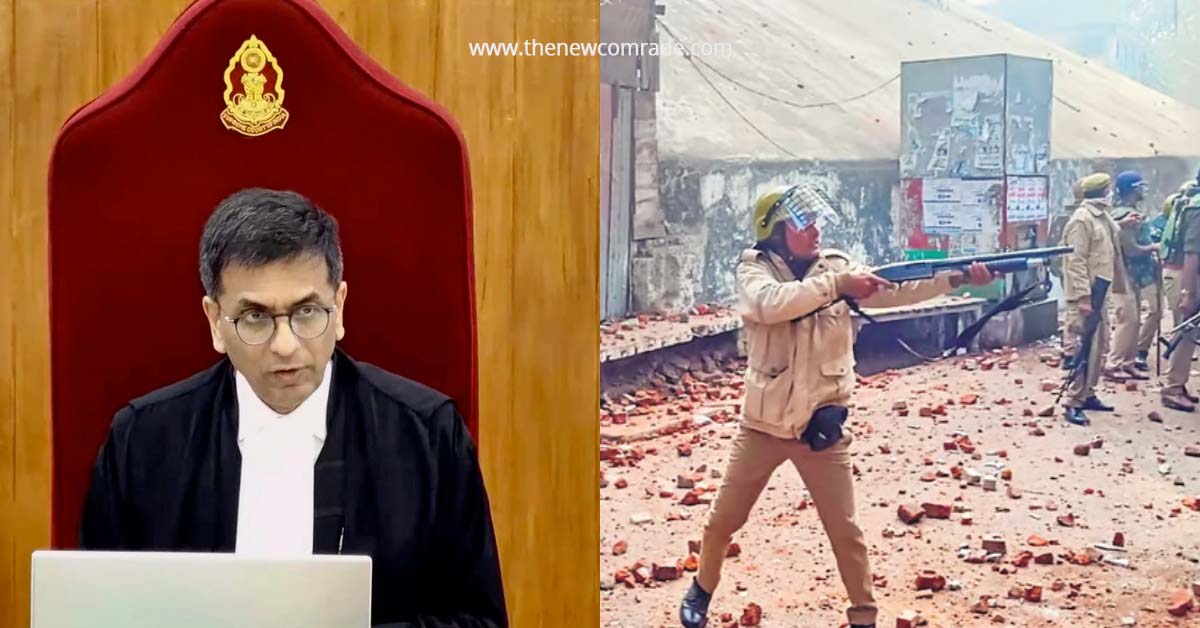
As news of the demolition spread, local residents gathered to protest. The situation quickly escalated, with protesters throwing stones at the demolition crews. Police responded with multiple rounds of tear gas to disperse the crowds, creating scenes reminiscent of the chaos five decades ago.
The demolition has triggered a political storm, with opposition leaders condemning the action as both illegal and discriminatory.
Amanatullah Khan, former Chairman of the Delhi Waqf Board and current Aam Aadmi Party MLA, categorically stated that the demolished structures were built on Waqf (Islamic endowment) property, making the demolition illegal under Indian law.
“This land is among 123 disputed Waqf properties in Delhi,” Khan explained. “The authorities are demolishing first and asking questions later. This is deliberate.”
Khan’s assertion raises serious legal questions, as Waqf properties enjoy special protection under Indian law and cannot be demolished without following proper legal procedures and obtaining clearance from the Waqf Board.
All India Majlis-e-Ittehadul Muslimeen (AIMIM) leader Asaduddin Owaisi provided additional context, revealing that the demolition was initiated following a court case filed by Save India Foundation, an organisation he identified as having links to the RSS (Rashtriya Swayamsevak Sangh).
“The court ordered a survey based on their petition,” Owaisi explained. “However, the Delhi Waqf Board failed to file a review petition, leading to this erroneous judgement.”
Crucially, Owaisi highlighted that the site has been a mosque since 1947, which should have afforded it protection under the Places of Worship Act of 1991 — a parliamentary law that mandates maintaining the religious character of all places of worship as they existed on August 15, 1947.
“The court completely ignored this fundamental law,” Owaisi stated, calling for the Delhi Waqf Board and the Masjid Managing Committee to immediately approach the Supreme Court to maintain the status quo and halt further demolitions.
Congress leader Sandeep Dikshit offered a nuanced response, acknowledging that removing unauthorised constructions is generally positive for urban development. However, he raised serious concerns about the selective nature of these demolitions.
“While illegal constructions should be removed, the BJP government appears to be specifically targeting structures belonging to one particular religious community,” Dikshit observed. “This selective enforcement of law raises questions about the true motivations behind these midnight operations.”
The demolition raises several critical legal and constitutional issues. If the land indeed belongs to the Waqf Board, as claimed by multiple political leaders, the demolition may violate laws protecting religious endowments. The Places of Worship Act of 1991, enacted to maintain communal harmony, prohibits conversion of any place of worship and mandates maintaining their religious character as it existed in 1947.
The midnight timing and massive force deployment raise questions about whether proper legal procedures were followed, including adequate notice to affected parties. Additionally, allegations of targeting specific communities could violate constitutional guarantees of equality before law and non-discrimination.
This incident occurs against the backdrop of what critics call “bulldozer justice” — a pattern where authorities in several BJP-ruled states have used demolitions as a tool of punishment, often targeting Muslim communities following communal tensions or protests.
The midnight timing, massive police presence, and swift execution mirror similar operations in Uttar Pradesh, Madhya Pradesh, and other states, raising concerns about this becoming an institutionalised practice.
With multiple leaders calling for Supreme Court intervention, the demolished site at Turkman Gate may become the next major legal battleground over religious rights and property laws in India.
The incident has already reignited debates about the weaponisation of municipal laws for political purposes, the protection of minority religious sites, the role of courts in safeguarding constitutional rights, and the continuing relevance of Emergency-era warnings about authoritarian overreach.
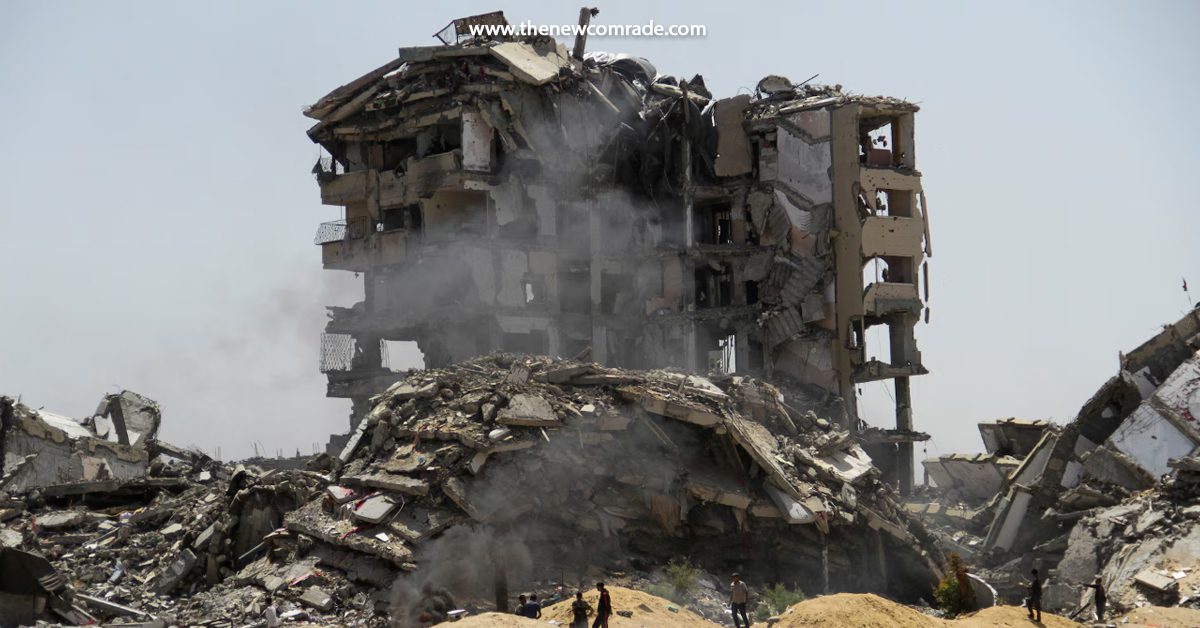
As dawn broke over Turkman Gate on Wednesday, the rubble of demolished structures served as a stark reminder that the ghosts of 1976 still haunt this historic neighbourhood. For many residents, the sight of 32 JCBs arriving under cover of darkness was not just a demolition — it was history repeating itself.
The coming days will likely see legal challenges, political mobilisation, and renewed debates about the nature of governance in India’s capital. What remains clear is that the midnight demolition at Turkman Gate has opened old wounds and raised fundamental questions about justice, legality, and the protection of minority rights in contemporary India.
As this story continues to develop, all eyes will be on the Supreme Court and whether it will intervene to address the legal and constitutional issues raised by this controversial demolition. The incident has not only revived memories of one of India’s darkest periods but also raised urgent questions about whether the lessons of that era have been truly learned or are destined to be repeated.