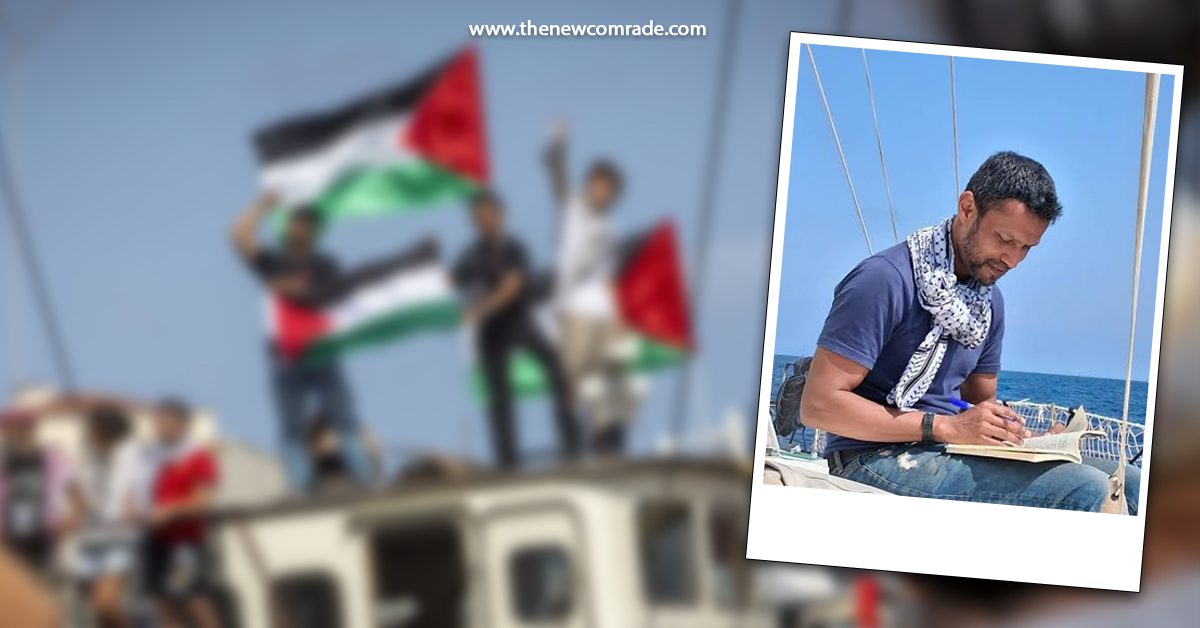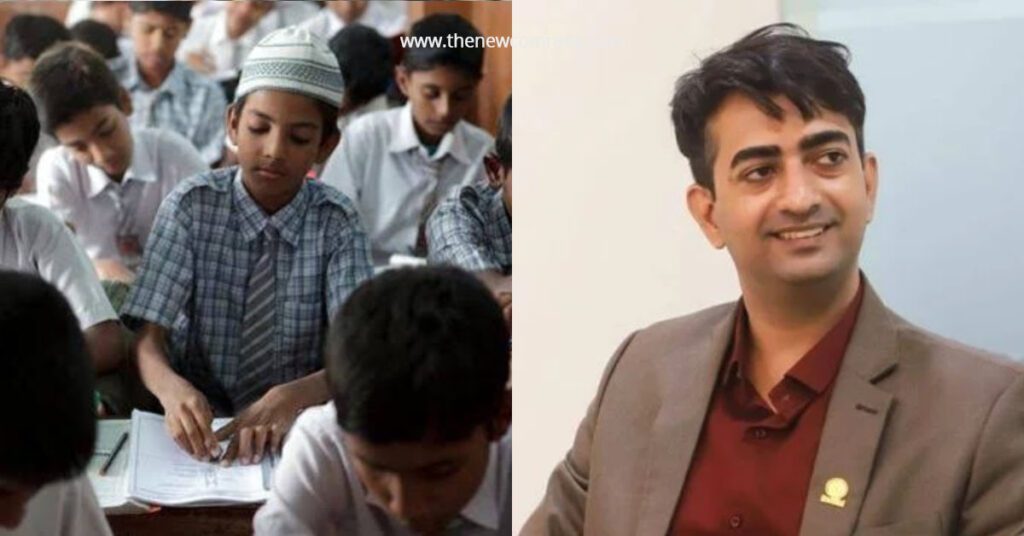
Aasif Mujtaba is a humanitarian leader, educationist, and environmental engineer with a strong academic and professional background. An alumnus of Aligarh Muslim University and the Indian Institute of Technology Delhi, he is a proud recipient of the Roll of Honour from IIT Delhi, reflecting his academic excellence and leadership.
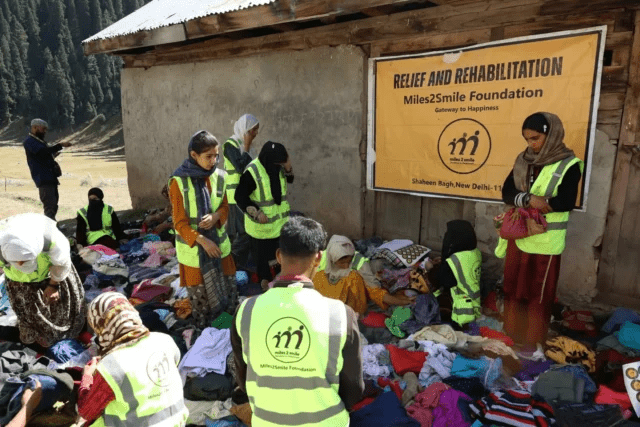
He is the Founder and Director of Miles2Smile Foundation, a not-for-profit organisation working extensively on relief, rehabilitation, education, and livelihood restoration for survivors of communal violence, mob lynching, demolitions, and disasters across India. Under his leadership, the Foundation operates 16 learning centres nationwide, including Sunrise Public School, a dedicated relief school ensuring continued education for children affected by pogroms and displacement.
Aasif Mujtaba was among the co-organisers of the historic Shaheen Bagh anti-CAA protest in New Delhi, contributing to one of India’s most significant peaceful civic movements. He has also served the IIT Delhi Alumni Association as Treasurer, Data Protection Officer, and Executive Committee Member.
An author and visual curator, he has co-authored two international books and curated the photo book “Hum Dekhenge”, documenting the anti-CAA movement and the Delhi pogrom through powerful visual narratives. His professional journey includes work as an Environmental Engineer with MWH Pvt. Ltd. and as an Assistant Professor at Manav Rachna International University.
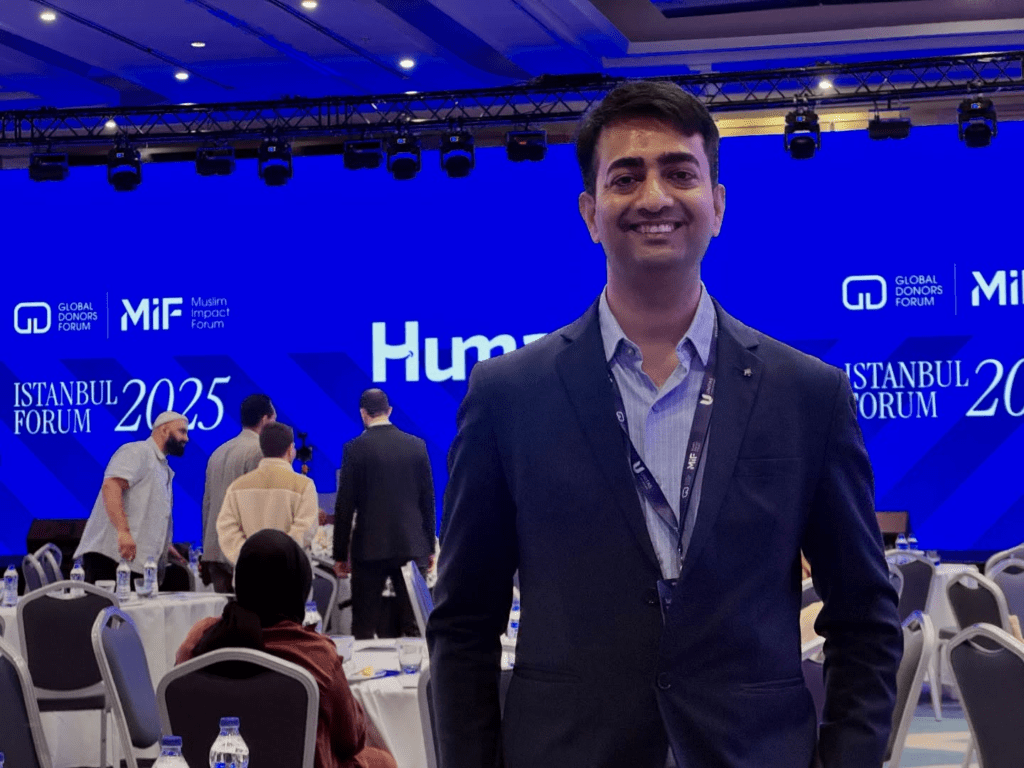
In recognition of his humanitarian contributions, he was awarded the National Life Empowerment Award 2025 and secured Second Position at the Global Donors Forum 2025 at Istanbul, Turkiye. He is also an annual invitee to the United Nations at Geneva, Switzerland, where he speaks on minority rights and social justice in India.
Asif in conversation with our Sub-editor Sidheek C S:
What discriminations and human rights violations have you witnessed in India’s educational system?
From the perspective of the larger educational setup that is being funded by the state. As for the state, we have seen, for instance, how the NCERT curriculum is being changed. Hindutva is being propagated across primary level. Schools are enforcing ‘Surya Namaskar’ and forcing Yoga. Such small steps, funded by the state, run by the state, governed by the state, cannot be overlooked. Be it pushing Hindi as core language, be it pushing Hindutva narratives and policies, all these are realities today. In addition, a lot of curriculum content has been changed. Muslim names in history have been omitted. Curriculum is being redesigned, abused, to push and to inculcate Hindutva narratives. As for educational institutions run by private players, Hindutva is creating zombies, even in elite masses ; many schools are run by the Hindutva bodies. Such institutions are propagating bigotry and training for violence. As for the small number of institutions run by Muslims, they are not allowed to work freely; the past decade, especially past couple of years, say, five – six years, has witnessed lot of state interference in these institutions. Such institutions are haunted by the Enforcement Directorate (ED) and other agencies and, unnecessarily, the state troubles them. For instance, University of Science and Technology Meghalaya (USTM), managed by a Muslim viz. Mahbub-ul-Hoque. He was arrested and kept in jail for a good time for no reason. Azam Khan had a hard time with his Mohammed Ali Jauhar University. Al-Falah University was recently vilified. Any Muslim educationist and educational institution, faces severe threat, of unimaginable scale, from the state.
So, overall, educational set-ups have not been helpful at all in mitigating the threat of the Hindutva virus.
What are the major challenges you face in operating Miles2Smile Foundation and its 16 learning centres across India?
Operating in an extremely hostile political environment has been one of the most difficult aspects of our work. One major challenge has been persistent and unnecessary harassment by state police across different regions—ranging from repeated questioning and surveillance to delays in permissions—often intended to intimidate and exhaust us rather than ensure compliance. We have also faced undue pressure from Indian tax authorities, including frequent notices, prolonged audits, and procedural hurdles that divert time, energy, and resources away from humanitarian work. Additionally, threats and intimidation from Hindutva groups have been a constant reality, especially when we extend relief to individuals affected by hate, communal violence, or demolitions. These threats are meant to silence, delegitimise, and criminalise compassion. Despite this, we continue to operate with transparency, legal diligence, and moral clarity. Our commitment to dignity, relief, and justice for the marginalised has remained stronger than fear or pressure.
After the submission at Geneva about the rampant demolition, our centres in different states were raided by the respective state Police. Intelligence Bureau (IB) raided our relief school in UP. Similarly, IB raided our learning centres in Haryana. If we do the relief work, for example, we went to Assam in September 2025, we are made running like criminals and the police badly maltreated, threatened, and picked some members of the group and intimidated them. Whenever we do relief work, by different means, the state tries to threaten us. The state ensures to terrify and dissuade us. Past couple of years, we have faced a lot of trouble from tax authorities. Police and these authorities raise ridiculous questions and ask us minute details. As such, in this hostile environment, we are supposed to be prepared for being subjected to different sorts of trouble. Further, being a Muslim adds another layer of such troubles, because, on that account the state could pick us any time, label us with charges of terrorism, money laundering, anything. It has become very easy for the state to target Muslims. With the Islamophobia and Hindutva in the air, any organisation that works for just causes, or for Muslims, are going to face trouble at the hands of the state. The state tries its best to ensure that we are silenced and made inactive. Alhamdulillah, against all such odds, pain, troubles, threats, etc. we persist and go to the mode of resistance- building. I put them as three Rs, viz. Remembrance, Resilience and Resistance – Remember atrocities, resolute to be resilient in our fight, and build a front of resistance against the Hindutva and Islamophobia.
What are the most effective tools you’ve identified to counter propaganda through your humanitarian and advocacy work?
For the past six years, I have worked in Assam, Gujarat, Kashmir, Madhya Pradesh, Haryana, Bihar, Uttar Pradesh and Rajasthan. All these states’ machinery operate in a very hostile Islamophobic manner. Our work is, primarily, reactive, after instances of violence, mob lynching, demolitions targeting Muslims, etc. The most effective way to counter this is to counter the dominant narratives, like othering of Muslims. Subsequent to othering, their life and property value less to others. Various propaganda mention about Muslims as cockroaches. Upon Muslims being effectively depicted less of a human, citizen, member of civil society, all troubles and pain effectively, diminishes in eyes of the others. Media – print and electronic ought to be employed for this purpose. This is the way to stop masses from turning to Hindutva zombies. I deliberately use the word ‘zombie’ because of the massive desensitisation upon witnessing children lynched and hanged, human dwellings demolished, etc. We need to revisit histories for this purpose. We need to forge socio-economic camaraderie between the communities that the RSS do not want together. Narratives of Islamophobia are based on lies, and are made easily available and formulated in manner making them easily acceptable.
You’ve mentioned that Islamophobia exists within the medical field in India. Could you explain the specific instances or patterns you’ve observed, and how this impacts healthcare access for Muslim communities?
I am witness to that. On 25 February 2020, when violence had ripped across the North-East Delhi my volunteers’ team and myself went to Guru Teg Bahadur (GTB) Hospital which was one of the biggest government hospitals in that area. The entire hospital, then, was filled with Hindutva goons. I was told by many people that if a Muslim dies with the wounds of violence, hospital staff celebrates ; once I was told about a nurse, expressing and mentioning it as a “loss of wickets”. Muslim women have been denied treatment at many places during COVID epidemic, Muslims were treated as second class citizens. Some doctors even posted that they were not going to tend to Muslim patients. Dr. Aarti Lalchandani, who was the principal of the state-run GSVM Medical College in Kanpur was heard making controversial, Islamophobic comments regarding Muslim patients being treated for COVID-19. She referred to Muslim COVID-19 patients as “terrorists” and suggested that resources were being wasted on them. She also expressed the opinion that the Chief Minister should have given “a clear order that they would not be treated here. Hindutva’s rotten mindset has penetrated deep into the elite classes of the society in the North. Doctors, engineers, executives, judiciary, etc. have all got this poisonous intent because of the RSS, and now it is manifesting in various forms.
In a recent talk, you mentioned that the Muslim community faces a lack of trust rather than a lack of funds. Could you elaborate on what you mean?
It has been almost six years that I have been working on a non-profit basis – with survivors of violence, demolition and mob lynching, which are primarily Islamophobic crimes done by the active and proxy players of the state. I have witnessed that there is no dearth or lack of funds within Muslim community. The community is willing and able to support good initiatives. What we lack is trust due to some theological, social and political organisations, who always manipulate and exploit the general trust of Muslim masses. In such processes, we have seen nascent political initiatives ending up in family business. Similarly, so with social and theological organisations. Instead of leading masses, they have pull them back. The community feels deceived at their effort, money, resource all led to failure. Due to this lack of trust, community is not able to unite broadly on certain topics, like, education, healthcare, political empowerment, etc. This further translates to lack of coordination, then to lack of collective cohesive effort, and then to no good results in various fields.
What are the possibilities of Citizenship Protests again?
From the perspective of the state, yes. Entire anti-NRC movement was crushed. Members from each of the groups that participated were arrested, be it Sharjeel Imam, Umar Khalid, Khalid Saifi, Miran Haidar, Shifa-ur-Rahman, Safoora Zargar, Asif Iqbal Tanha, etc. Most of these people represented different ideological or student groups. Khalid Saifi, for instance, represented “United Against Hate”, Sharjeel Imam initiated Shaheen Bagh protests, Umar Khalid represented “Democratic Students’ Union”, Safoora and Asif Iqbal Tanha represented JCC of Jamia. Further, hundreds of Muslim youth who participated in the protests in Delhi and across the country were picked up by the police and tortured and humiliated and that went on for almost a year. At Shaheen Bagh, additional chowkis were made and the police surveillance was increased. All these things happened because the state wanted not to see the Shaheen Bagh protest-like movements again, on any issue. However, there is unimaginable power in the masses, with the commoners.
British colonial mindset was the same as that of the current junta. They thought that by crushing voices of dissent they could crush legitimate aspirations of the masses. However, the British had to leave India. Similarly, after 1947 too, several protests have been crushed by the state. State tries to sabotage, harass, intimidate, threaten people, ensure that they do not come to streets. Ultimate power lies with the people, and I expect that people would rise up. We should not be surprised, if, against the backdrop of suppression by the state, we see a movement like Shaheen Bagh, may be at Shaheen Bagh, maybe somewhere else, but with the same spirit. It is not going to die, never.
As an annual invitee to the United Nations in Geneva, what tangible impact have your submissions on minority rights and social justice had both internationally and on your work in India?
During the 16th UNHRC conference at Geneva, I gave my submission to the members about the rampant demolition in India. After my talk there, we had another conversation with European media houses. I met the representatives of the OIC (Organisation of the Islamic Cooperation). They told me that they are, themselves, viewing the situation in India against Muslims as alarming, and that they were planning to make a written submission to the Modi government about the misuse of state power. After that, many pronouncements and observations of the Supreme Court declared it as unconstitutional, mandating the state not to demolish the houses. I think the submission at Geneva has had a good impact from the perspective of the state.
What are the major lessons you’ve learned from working directly with communities affected by violence, displacement, and discrimination?
Working closely with affected communities has taught me that dignity matters as much as relief. Individuals affected by hate, communal violence, and demolitions do not seek charity alone; they seek justice, recognition, and humane engagement. For many Indian Muslims impacted by targeted violence, true justice often feels distant -almost utopian- amid prolonged legal battles, impunity, and systemic neglect. I learned that trust is built through consistent presence, honesty, and standing by people when institutions fail them. Communities possess deep resilience and wisdom; our role is to accompany and empower, not impose solutions. Lasting impact emerges when immediate relief transforms into rehabilitation, education, and the restoration of dignity and hope.
Motivation, hope..
Leading a counter-current initiative like ours is emotionally demanding. My deepest source of motivation comes from the people we serve. When someone once broken by hate, violence, or demolition begins to smile again, that smile becomes my renewal. It reminds me why we exist. At Miles2Smile, our work spans emergency relief for survivors of communal violence, mob lynching, and demolitions; rebuilding homes after floods and landslides; running learning centres and relief schools across multiple states; supporting livelihoods; and standing with families through long legal and social struggles. Hope is sustained when relief turns into rehabilitation, when children return to classrooms, when dignity is restored to those pushed to the margins. I also draw strength from the resilience of communities who refuse to surrender to despair despite injustice. Their courage, patience, and quiet resistance constantly remind me that meaningful change, though slow, is always possible.
What kinds of activities or strategies do you believe are most effective in countering the hostile currents created by the current regime against marginalized communities?
Through our work on the ground, we have identified that sustained, community-rooted interventions are the most effective way to counter the hostile currents unleashed by the regime. Immediate relief to individuals affected by hate, violence, and demolitions is crucial, but it must be paired with long-term rehabilitation. Education has emerged as a powerful counterforce—our learning centres and relief schools help children reclaim normalcy, critical thinking, and hope. Livelihood support restores dignity and reduces long-term dependency created by targeted violence. Legal assistance and documentation help families navigate a system where justice often feels inaccessible. Equally important is consistent presence—standing with communities beyond moments of crisis builds trust and breaks isolation. Storytelling, documentation, and public engagement humanise victims who are otherwise reduced to statistics or stereotypes. Above all, solidarity across communities and a values-based approach grounded in empathy, constitutional rights, and human dignity have proven to be the most meaningful tools to resist fear, hatred, and systematic othering.
Please elaborate about your current venture
My current venture, Miles2Smile Foundation, is a grassroots humanitarian organisation committed to relief, rehabilitation, and long-term empowerment of communities affected by hate, communal violence, mob lynching, demolitions, and climate-induced disasters. Our work begins with immediate humanitarian relief—food, shelter, medical aid, and winter support—and extends into rebuilding homes, restoring livelihoods, and providing sustained educational support. We run learning centres and relief schools across multiple states to ensure that children affected by violence and displacement do not lose access to education. A key focus of our work is standing with individuals and families through prolonged social, legal, and economic marginalisation, where justice often feels distant. We emphasise dignity-led intervention, community participation, and long-term rehabilitation rather than one-time charity. At its core, Miles2Smile exists to restore hope, agency, and dignity—ensuring that those pushed to the margins are seen, supported, and empowered to rebuild their lives. I am also closely involved with Shaagird, an education initiative that connects sponsors with marginalised children—especially survivors of mob lynching, communal violence, demolitions, and refugee situations—to ensure continued access to learning and transformation through education. Together, these efforts restore dignity, hope, and opportunity to communities pushed to the margins.