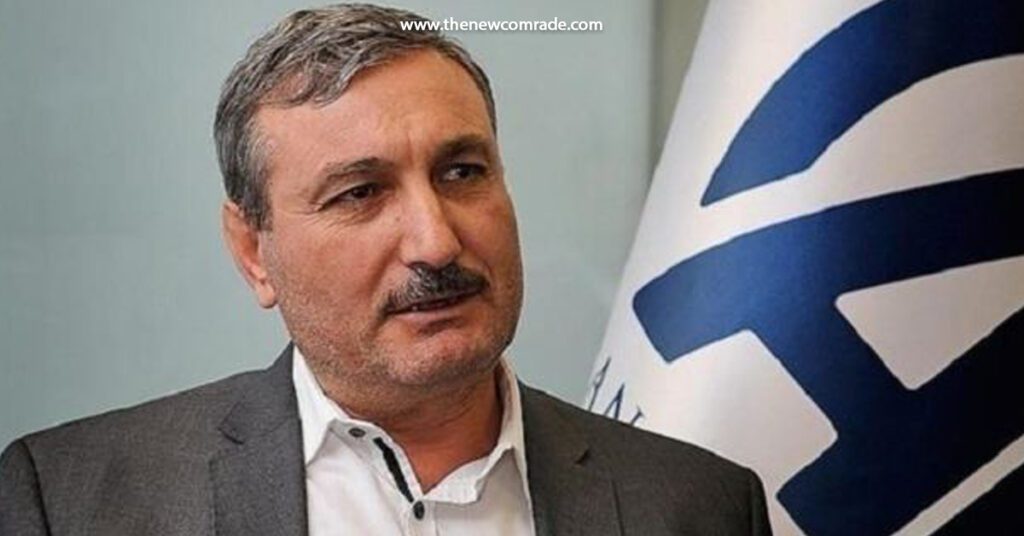
Fifteen years after schoolboys’ graffiti in Daraa sparked one of the century’s most brutal wars, Syrians are still arguing over what remains of their revolution. Some say it was hijacked by extremists; others insist it was smothered by a regime and a world that preferred “stability” to justice. But there is one figure whose life still cuts through the slogans: Colonel Riad al-Asaad, the air force officer who chose not to shoot.
For decades, Riad al-Asaad was part of the machine. A career officer who joined the Syrian Arab Air Force as a young man, he rose through the ranks as an engineer and colonel within a system defined by loyalty to the Assads. His life, like that of thousands of other regime officers, seemed to run on rails: predictable, constrained, and dependent on obedience to a security state that fused the army with the presidency.
Then came Daraa in 2011. What began as protests over tortured children quickly became a national uprising, and with it a moral test for everyone in uniform. When orders filtered down to crush demonstrations and brand civilians as “armed gangs”, al-Asaad was forced into a choice: obey and preserve his rank, or step outside the apparatus that had shaped his entire adult life. He chose rupture.
In July 2011, he defected and soon after announced the formation of the Free Syrian Army (FSA) from exile. The early FSA was not a polished force. It was a patchwork of local units, defected conscripts and officers, community fighters and volunteers with mismatched uniforms and weapons. Its videos were grainy, its command structures fragile, its discipline uneven. Yet for a crucial window of time, it did something politically invaluable: it cracked the regime’s narrative that all armed opposition was terrorism.
Bashar al-Assad’s government worked relentlessly to depict the uprising as a jihadist conspiracy. State media spoke in the language of “takfiris” and foreign plots, insisting there were no legitimate protesters, only saboteurs and extremists. Against that story, Riad al-Asaad’s figure was stubbornly inconvenient. Here was a colonel from within the Syrian Arab Army, a man whose entire career testified to his integration in the state, now insisting he could not fire on his own people. His defection did not merely add manpower to the opposition; it lent it a kind of military legitimacy the regime struggled to dismiss.
This is not to romanticize the FSA. The label quickly became an umbrella claimed by a dizzying array of brigades, some of which committed abuses, many of which were deeply entangled with regional patrons who used them as instruments rather than partners. Over time, the FSA fractured under the combined pressures of regime brutality, foreign agendas, the rise of jihadist factions, and internal corruption. The myth of a unified, clean “Free Syrian Army” was always just that: a myth.
But myths matter in politics, and Riad al-Asaad was at the heart of one of the revolution’s most important ones: that a professional soldier could refuse criminal orders, defect, and stand with civilians. In a region where militaries are often treated as unshakeable pillars of authoritarian regimes, his choice signaled that even the army’s loyalty was not guaranteed.
The cost to al-Asaad himself was severe. In 2013, he was badly wounded in an explosion that led to the amputation of his leg. Whether the attack came from the regime or a rival faction, the message was the same: men like him were dangerous. They embodied a crossing of lines that both the dictatorship and extremist actors found intolerable — a mixing of military experience with a refusal to submit to either tyranny or nihilistic violence.
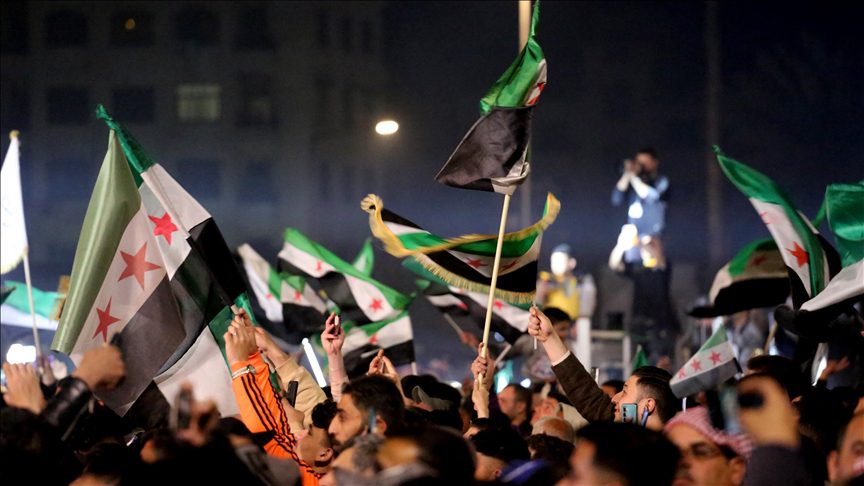
Fifteen years after those first protests, his return to Daraa for the anniversary carries a symbolic weight far beyond one man. A former regime colonel, now maimed by war, being lifted on the shoulders of a crowd in the city where it all began: it is an image that collapses the distance between 2011’s euphoria and today’s exhaustion. Once he carried their rebellion, now they carry him. In that reversal lies a story of both gratitude and unfinished business.
For the revolution’s supporters, al-Asaad’s journey is proof that the uprising was never reducible to sectarianism or extremism. It began with people like him — insiders who broke ranks, officers who refused to be executioners, citizens who believed their country could be something else. For his critics, his later years, including involvement with controversial opposition structures, embody the revolution’s drift into fragmentation and ideological murk. Both views contain truth, and it is intellectually lazy to pretend otherwise.
Yet on this anniversary, the more urgent question is not whether Riad al-Asaad’s legacy is spotless. It is whether his original act — the refusal to fire, the willingness to throw away rank for principle — still has political meaning in a region where so many have concluded that nothing ever changes. His broken body says that choices have consequences. His survival says those choices cannot be erased.
As the world mostly moves on, treating Syria as a humanitarian file or a “stability” problem, remembering figures like Riad al-Asaad is a way of insisting that the revolution was not an aberration. It was an attempt, however flawed and tragic, to reclaim moral agency in a country built on fear. Fifteen years later, the least we can do is honour those who, in moments of unbearable pressure, chose not to shoot — and ask what it would mean to take their choices seriously again.