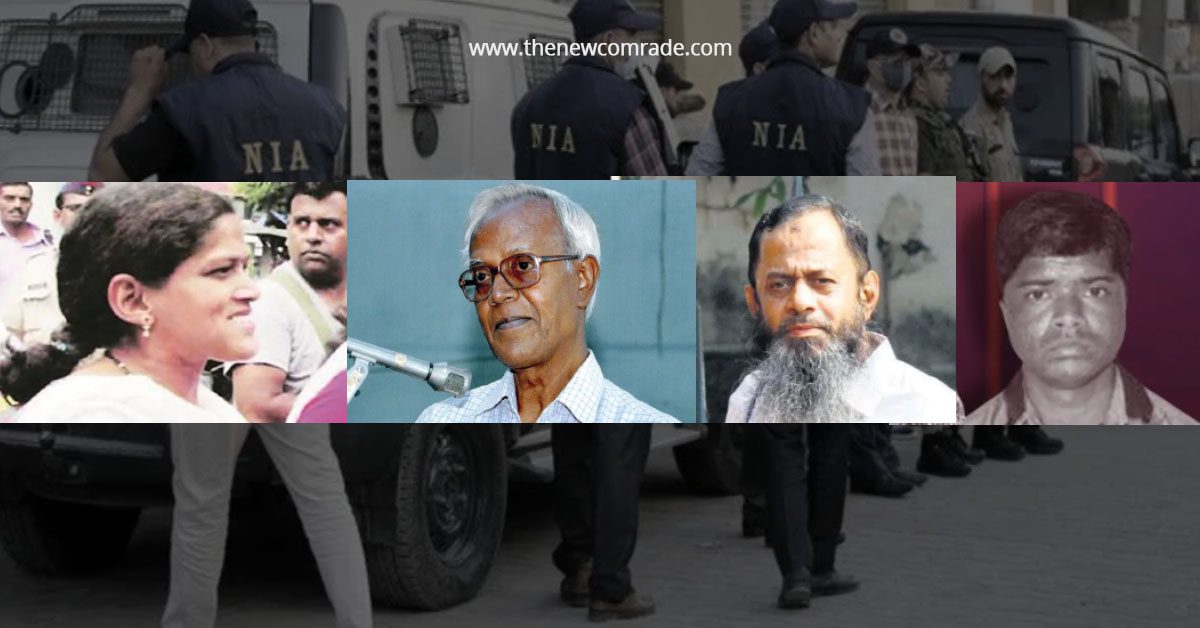
The legitimacy of any justice system rests on a fundamental principle that punishment follows proof. Yet, in contemporary India, this foundational principle has been largely eroded by the state. Application of various draconian laws, like the Unlawful Activities (Prevention) Act (UAPA), has increasingly reconfigured legal procedure into an instrument of prolonged pre-conviction detention.
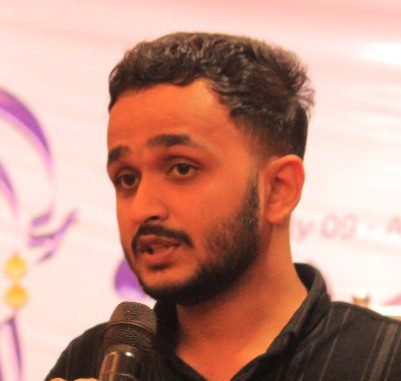
In this regard, the seventeen-year incarceration of Mohammed Zakariya represents a disturbing transformation in the architecture of justice. His case is not merely about delay, but about the normalisation of a legal condition, in which time itself becomes punitive. With the line between accusation and guilt being dissolved, due process becomes a risky affair.
Mechanics of Disappearance
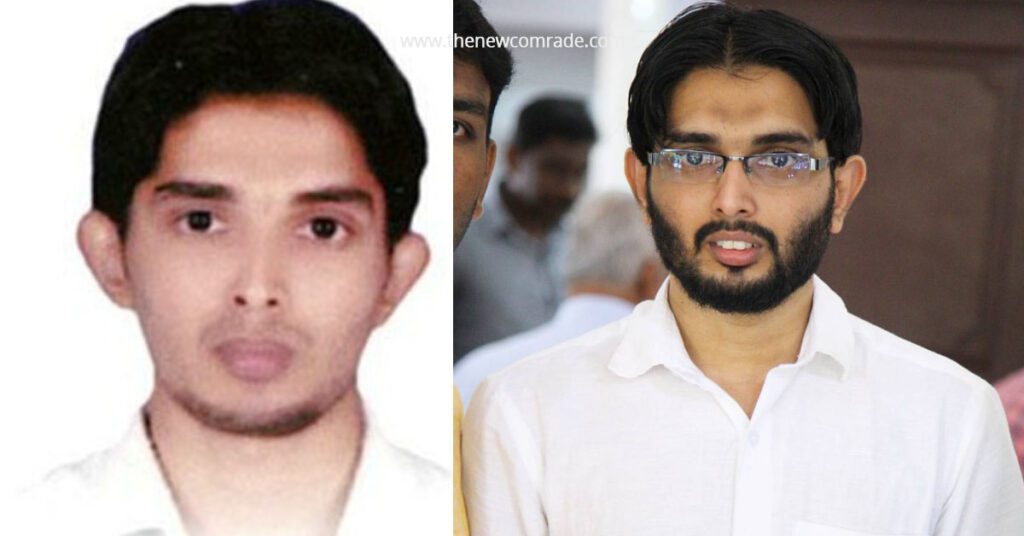
The irreversible redirection of Zakariya’s life on February 5, 2009, serves as a case study in extra-judicial procedures. Then a vocational labourer from the central Keralite village of Parappanangadi, whereby he was driven by familial compulsions following father’s demise, Zakariya’s transition from a bachelors in commerce to a mobile phone technician was a path that the state re-engineered as a “technical qualification” for accusing him of insurgency.
Deliberate administrative deception was visible from the very beginning of this case. Under the pretext of a fictitious Police inquiry (which is mandatory in India or issuance of passport), local authorities facilitated his abduction. For four days, Zakariya disappeared from both family and jurisdictional records, only to re-emerge as the eighth accused in the 2008 Bangalore serial blasts case. This process effectively stripped the individual of his local identity, replacing it with a ‘designation’ in a ‘security’ agency narrative.
The result has been the almost total consumption of a life by the architecture of Bangalore Central Prison. Transition of a teenager to a thirty-six-year-old man within these walls, Zakariya’s seventeen-year interval represents the systematic burning out of a person’s prime years. The years slipped by with little change, except for rare, state-granted moments, attending a brother’s wedding and later mourning him at his funeral.
Ultimately, the human cost is measured in the collapse of the very domestic structure Zakariya sought to support. His yearning to return to his partially paralysed mother represents the most basic demand of an individual whose youth was sacrificed for a farce legality.
Undertrial System: When Waiting Becomes Punishment
To understand the crisis within Indian judiciary, one must look beyond the slow pace of individual cases and examine how the undertrial system has been normalised. In this system, being an “accused” is no longer a temporary stage but an extended, almost permanent, condition. By separating imprisonment from conviction, the state has effectively created a parallel punishment system that operates without the safeguards of due process.
This is where time itself becomes a tool of control. Draconian laws like the UAPA does not simply aim to prove guilt; it keeps individuals in prolonged detention. Zakariya’s seventeen-year imprisonment is not just a delay—it reflects how pre-trial detention is made to function as a punishment in itself. In such a system, the presumption of innocence is weakened by a “security-first” approach that values suspicion over timely justice.
What emerges is a shift in judicial power—less accountable and more harmful to marginalised communities. Despite Supreme Court calls for faster trials, cases remain stuck in long procedural delays. For Zakariya, the prison becomes a kind of state-imposed limbo, where years of life pass without resolution – legal procedures drag on indefinitely, the process itself turns into the punishment, individuals are trapped in a system that offers neither justice nor closure.
The Grassroots Resistance
The movement for Zakariya’s freedom represents a critical transition from private tragedy to organised resistance against the state-sanctioned isolation. Initially, the “terrorist” designation functioned as a tool of social paralysis, effectively distancing the family from mainstream discourse. This silence was only punctured when the material reality of Zakariya’s innocence—repositioned as a pawn in a broader investigative game—was highlighted by co-accused Abdul Nasar Madani and subsequently amplified by civil society.
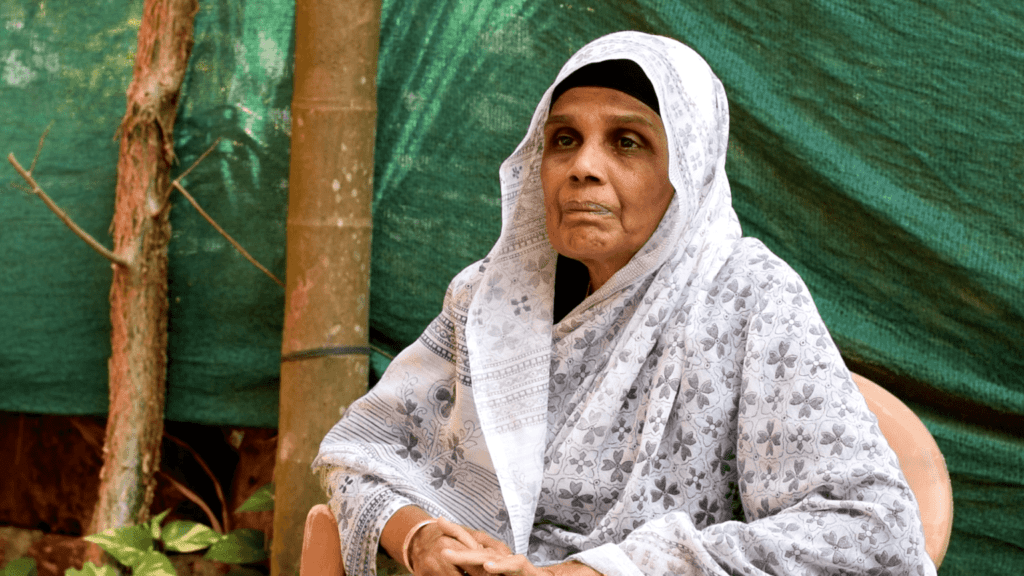
The cornerstone of this struggle remains Beeyumma, Zakariya’s mother. Her transformation from a grieving widow into a litigator—filing a Public Interest Litigation (PIL) in the Supreme Court despite a debilitating stroke—marks a rare instance of a marginalised subject directly challenging the constitutionality of the UAPA.
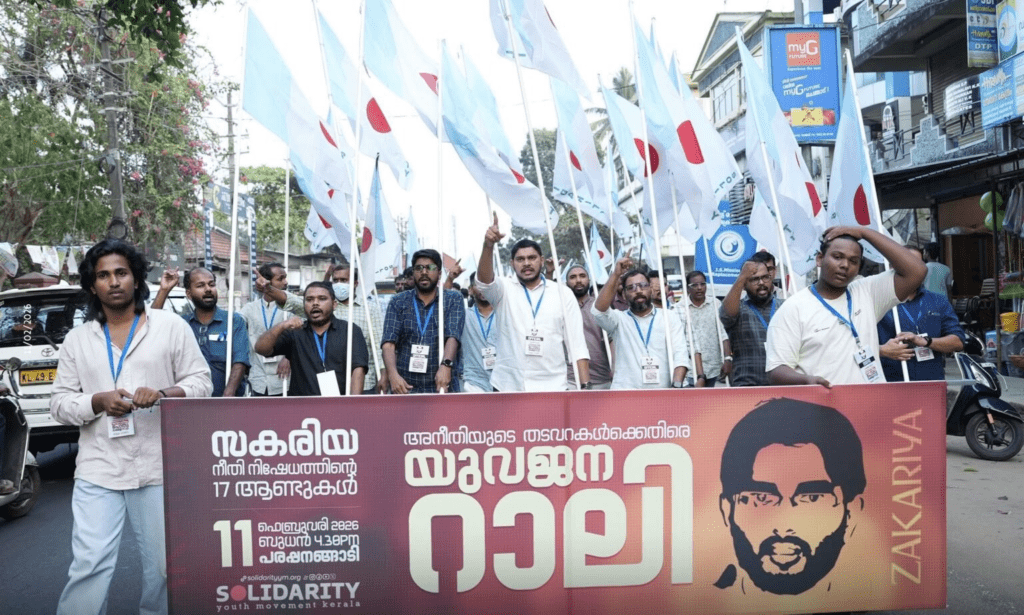
The Free Zakariya Action Forum and the Solidarity Youth Movement provided the political and legal scaffolding necessary to sustain a two-decade-long campaign.
Artistic interventions, specifically KP Sasi’s ‘Fabricated’ and Adv. Hashir K’s ‘A Documentary about Disappearance’, functioned as vital counter-narratives to the state’s monopoly on information.
Ultimately, the most potent form of defiance emerged from within the cell. Zakariya’s reported rejection of state-offered liberty—contingent upon providing false testimonies—reconfigured his status. By refusing freedom in exchange for perjury, he transitioned from a mere passive victim of the state into a symbol of moral integrity. This refusal to participate in the manufacturing of state-sanctioned narratives serves as the ultimate indictment of a system that prioritises procedural “closure” over the pursuit of truth.
A Mirror to India’s Institutional Crisis
Mohammed Zakariya does not exist as an isolated legal anomaly; he is the definitive archetype of a systemic malignancy within the Indian carceral framework. His seventeen-year incarceration serves as a biological clock for a crisis in which 77% of the prison population remains in undertrial status. This demographic is not accidental; it is disproportionately composed of marginalised communities—Dalits, OBCs, and Muslims—who lack the social and economic capital to challenge a state narrative that has effectively replaced the presumption of innocence with a “security-first” doctrine.
The structural parallels to other high-profile cases reveal a consistent pattern of judicial attrition.
Much like the protracted detention of Abdul Nasar Madani, Zakariya’s imprisonment suggests a “hostage logic,” where the state utilises a peripheral individual as a bargaining chip to manufacture testimonies against high-profile political targets.
His case mirrors the A.G. Perarivalan precedent, where an individual is entombed for decades based on a peripheral technical role—in Zakariya’s case, the alleged assembly of timers—frequently supported only by coerced or thin circumstantial evidence.
Zakariya’s narrative reflects the “terror trials” of the Malegaon, Mecca Masjid, and Samjhauta Express cases. In these instances, hundreds of youths were branded as “extremists” only to be acquitted twelve to twenty years later—long after their social and personal lives had been irrecoverably dismantled.
By deploying draconian laws such as the UAPA, the state ensures that “suspect subjects” are held in a state of permanent undertrial status. As seen in contemporary cases like that of Umar Khalid, the legal process itself functions as a life sentence, circumventing the need for the accountability of a final verdict.
Ultimately, Zakariya is the face of thousands of “faceless” prisoners. His case serves as a chilling mirror of a state where the legal vacuum has become a standard tool of governance. It exposes a reality where justice is not merely delayed, but is strategically suspended, ensuring that by the time a “not guilty” verdict is finally reached, the state has already successfully consumed the individual’s entire existence.
Disclaimer: The opinions expressed in this article are solely the author’s and do not neccessarily reflect the opinions or beliefs of the website and its affiliates.