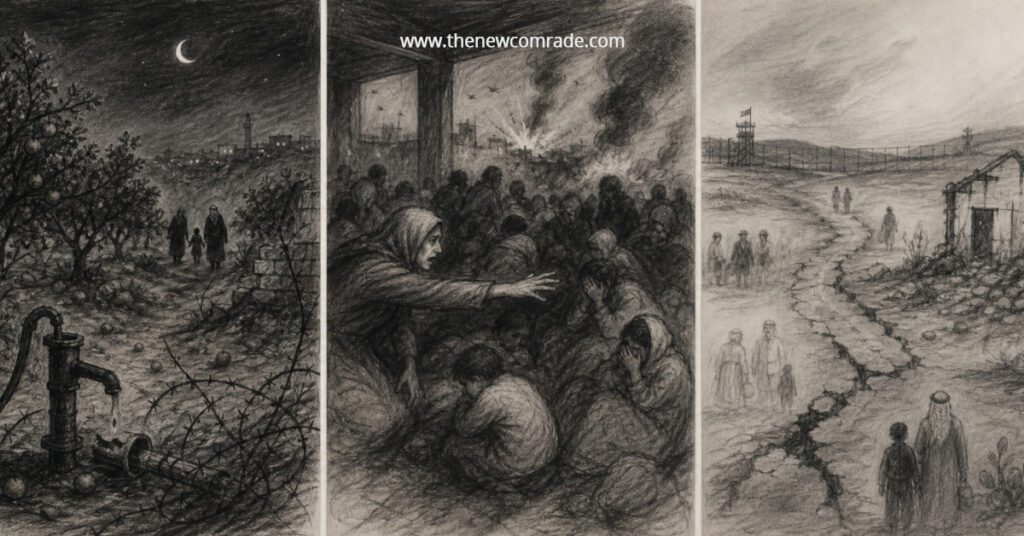
On Nakba Day, these two stories speak to one another across time and geography. The Nakba, meaning “catastrophe,” refers to the mass displacement of Palestinians in 1948, when families were uprooted from towns and villages, many never able to return, and that loss has continued to shape Palestinian life ever since.
Between the orange groves of Qalqilya and the shelters, borders, and bombed streets of Sukari’s memory, the same Palestinian grief returns in different forms, as though history has merely changed its costume. In Hallaj’s recollection, the land is first divided by an almost unbelievable logic: pumps are removed and returned, trees are left behind, young men steal oranges from groves that were once their own, and the border transforms a homeland into a trap. In Sukari’s story, that same devastation travels forward into another geography of exile, where fear runs faster than thought, hunger follows displacement, and the body itself becomes a witness to a Nakba that has never truly ended. Read together on Nakba Day, these narratives do more than remember loss; they reveal how loss reproduces itself, how it settles into daily life, and how Palestinians continue to carry a homeland fragmented by war, exile, and the stubborn ache of return.
Muhammad Hallaj, a political scientist specializing in Palestinian affairs and the Israeli-Palestinian conflict, was born in Qalqilya, Palestine, in 1932. Dr. Hallaj shared his memories of the 1948 war and its aftermath, which he experienced as a high school student in Jaffa, and then in Qalqilya and Tulkarm:
“An incident that took place in Qalqilya is a good example of the sense of unreality about what was happening to Palestine. When people learned that United Nations “truce supervisors” were about to show up to demarcate “borders” between Israel and Palestine, and that their orange groves would all end up on the Jewish side of the line, some people dismantled the huge water pumps they used to irrigate their orchards and brought them home with the idea of reinstalling them later, when a settlement would be reached and they would be able return to their land.
A few days later, one of the families changed its mind and took the pumps back to the orchards and reinstalled them. They said that if the Jews took the orchards without the pumps their trees would die, but by returning the pumps the trees could be irrigated and kept alive until the war ended and they could recover their orchards. What happened, of course, was that the Jews got the land, the trees, and the pumps, and the Palestinians got nothing for their pains. In the meantime, and up until 1950, when Jordan annexed the West Bank, the people in Qalqilya risked their lives—some died—stealing oranges from their own orchards, which were now on the Israeli side. It was a common sight in Qalqilya to see small groups of young men carrying burlap sacks, waiting for darkness to fall so they could sneak across the barbed wire that now constituted the border between Israel and Palestine. The young men entered groves that they had until recently owned and filled their sacks with oranges before sneaking back.
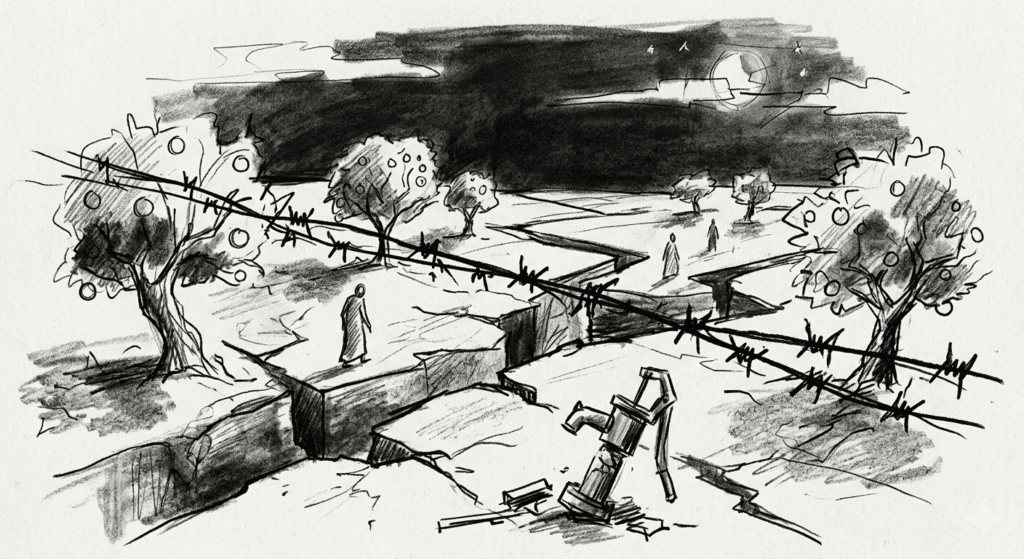
The following morning, they would sell the oranges, and that was how they made a living. The problem worsened when the Israelis began to run armed patrols along the line. Sometimes they caught the “infiltrators” (as they came to be called) and demanded monetary fines in exchange for their release. If these people had any money they would not have taken the risk in the first place. So, to avoid being caught by the Israelis, the infiltrators began to take weapons with them along with the sacks. When an Israeli patrol showed up they fired at it to cover their escape. So the Israelis started shooting infiltrators, and many young men died while trying to steal a sack of oranges from their own family groves. When farmers lose their farmland, what do they do? If there is land available to reclaim, they create new farmland. Eventually, the people of Qalqilya cleared the hilly area to the east of the town. They used dynamite to blow rocks out of the side of the mountain until they had new land where they could grow crops. They planted citrus trees, grape vines, figs, and olive trees. They even dug wells, installed pumps, and irrigated vegetable farms. They recreated their lost economy.
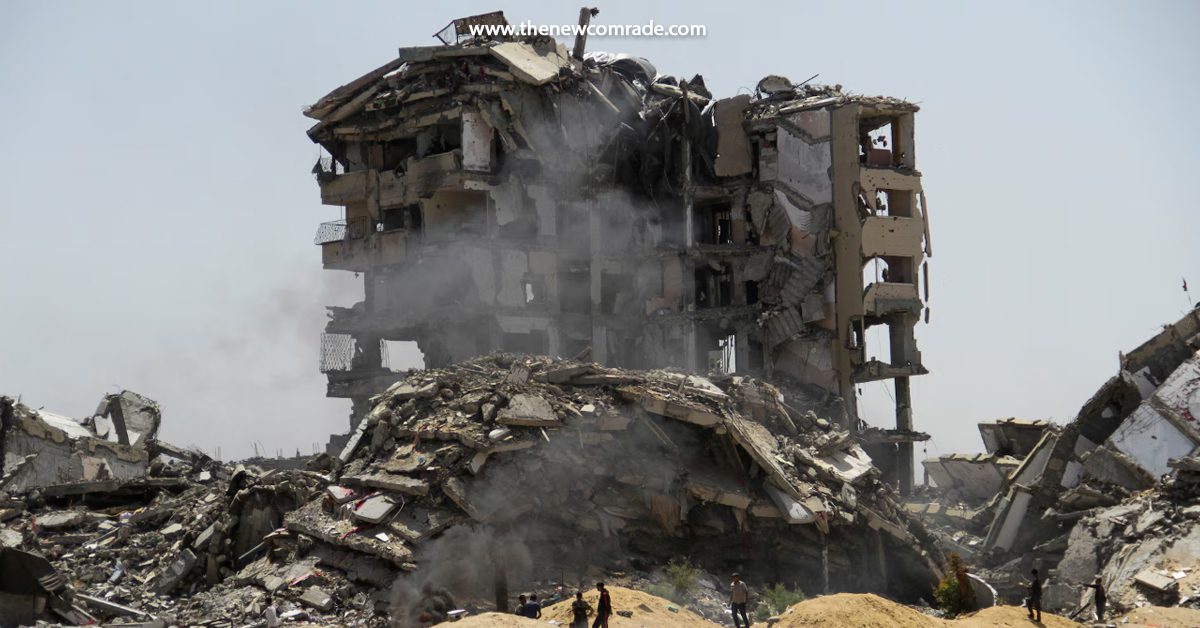
In 1967, the Israelis completed their conquest of Palestine, seizing the Gaza Strip and the West Bank, including Qalqilya. They bore down on Qalqilya with a particular vengeance. They tried to destroy the town completely, loading many of the inhabitants onto trucks and dumping them at the Jordan River, telling them to “go to King Hussein.” My father was among them. After dynamiting and bulldozing a substantial part of the town, foreign embassies in Tel Aviv found out what Israel was doing in Qalqilya and had their governments intervene. International pressure forced Israel to stop destroying the town.
Later, when Israel decided to separate itself from the Palestinians by building what the Palestinians call the Apartheid Wall, Qalqilya was given an extra dose of punishment. The wall not only passed by the town, it surrounded it, leaving only a gate guarded by Israeli soldiers for people to go in and out. Instead of a town, Qalqilya became a prison, and so it remains until today.”
Read full version as Recollections of the Nakba through a Teenager’s Eyes
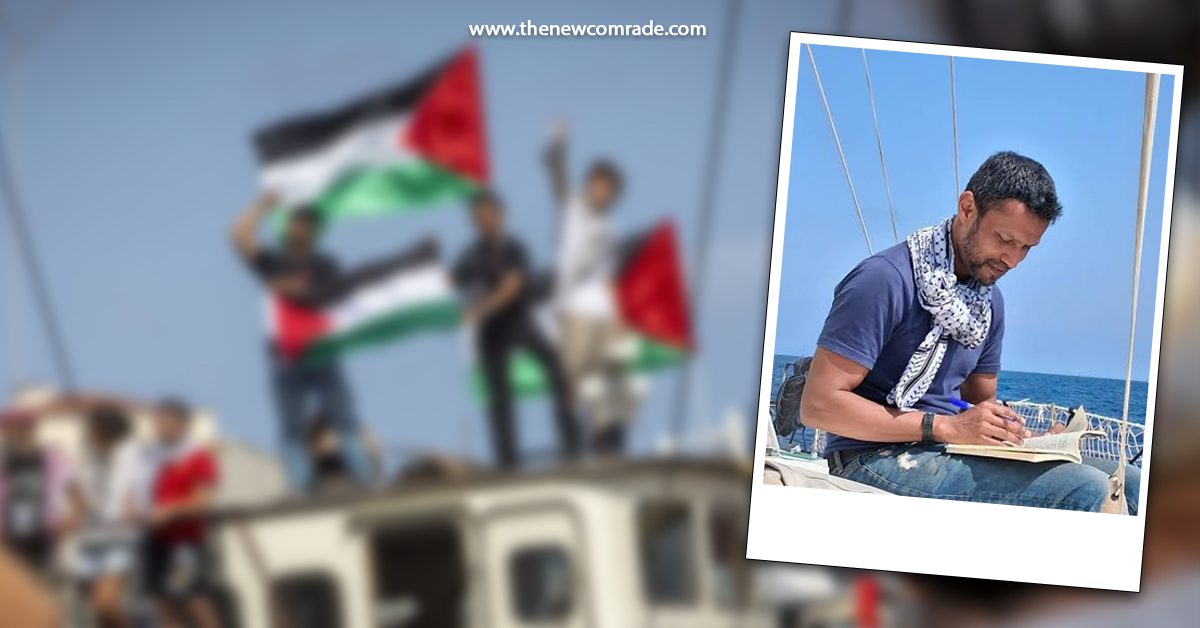
Smoke, bread, and barbed wire By Ahmad Sukari
I’m walking… Still walking… And the distance to the shelter is not short at all, especially when
you’re running and time is not on your side, and loss in this specific situation is a matter of life or
death, or at least an injury that could result in paralysis, or permanent disability. Not to mention
the unknown fate that a person might fall into.
Unknown fate? No, absolutely not!
Perhaps at the time, I wasn’t thinking that I could lose the house I grew up in, where I spent my
childhood. I never expected it to come to this, just as my grandfather who, when he was leaving,
had never expected not to return or see his village ever again.
But I remember the scene of Taym Hasan, Professor Ali… The scene of the flight from the
village, in the Palestinian series “Al-Taghreba Al-Filistiniya”… The scene of the great
displacement between villages.
One word, one word only, can describe my feeling and the character’s feeling at the time:
“Fear.” This word encompasses everything, or rather, all the degrees of fear, because children’s
fear as they reach the shelter can certainly be called panic, but the fear of an elderly man is
called sorrow, and disappointment, and a shattered soul… Just like the expression on Khaled’s
face spoke of expulsion, in this same displacement scene.
My grandfather was fleeing his village in Palestine, surely afraid for the same reasons I was
scared of when I was running away from Syria. I always hear the elders say that we were afraid
for the women and the children. Truly, we were not only escaping death, we were afraid of the
chaos… The chaos that unleashes all the monsters within us, those that don’t come out in
normal circumstances.
Chaos caused by Zionists coming in from overseas, that caused my grandfather to fear for
himself and for his dignity. This same chaos was haunting me because of my neighbor who
lived in the same neighborhood.
I will reiterate that the situation can only be described in one word: fear.
Suddenly, after many television scenes that depicted what was, and still is, happening in Syria,
the loudspeakers in the mosques were enough to acquaint us with the literal term “house
destruction”, which meant us leaving our homes. An hour later precisely, the shelling began, its
source and direction unknown, chaos only, with no predicting where safety lay. Four hours later,
the journey that is called the journey of house destruction began. We began moving from one
relative’s house to another, to find a safe place, but unfortunately, I felt like I was in a car going
from one house to another, taking people along this journey, because we all set off in the same
direction and started running to protect ourselves in the shelter, which we thought was a safe
place. But unfortunately, nowhere was safe. Before I tell you why we left the shelter, I must talk
about the road to the shelter. It was like a doomsday scene, terror and fear in people’s faces
and eyes, no words or expression could ever describe this scene, you’re running, but the
distance is far, you’re running, but you feel yourself getting heaavvvyy, heavy with your worry,
your sadness, your fear, and your panic, heavy with your thoughts about what will happen next,
heavy when you see a woman leaving without her hijab, forgetting herself out of her own fear.
What is bigger than death? Nothing!
And on the other side, a mother is screaming “I forgot my son at home!”
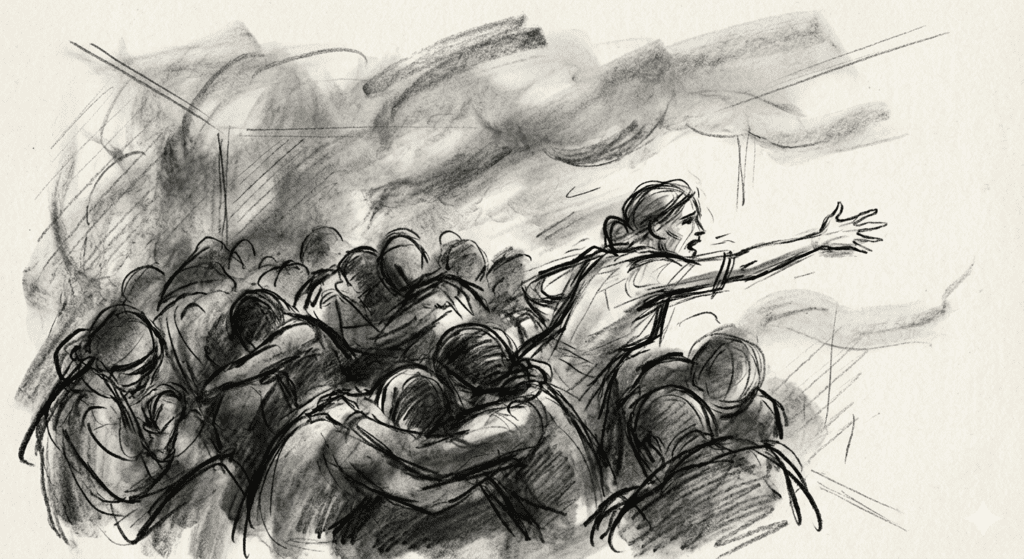
The mother who is willing to give her son her life, her days, and everything emotionally or
materially, becomes unconscious in an instant and runs to save herself, until she regains
awareness and realizes that her baby is not with her, so she screams: “I want my son, bring me
my son.” At this point, I don’t need to search my memory for a similar scene. The first thing that
came to my mind when I saw this woman was a scene with Um Salem, again in the television
series “Al-Taghreba Al-Filistiniya”. I recalled Khaldun, the symbol of a childhood lost to the
Nakba. Khaldun, whom Ghassan Kanafani, in his novel “Returning to Haifa”, decides to leave in
his house in Haifa, for him to become lost, and to later become known as “Dov”. I remember
when my grandmother saw Um Salem’s character, she started crying. Apparently, this story
actually happened during the Nakba, and with more than one mother, who fled and took a pillow
instead of her child.
Here I was, thinking that Dr. Walid Sayf (the author of “Al-Taghreba Al-Filistiniya”) and Ghassan
Kanafani—by virtue of them being intellectuals who wanted to expose the ugliness of the
struggle caused by displacement—had created a story revolving around a horrific event that
could only be imaginary, but it turns out that reality, my dear, is not much different than
imagination.
The mother in 1948, who is Safiya on paper, is the same as Um Salem on the television screen,
and the same as the woman I saw in Syria, when I was fleeing and living in the shelter.
A father carrying his child on one shoulder, and his worries and sorrows on the other,
remembered what his grandfather used to tell him about their expulsion from Palestine. Perhaps
it is because the father is always the one who protects the house, that he feels more danger
than any other member of the family, seeing what they don’t see. At the same time, I’m
remembering the words of the elders about their displacement in ’48, all these situations that I
never imagined would happen to me personally, the embodiment of fear in its various degrees
and forms.
We reached the shelter, a place saturated with fear, filled with panic, and reeking of the smell of
death that encircled people from all sides. We stayed there for two days, and to summarize
what happened, there was little food, no heating, and at one point I decided to go out with a few
young men to get bread, when we heard that the bakery had been bombed. But in the story of
Hajjeh Sheikha Zayd, which I watched in the Nakba Archive, the situation was slightly different
because it wasn’t the bakery that was bombed. The young men who went to get bread were the
ones who got bombed. There was a young man named Taha, who went to get bread for his
family who had fled to Ayn al-Hawsh, in the outskirts of the city, as soon as they saw him, they
shot him.
In the world of warfare, this is known as “sweeping.” It means destroying any human
strongholds that remain within the defeated enemy. The strongholds, or what people in rural
communities perceived as strongholds, were solely attributed to the physical strength of their
men. But what can a man with nothing but a single British rifle do against organized gangs
equipped with the latest weapons and armored vehicles?
What is the story of Ain al-Hawsh, really? Its story is that people spread the news among
themselves, just as Hajjeh Sheikha1 says: “the Jews attacked, they displaced the women and
the children.” Subhan Allah! It’s the same script wherever it happens: the women and the
children. She says there’s a man named Saeed al-Hadeeri who defended his wife in the village
of al-Jish and came back to us. It doesn’t matter whether he faces danger; what matters is that
the woman remains unharmed.
This is exactly what happened to me when I went to get bread for my family in the shelter. Had I
gone a little earlier, I would have died when the bakery was bombed. Truly, the mercy of our
Lord was evident everywhere, despite everything that was happening.
Perhaps it’s because we consider the preservation of life as being a victory, regardless of the
kind of life it is—a life as a refugee, a life of displacement, or a life in the camps. What matters is
that we save our souls. That’s how we’ll be fine, or at least that’s what we imagine.
Anyway, we took advantage of a lull in gunfire and managed to leave the area. Suddenly, we
found ourselves on the Jordanian border without any prior planning, and we tried to enter
Jordan because we were in a state of war. We didn’t expect or imagine that they would prevent
us from crossing. We stayed at the border for about five days, five days and nights enduring the
cold and hunger. Every time we tried to cross the border, they would put us on a bus, lock us
up, and send us back outside the border, claiming that we are Palestinian-Syrians and that we
don’t have the right to seek refuge in another country. We struggled greatly waiting at the
border. At one point, I saw a cat crossing the border over to the other side, I thought to myself:
“How is it possible that an animal today has more rights than a human being?” After we lost
hope of entering Jordan, we decided to go back, but at that time we were unable to think of
returning home because there was no longer a home to return to, so we decided to go back to
Lebanon, repeating the same process and the same struggle, except this time we did manage
to cross the Lebanese border.
When we entered Lebanon, a new journey of agony and struggle began, contrary to our hope
that we would find relief away from destruction, shelling, blood, war, and explosions. We still talk
about what we lost, how we escaped, and many other things, and most importantly, about the
unknown fate. Because reality was more painful and complicated for the Palestinians who
sought refuge in Lebanon, than for those who had always lived here. Hahaha, these terms are
funny: Palestinian-Syrian… Palestinian-Lebanese. Basically, there are no plain Palestinians.
The Palestinian-Lebanese has a tiny advantage over a Palestinian-Syrian like us. It’s as if, in
being a refugee, there could be three stars, four stars and even five stars, my dear. But what I
know and am certain of, is that for any Palestinian, these stars forever mark each one of the
stages of his ongoing Nakba, bruising his body and his memory.
Courtesy: Nakba Archive
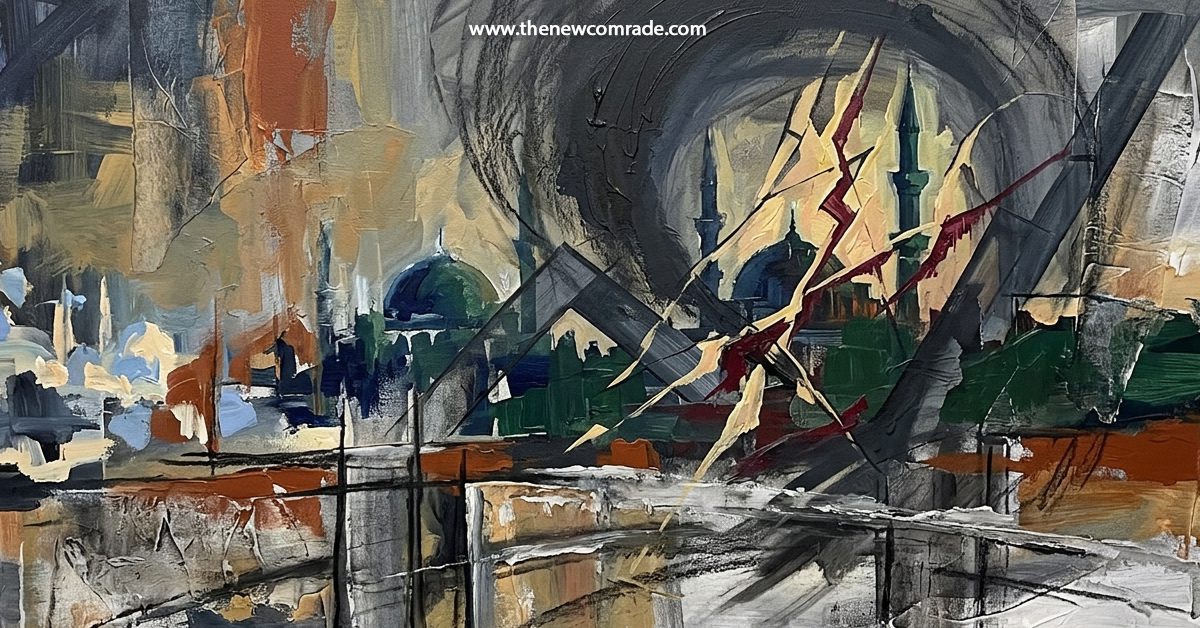
Illustrions are AI generated