Compiled from reports in The Wire, The Indian Express, The Telegraph, Maktoob Media, Alt
1. Post-election anti-Muslim attacks after BJP victory in West Bengal
Date: 4–7 May 2026
Location: Multiple districts across West Bengal (including Cooch Behar, North 24 Parganas, South 24 Parganas, Kolkata region)
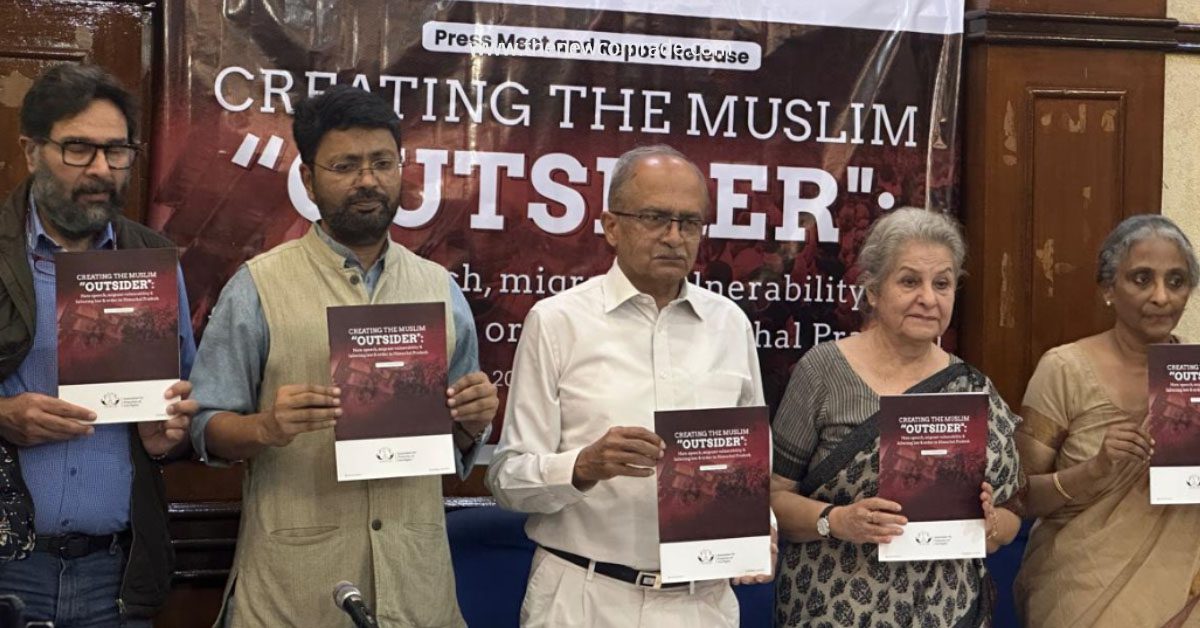
Description: A fact-finding report by the Association for Protection of Civil Rights (APCR) documented 34 incidents of targeted violence and intimidation following the BJP’s victory in the West Bengal Assembly elections. Documented cases included attacks on at least three mosques, demolition or vandalism of Muslim-owned hotels and shops, assaults on Muslim residents and street vendors, intimidation at cattle markets and meat shops, and attempts to symbolically erase Muslim presence through renaming or defacement of Muslim-associated sites.
Impact on Muslims: The APCR report recorded at least two Muslim deaths, including a man reportedly killed while attempting to protect a mosque in Gosanimari. Around 50 Muslims were directly affected through physical injury, property loss or forced displacement, with broader chilling effects on public visibility of Muslim life and commerce.
Primary sources: Maktoob Media’s summary of the APCR report; detailed coverage in Madhyamam; follow-up summaries in Kashmir Media Service and Muslim Network TV.
2. Closure of Benia/Beni Bagh Bakra market before Bakrid in Varanasi
Date: Order enforced around 24–25 May 2026; reported 27–28 May 2026
Location: Benia/Beni Bagh seasonal goat market, Varanasi, Uttar Pradesh
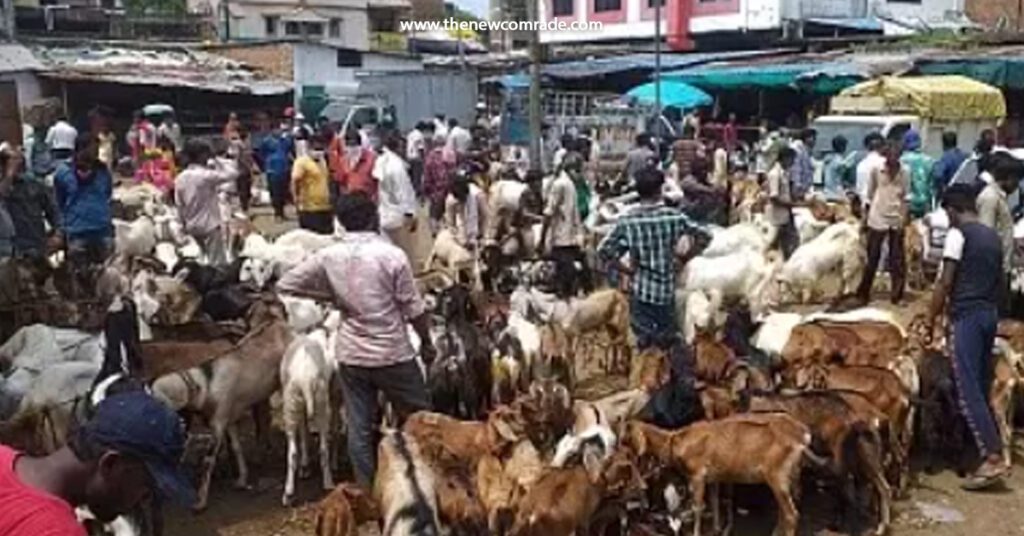
Description: Municipal authorities in Varanasi sealed a decades-old seasonal goat market at Benia/Beni Bagh just days before Eid al-Adha, citing complaints about crowding, sanitation and traffic congestion. Traders said they were abruptly ordered to vacate during the peak period for Eid livestock sales, and alleged that no adequate alternative space was provided.
Impact on Muslims: The sudden shutdown disrupted a key livestock hub largely dependent on Muslim traders and buyers. Many traders reported serious financial losses and accused the administration of using regulatory language to constrain Muslim religious and economic life around Bakrid. Primary sources: City report in The Indian Express on the sealing of the market; commentary and contextualisation in The Wire and allied discussions framing the closure as part of a wider pattern of economic pressure on Muslims around religious festivals.
3. West Bengal BJP government’s enforcement of cattle-slaughter restrictions ahead of Bakrid
Date: Key orders from 13 May 2026; impacts observed through Eid on 28 May 2026
Location: Multiple districts in West Bengal, including Bankura (Punisol village)
Description: After forming government, the BJP administration in West Bengal moved to strictly enforce the West Bengal Animal Slaughter Control Act, 1950, framing it as a neutral animal-protection measure. Police summoned Muslim community representatives in villages such as Punisol and informed them that no cow sacrifice would be permitted for Bakrid, even though the law technically allows slaughter of older or unfit cattle with certification.
Impact on Muslims: Ground reports described widespread fear and confusion in Muslim-majority localities. In many villages, Muslims abandoned cow sacrifice entirely and in some places significantly scaled down qurbani overall. Poor Muslim households lost access to customary distributions of meat, and Hindu and Muslim cattle rearers both reported severe income shocks.
Primary sources: The Wire’s detailed report on Bakrid in Bankura and other districts; analysis piece ‘Bengal BJP’s Slaughter Curbs, a 1958 Ruling and the Contraction of Muslim Sacred Space’; legal and political coverage of related litigation before the Calcutta High Court.
4. Bakrid livestock dispute and pig provocation at Mira Road housing society
Date: 25–26 May 2026
Location: Poonam Estate / Srishti Complex (also reported as Poonam Cluster), Mira Road, Thane district, Maharashtra
Description: In the days leading up to Eid al-Adha, Muslim residents brought goats into a designated area within their housing complex for sacrificial purposes, as they said they had done in previous years. A section of residents objected and local Hindutva organisations including the Vishwa Hindu Parishad and Bajrang Dal mobilised outside the gate, reciting Hanuman Chalisa and demanding removal of the goats. During the escalation, protesters attempted to bring a pig into the society premises as an act widely understood as deliberate religious provocation. Videos showed a police officer carrying the pig while members of the crowd tried to prevent its removal. Separate clashes resulted in injuries to at least two or three Hindutva activists after a blade attack, and police registered cross-cases.
Impact on Muslims: The episode led to removal of dozens of goats from the complex and reinforced an atmosphere in which Muslim residents felt that even long-standing Bakrid practices inside private societies could be challenged or criminalised. The widely circulated images of the pig outside the gate became a symbol of humiliation-oriented politics around Muslim ritual life.
Primary sources: Ground report in The Wire on Hindutva groups arriving with a pig and the lead-up to the confrontation; PTI-based reports in outlets such as The Print and NDTV, and independent coverage in India Today and the Times of India detailing the protests, injuries, police interventions and subsequent restrictions.
5. Restrictions on Eid animal sacrifice inside housing societies in Kalyan
Date: 27–29 May 2026
Location: Multiple residential complexes in Kalyan, Thane district, Maharashtra
Description: Police and municipal authorities in Kalyan imposed a series of restrictions on animal sacrifice inside residential societies during Eid al-Adha, invoking a prior Bombay High Court ruling and citing law-and-order concerns. Residents reported that police presence and barricades greeted them as they returned from Eid prayers, and that they were told to perform qurbani only at authorised facilities rather than in the courtyards or parking areas where sacrifices had long taken place.
Impact on Muslims: Muslim residents interviewed in media reports said they felt that a core religious obligation was being treated as a presumptive offence. Many complained that the limited capacity of authorised slaughter points made it practically impossible to complete sacrifices within the prescribed time, and described the situation with the refrain that ‘sacrificing has become a crime’.
Primary sources: Maktoob Media’s report and social-media summary on Eid sacrifice restrictions in Kalyan; corroborating coverage in Madhyamam, Kashmir Media Service and Muslim Mirror, alongside local Marathi and English-language reportage on police orders in the city.
6. Doordarshan anchor labels Delhi student ‘Pakistani’ for raising CBSE marking grievance
Date: 25–26 May 2026
Location: Online (X/Twitter); anchor and student based in Delhi
Description: After a Class 12 CBSE candidate from Delhi, Vedant, publicly questioned his Physics marks on X, Doordarshan anchor Ashok Shrivastav quote-tweeted the post, misreading the ‘South Asia’ location as a sign that the student was from Pakistan and asking rhetorically whether Pakistanis had also appeared for CBSE examinations. The insinuation was amplified by other right-wing accounts before being widely criticised.
Impact on Muslims: Although the student himself was not Muslim, the incident exemplified the normalisation of ‘Pakistani’ as a communal slur and as shorthand for disloyalty, a trope that is closely entangled with anti-Muslim othering in Indian media discourse. It illustrates how Islamophobic narratives can be reproduced even in ostensibly apolitical contexts such as exam-related complaints.
Primary sources: News report in The Wire on the Doordarshan anchor’s comments and subsequent backlash; parallel coverage by other digital outlets citing the same exchange.
7. UP Chief Minister’s directive restricting Eid namaz in public spaces
Date: Directive reported 21 May 2026 (applicable to Bakrid on 28 May 2026)
Location: Uttar Pradesh (state-wide)
Description: Ahead of Bakrid, Uttar Pradesh Chief Minister Yogi Adityanath reiterated that the government would not permit Eid namaz in public roads or open spaces, directing that prayers be confined to mosques and Eidgahs. Muslim clerics quoted in press reports noted that local administrations were instructed to prevent spillover of prayer gatherings into adjoining streets and to strictly enforce prohibitory orders where necessary.
Impact on Muslims: While framed as a general law-and-order measure, Muslim organisations argued that such directives disproportionately constrained large congregations in densely populated Muslim areas where mosque capacity is limited, and risked criminalising overflow prayer as a public-order offence. The directive reinforced a broader sense that Muslim religious visibility in public space is under mounting administrative pressure. Primary sources: Coverage in The Times of India and allied outlets on the CM’s directive and responses from Muslim clerics; contextual references in Bakrid-related reporting on restrictions in North India.
8. Hate-crime monitoring report on Muslim killings in early 2026
Date: Report released mid-May 2026 (covering January–April 2026)
Location: Multiple states across India
Description: A monitoring initiative cited by Muslim Network TV and The Observer Post released data indicating that at least 13 Muslims, including women and a minor, were killed in hate crimes in the first four months of 2026. The report categorised incidents as mob lynchings, custodial deaths, encounter killings and targeted shootings, often accompanied by communal slurs or accusations related to cattle, alleged ‘love jihad’ or political dissent.
Impact on Muslims: Although the deaths took place before May, the report’s publication in mid-May sharpened awareness among Muslim communities and advocacy groups of the cumulative risk landscape. It also underscored how individual May incidents documented in this dossier are part of a continuing pattern rather than isolated aberrations.
Primary sources: Muslim Network TV article summarising the findings; social-media cards and posts by The Observer Post amplifying the figure of 13 Muslim victims; references in statements by advocacy organisations drawing on the same dataset.
9. Supreme Court hearing on alleged anti-Muslim hate crime in Noida
Date: Ongoing case, with hearing listed for 19 May 2026
Location: Noida, Uttar Pradesh (incident July 2021; proceedings active in May 2026)
Description: In a case concerning a 2021 attack on an elderly Muslim man in Noida who alleged that he was beaten, forced to chant Hindu religious slogans and had his beard cut, the Supreme Court in April 2026 sharply questioned the Uttar Pradesh government and the investigating officer over delays and perceived attempts to dilute the case. The matter was posted for further hearing on 19 May 2026, keeping the issue of accountability for anti-Muslim hate crimes on the national judicial agenda.
Impact on Muslims: The Court’s intervention signalled judicial unease with the handling of at least some hate-crime cases involving Muslim victims. For advocacy groups, the May hearing date provided an opportunity to re-centre the victim’s experience and the broader pattern of attacks that use forced slogans and public humiliation against visibly Muslim men.
Primary sources: Report in The Wire on the Supreme Court’s remarks and scheduling of the May 19 hearing; additional context from earlier coverage of the original Noida incident in national media.
10. APCR and media mapping of attacks on Muslims in Odisha including lynching cases
Date: Cumulative pattern highlighted in January–May 2026; references resurfaced in May 2026 debates
Location: Odisha (Balasore, Sambalpur and other districts)
Description: Rights groups and media outlets continued, in early and mid-2026, to highlight a series of attacks on Muslims in Odisha that form part of the national pattern of anti-Muslim violence. These include the lynching of a Bengali-speaking Muslim migrant worker in Sambalpur, the January 14 lynching of a Muslim youth in Balasore allegedly by ‘cow vigilantes’, and related communal flare-ups. While the lynching incidents themselves predate May, they were repeatedly cited in May 2026 reporting and commentary on the wider climate of Islamophobia and mob violence in eastern India.
Impact on Muslims: For Muslims in Odisha, these cases have become emblematic of their vulnerability in mixed or Hindu-majority localities, especially in contexts involving cattle transport or rumours around beef. Continued references in May 2026 help situate that state’s experience within the broader, pan-Indian trend of communal vigilantism.
Primary sources: Indian Express article on communal incidents and pastor assault in Odisha that lists lynchings of Bengali-speaking Muslims; The Hindu’s report on arrests in the Balasore lynching; The Wire’s in-depth piece on cow-vigilante violence in Balasore.
11. Post-poll street attacks on minorities in North India
Date: Incidents clustered in late May 2026 (reported as a pattern rather than discrete cases)
Location: Multiple locations in North India, including parts of Bihar and Uttar Pradesh
Description: A Ground Zero feature in The Hindu described how, in the wake of post-election triumphalism, street thugs in several North Indian localities felt emboldened to harass and attack minorities. Drawing on detailed interviews with victims such as Mohammad Qasim, the report recounted beatings, shootings and intimidation targeting Muslims who were singled out explicitly because of their names, appearance or perceived political stance.
Impact on Muslims: Though the piece covered a time span that extends beyond May 2026 and revisited earlier attacks, its publication in the election aftermath captured how Muslims perceived the post-poll environment as one of heightened risk. For many, May 2026 was not simply another month, but a continuation of years in which everyday mobility, work and worship had become fraught.
Primary sources: The Hindu’s Ground Zero report ‘A thread of fear and hate: Street thugs attack minorities post-election in North India’, synthesising case studies from multiple towns and villages.
12. Political and media rhetoric framing Muslims as a ‘vote bank’ or security threat in May 2026
Date: Statements and coverage across May 2026
Location: National television and print media; speeches by senior political leaders
Description: Throughout May 2026, several high-profile statements and media commentaries framed Muslims either as a monolithic ‘vote bank’ or as a security question. Examples include televised debates on Operation Sindoor and Pahalgam where critics were accused of ‘appeasing’ Muslims, and columns or talk-show segments warning of ‘Muslim consolidation’. While not violent incidents in themselves, these narratives contribute to an ideological environment in which discrimination and targeted violence become easier to justify.
Impact on Muslims: For Muslims and rights advocates, such rhetoric blurs the line between policy debate and incitement, reinforcing a sense that their citizenship is contingent and perpetually under suspicion. The normalisation of such language in May 2026 was therefore documented alongside physical attacks as part of a broader Islamophobic ecosystem.
Primary sources: Indian Express political coverage on Operation Sindoor and accusations of ‘appeasement’ of a Muslim vote bank; Maktoob and other outlets’ analyses warning that sustained demonisation in mainstream discourse is a precursor to more overt forms of persecution.