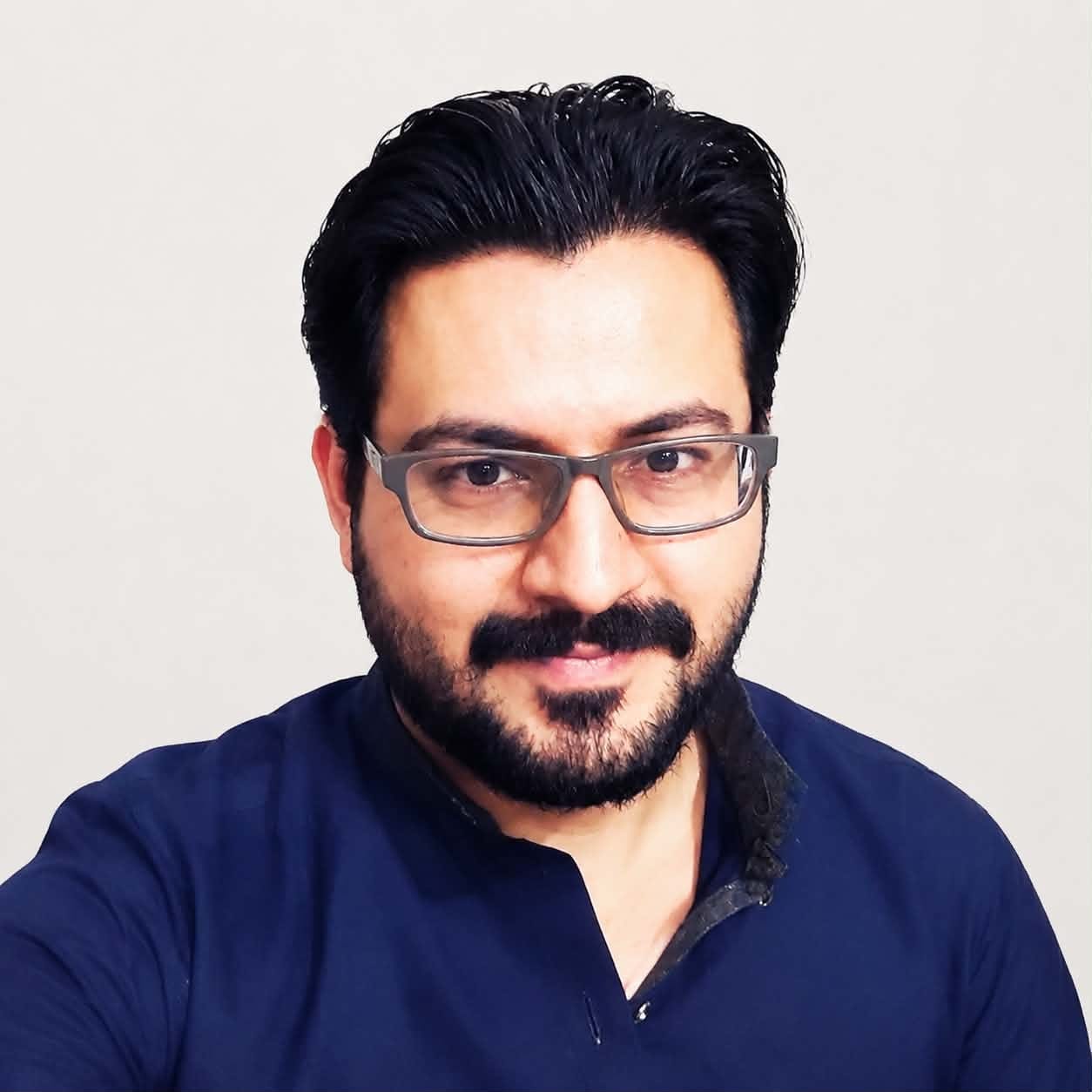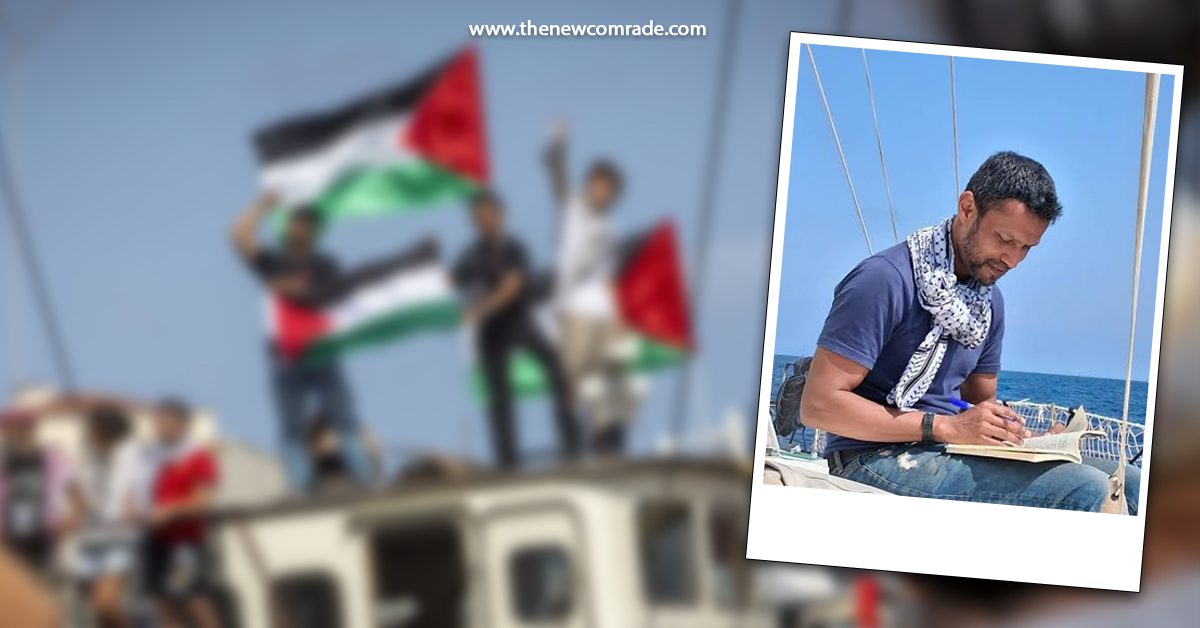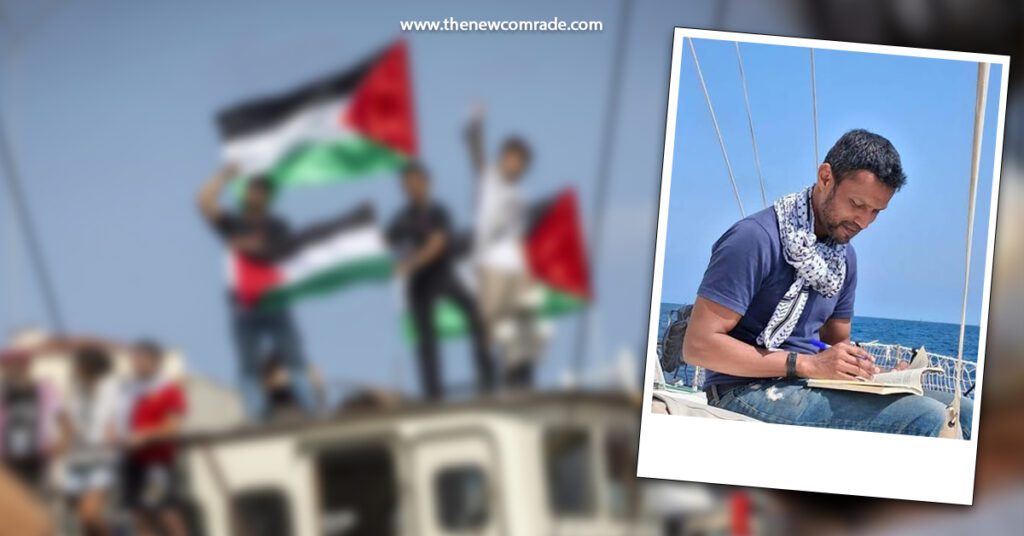
Ko Tinmaung ending up on a boat headed to break the siege on Gaza Strip is a remarkable act of solidarity. As a Rohingya, he knows all about the pain of exile, and yet, when the Global Sumud Flotilla set sail, he was on board. Zionist forces intercepted the mission and detained him. By his own account, what followed was brutal.
The candid interview is more than just a bad few days in custody. Ko talks about how he sees his own history reflected in Gaza Strip. He has little appetite for Myanmar’s opposition politics, and he also reveals what keeps him steadfast.
His own path to Canada was not simple either. He is the child of Rohingya parents who, as a young couple from Myanmar, survived the earliest wave of state-directed mass deportation of Rohingya people in 1978. They took refuge in Bangladesh, where he was born in Chittagong. Ko and his mother moved to Toronto as refugees afterwards.
Q-1) What first pulled you into Rohingya advocacy specifically, rather than broader Myanmar democracy work?
My journey into social justice began during my university days, volunteering at soup kitchens and with homeless communities in Toronto. It later took me to Haiti after the 2010 earthquake, and then to South Africa and Ecuador for humanitarian work.
When I started volunteering for my people in the refugee camps of Bangladesh, it was purely on humanitarian initiatives. In 2017, the genocide of my people happened, exterminating nearly 400 Rohingya villages and forcing nearly 850,000 people into the refugee camps of Cox’s Bazar, Bangladesh. At that time I realised that humanitarian activity alone would not solve an issue of this magnitude and complexity. I had to get involved in human rights activism.
My parents’ villages are among those exterminated in and around Akyab, what is today known as Sittwe. Perhaps that connection explains my personal commitment to advocating for the human rights of my people and oppressed people everywhere.
There is little scope for democracy work outside Myanmar under military dictatorship, even less for diaspora members of a persecuted minority.
The broader democracy effort for Myanmar is led by the National Unity Government (NUG), comprised largely of officials from the NLD, the party in power before the 2021 coup. But this ‘democratic’ group is overwhelmingly led by people who oversaw the genocide of the Rohingya, including Aung San Suu Kyi, who denied the genocide in front of my own eyes in 2019 at the ICJ courthouse in The Hague. There is no moral sense in getting involved. Human rights and humanitarian work for my people is needed more than anything else.
Q-2) You are a Rohingya activist who ended up in Zionist custody over a Gaza-related flotilla. Why is a Rohingya activist involved in this cause?
I joined the flotilla in solidarity with my Palestinian brothers and sisters, a persecuted group going through the worst atrocities the world has ever seen in real time. I have been a community organiser in my locality in East Toronto for the past four years. Having been involved in peaceful protests, vigils, arms embargo campaigns, boycott initiatives, and measures that expose direct government support for genocide, I decided it was time to go physically with my own body and soul on the line to break the siege on Gaza Strip. The flotilla was a perfect choice: a mission with humanitarian supplies destined for Gaza Strip.
Why is a Rohingya activist involved in the fight for Palestine? Because the fight for Palestine is at the core of the fight against all forms of oppression — colonialism, racism, land theft, the exploitation of the poor by the rich, etc.
The Rohingya cause is very connected with the Palestinian cause. Like the Palestinians, the Rohingya are persecuted because of their religion and their ethnicity, and our villages have been exterminated while our people live perpetually in refugee camps. Like the Palestinians, we have apartheid laws in Arakan that severely restrict our access to basic necessities, including food, water, shelter, medication. We are also not allowed to move freely from one village to another.
The Burmese government has historical ties with the Zionist enemy, including military and defence exchanges. Zionist equipment was used in the genocide of the Rohingya. The popular extremist narrative in Myanmar asks to learn from the Zionists on how to deal with the “Muslim issue”.
Q-3) Malaysia has hosted large numbers of Rohingya refugees but also seen real spikes in anti-refugee rhetoric. What is your read on why a Muslim-majority country would turn on Muslim refugees?
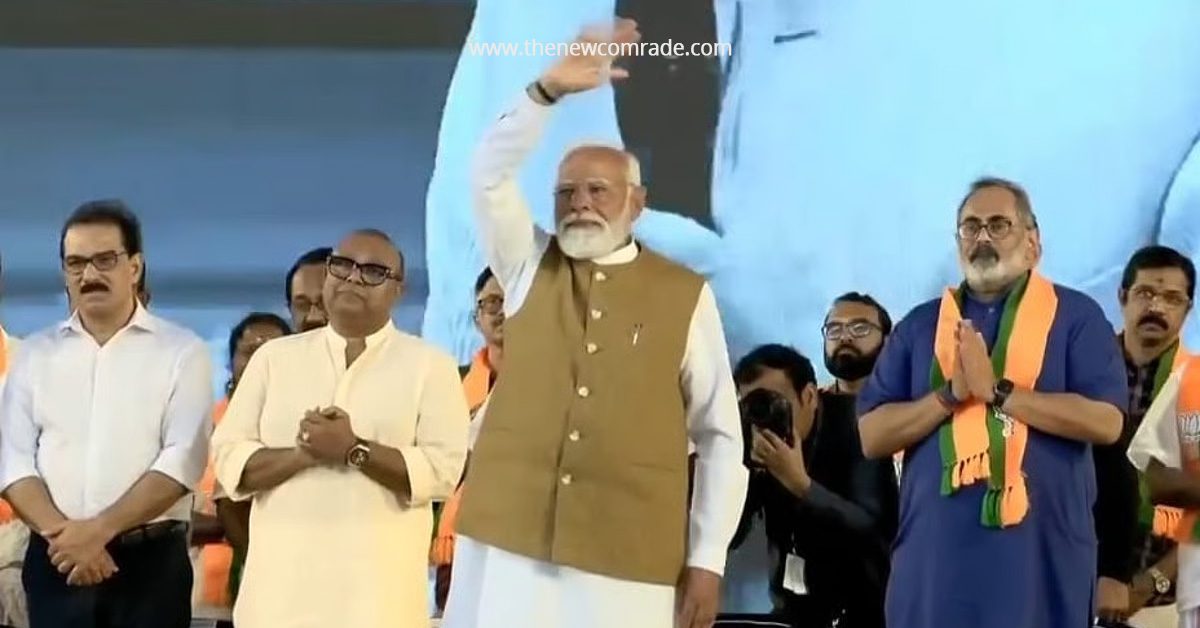
We live in an age of ethno-nationalism, popularised by leaders like Trump, Modi, and Orban — and Malaysia has not been immune to the spike. Several leading Malaysian politicians and bureaucrats have jumped on the ethno-nationalist bandwagon targeting ethnic minorities to gain fame and political power.
It is a shame that a Muslim country, once sympathetic in supporting a persecuted minority, has now become a hotspot for anti-Rohingya sentiment and hate speech.
Not all of Malaysia is anti-Rohingya. Many Malaysians still hold to values of compassion toward the persecuted. But the number propagating hate speech is growing. It is appalling to watch the pursuit of power make people discard those values.
Q-4) What role can the Rohingya diaspora in Canada play in supporting the struggle for justice, and what are the limitations of diaspora activism?
There is not a large Rohingya diaspora in Toronto itself; the larger community is in Kitchener, Ontario, about 100 km to the west.
To answer the question about what a diaspora group could accomplish that people inside Rakhine cannot do, I would say nothing significant. Effective activism happens only where the vast majority of the population lives. You would need to live, walk, eat and sleep with your subject people. Were it not for the same, Gandhi would not have returned to India, nor would Mandela have returned to South Africa from his exile.
The Rohingya diaspora only has the scope of playing a supporting role in the movement inside the refugee camps and villages. It can advocate internationally and provide monetary support.
It is important to note that the case of Palestinian activism is slightly different in this aspect. Palestinian activism has an enormous role to play in North America and Europe, primarily because the latter are the centres of gravity for Zionist actions. The US, EU, UK, Australia are at the core of all economic, social, cultural, military, and political support for the genocide perpetrated by the Zionists. Hence it makes sense for Palestinian activism to play a major role within the North American and European diaspora.
Q-5) Zionist guards mocked you as ‘Ahmed’ and treated your passport as worthless. Did that echo Rohingya statelessness, or was it a different kind of dehumanisation?
In Arakan, the Rohingya are paperless and stateless — not officially recognised, not even by name, in Myanmar’s official narrative.
Having said that, the way Zionists dehumanise is a step ahead. You have a passport, you have an identity, but you are still treated as a second or third-class citizen because of your skin colour and religion. Because I was brown and Muslim, I was constantly called ‘dog’ and other slurs, even though I had a Canadian passport.
My white European comrades in the flotilla were not treated better than me. Some of them sustained broken ribs, broken clavicle, and broken teeth. Many were sexually assaulted.
Therefore, while most racialised individuals were subjected to second- or third-class treatment, many white Europeans were also treated brutally for showing solidarity with the Palestinians.
We could now understand the type of treatment Palestinians receive and the level of dehumanisation they experience.
Q-6) The camps are often portrayed as a humanitarian crisis. What do most outsiders fundamentally misunderstand about life in Cox’s Bazar?
The daily reality is that people in the camps want to go home to Arakan — to move, work, study, and live freely again. No one wants to live off WFP rations, or live a refugee life perpetually.
Returning to Arakan is a political and human rights problem, not a humanitarian one.
Q-7) Do younger Rohingya in the diaspora still identify with Rakhine as home, or has even the language started to slip away?
The vast majority of the younger generation Rohingya see themselves as residents or citizens of the country where they currently live. Many Rohingya parents are mindful of the hurdles with adaptation, assimilation and citizenship in the new countries where they eventually found shelter. It is natural for parents to encourage children to speak English in the West, or Bengali in Bangladesh, or Hindi in India, so as to assimilate into the society around and not be potential targets as outsiders — something that Rohingya parents experienced in their homelands.
As a Rohingya growing up in the diaspora, my parents encouraged me to speak and learn Bengali at first, until we were expelled from Bangladesh. Then they encouraged me to speak and learn Urdu until we could not be Pakistanis any more. I began learning Rohingya properly only as an adult. I still struggle with speaking my mother tongue as I try to grapple why identity and belonging had to be so difficult.
Q-8) Has any Canadian or international body followed up with you since your release, or has the “testimony” stage been the end of it?
The Canadian government did not do any real follow-up. It took weeks of pushing before Foreign Affairs granted us a meeting, two months after our return.
We still have to secure a meeting with the Foreign Affairs Minister, Anita Anand, who has not responded to any of our requests thus far. Unfortunately, this is a sad reality of seeking support from a government that is very Zionist in nature.
One avenue that would be potentially beneficial to follow up would be the ICC. Upon returning from Zionist detention and torture, I was amongst the four participants chosen to go to the ICC and make a preliminary submission of the crimes that we witnessed and experienced first-hand at the hands of the IDF. The court was very receptive to our submissions and there is potential that our testimonies will be utilised to prosecute Zionist war criminals.
Q-9) With the Arakan Army now controlling most of Rakhine, has anything changed for the Rohingya, or is one persecutor just replacing another?
The Arakan Army is as intent on exterminating the Rohingya as the Tatmadaw is. In the 2024 massacre, the Arakan Army wiped out several dozen villages and drove tens of thousands of Rohingya into Bangladesh’s refugee camps, as Human Rights Watch documented.
The Arakan Army’s takeover of most of the province has no significance for the Rohingya in terms of our repatriation. For us to successfully return to our homeland, we need to have assurance of all of our rights and citizenship with an independent authoritative external power such as the UN, the ASEAN, or China monitoring and guaranteeing our safety and security. Chances of this to materialise, however, look bleak..
The Rohingya must build our own infrastructure for self-sustenance and self-governance, though that would not happen overnight.
Q-10) Canada has often positioned itself as a champion of human rights and international law. How does that square with what you experienced, and with Ottawa’s posture on Gaza Strip?
Canada’s rhetoric on human rights and international law runs only as deep as the screen it’s broadcast on.
Canada has a history of genocide of its own — built, in part, on the mass graves of Indigenous children. Now it risks a second: Canada provides political cover, economic support, and weapons components to the Zionist enemy through the US military-industrial complex.
Q-11) What is something about you that would surprise people who only know you from the news right now?
Most people see activists as fanatics ‘looking for trouble.’ But I, like most of my colleagues, am an ordinary person.
I have a family. I have a profession. I have desires of simple pleasures in life like most people do, such as going for a holiday or spending time relaxing and taking things easy.
The only reason why I find myself in the frontlines of activism during my spare time is because I cannot accept that I stand by and do nothing while hundreds of thousands of innocents are killed using the taxpayer money of Canadians.
I want to be able to tell my children and grandchildren that I did something — whatever I could in my limited capacity — to stop this genocide and to stand against injustice.
Q-12) Is there a meal, a place, or a piece of music from home that you go back to when things get heavy?
I meditate, do Zikr, or listen to the Quran when things get heavy. The more I understand its verses, the more I find answers to why Allah allowed injustice to happen.
When I was in prison and consumed by hopelessness, I read something on the walls of the prison written by a fellow Palestinian brother or sister who was in the same cell before me. It was verses of the Qur’an that talked about the purpose of life. The verses answered fundamental questions on why grave injustices and evil prevail despite the good few that stand against them.
I do not know if the Palestinians who wrote those verses is alive or not. But whoever wrote those verses taught me lessons I will remember for the rest of my life.