The world, ever since its creation by Almighty Allah, has been a stage for many changes. While some changes have been slow and gradational, some others have been abrupt and immediate. Some have been of very limited impact and significance, whereas some others have been of long lasting impact. The trail of Muslim community was no different. Beginning with the state of the first Caliphate, the community has seen many twists and turns in history till date, some of which were counted as episodes which advanced their power and civilisation, whereas some which worked to the contrary.
<< … those are the days which we revolve around people…>> Quran
One incident in recent history, which stands out as a very significant and impactful chapter of history, has been the 11.09.2001 attacks in the cities of New York and Washington DC, when 19 persons using four aircrafts struck a blow to the imposed ‘superpower’ of the contemporary world order. That incident was retaliated excessively and the ripples of the same continue to affect the Muslim community and humankind to this day, despite the passage of a quarter century.
“Operation Holy Tuesday”, as it has been alleged to have been called by those who executed, is just one of the many historical incidents that have been quite decisive in the destiny of the Muslim community in the modern era, beginning with the advent of Mohammed Ali over Egypt. While incident itself and many of its aftermath incidents maybe well known to most of those aware of history and current affairs, what is largely unknown to commoners is what lead to do these incidents. While people have been usually lead to viewing the 119 attack as the starting point it is, as per the perpetrators acknowledgement itself, an accumulation of many incidents leading to at least 80 years prior. To make an idea and sense of these happenings, we need to examine the factors, one by one. Let us see to some of them.
World War 1 and Caliphate
Since the advent of the Holy Prophet (SAAWS), Muslims have had a sovereign political leadership that represented them. England and France, in their crusade imperialist objectives, decided to dismantle this political office and its entity. By simultaneous action on several fronts, they dealt a deadly blow to the Ottoman state in the World War 1 and the Sharif Hussain revolt, that followed. Sharif Hussain declared Caliphate and England made sure that he was deposed quickly.
What took its place was many client states based on ‘nations’ that England and France defined, invented and set borders between on the ground. Bereft of sovereignty, dividing people of same faiths, languages, ethnicities, shared histories, tribes, etc. between various rival ‘states’ subservient to them, placed under hereditary client families or some military generals. These states represent the mechanism by which imperialism has continued to govern masses by proxy. As such, ruling elites of these states perform all what the European imperialist colonialist would do upon them. Hence, despite passage of over one century, re-establishment of a unified political entity forms the aspiration of Muslim activists till date. This represents the first reason behind the 11.09.2001 incidents. The mention of this appears in various media productions of the group that committed these attacks, viz. Qaedah.
The Zionist entity
The deepest cut in the body of the Muslim community in the modern history has been the occupation of Palestine and Quds and the establishment of the Zionist entity upon it by uprooting hundreds of thousands of natives. The English even established a buffer state of Jordan, whose mission was to obstruct Bedouins from obstructing. the Zionist entity and client states all around, which were committed to facilitate the non-disruption of the mission of the Zionist entity at any cost. Prior to leaving the place in 1947, the English colonial government was keen to have provided for the Zionist entity all the fundamental needs of a state while having massacred hundreds of thousands of natives and their supporters, throughout the 1930s and 1940s, who resisted them.
The partition of Palestine by the UN in 1947 was rejected by both the Zionist settlers and the natives. What followed was that the Zionist settlers, with complete military provisions by the English, waged a war to establish their entity, by forcing an exodus of hundreds of thousands of natives and massacring several thousands. The Arab armies were ill provided by the client states. Volunteers who joined ranks to fight the Zionist gangs were forced to withdraw and then haunted by the client regimes. In the end of 1948 war, the Zionist entity was established over a territory beyond even what was drawn by the 1947 UN partition plan. Millions were pushed into refugee camps in the surrounding states. The Zionist entity kept making skirmishes inside the armistice line, killing any attempts by the Palestinians to fight back. On the other hand, Palestine and Quds became simultaneously a rhetoric bogey for the surrounding states’ ruling classes, as well as a cause to be defeated. So, Jordan annexed the West Bank portion of the Palestinian state. Egypt, after tolerating for some time, occupied the Gaza strip part of the Palestinian state, sending its government to exile. As soon as the leaders of this government passed away, the client regimes urgently created a Palestinian Liberation Organisation (PLO), with a charter emptied of Islam, supposedly to represent Palestine. While these client states would have an iron fist in dealing with their own people, they progressively ceded territories to the Zionist entity and lose to them. Egypt was defeated in the 1956 war fought jointly by the armies of England France and the Zionist entity. The whole of Sinai peninsula and Suez canal were occupied.

In the 1967 war, Zionists simultaneously defeated all the surrounding states and occupied the whole of remaining portion of Palestine and even the strategically high and naturally fortified Golan region of Syria. The Holy Aqsa mosque complex of Quds came directly into the hands of the Zionists with the Jordanian army placing a meagre 5000 troops to defend Holy Quds. Within months there were attempts to burn down the Aqsa complex. Soon thereafter, in 1970, there was also a massive crackdown of Palestinian fighters in Jordan in what came to be known as the ‘Black September’. In 1973, a war was staged by the Egyptian regime whereby they boasted of regaining Sinai peninsula, but then made extensive security arrangements, with the Zionists, for the whole area, dividing it into various zones.
In 1982, the Zionist entity invaded Lebanon and held it for three years, committing various massacres at the time. On October 6th, 1987 began an uprising (intifada) of Palestinians themselves. Beginning with a shoot-out in the Shujaiyah area of Gaza city, followed by demonstrations and clashes outside Gaza Islamic university, this intifada lasted for six years and was suppressed by two major external events, viz., Saddam Hussein’s invasion of Kuwait and, secondly, start of talks between Fatah group and the Zionist entity – not to mention, the lack of military support by the surrounding client states. Then came a phase of attempts to create a Palestinian state for the next couple of years in the air of the dramatic Accords signed by the Fatah with the Zionist entity, as well as the establishment of diplomatic relations between Jordan and the Zionist entity. The promised state never came, and in 2000 there was also an intrusive entry of a Zionist former General, viz. Ariel Sharon, into the Aqsa complex with a huge retinue of Zionist troops triggering the second intifada, again accompanied by many killings, suppressions, hostage taking, etc. Massive public demonstrations and campaigns went futile in face of the iron fist of the client regimes and their control mechanisms. In the meantime, the client states, contrary to their rhetoric, began gradually exposing their relations with the Zionist entity. The son-in-law of Egyptian dictator and ultimate rhetoric of Pan-Arab glory Gamal Abd-en-Naser, Ashraf Marwan, leaked out many secrets of Egyptian army to the Zionists and those became vital in the 1967 defeat. Anwar el Sadat normalised relations with the Zionist entity in 1974, with the Camp David Agreement. Initially Egypt was ostracised by other Arab states as a result of these Accords, to be embraced soon later. The rise of the “religious Zionists ” was coordinated after those agreements. Formally, Egypt moved from the Soviet Union Bloc to the American bloc. Husein bin Talal of Jordan normalised relations in 1994. PLO signed accords with the Zionist entity in 1993. Fahad bin Abdulaziz of Saudi Arabia put forth a proposal, in 1996, that all Arab states would normalise relations with the Zionist entity, if they withdrew to pre-1967 war lines. After the liberation of Kuwait from Saddam Husein, Zionists became free to deal with Arab Gulf states. While these states had all got ” Israel boycott office ” within their Foreign Ministries, prior to this point of time, Zionists would circumvent this formal boycott by means of shell companies in Greece and Greek Cyprus. Singapore, European and American capitals also formed havens where such dealings could be done. Oman and Qatar established contact offices with the Zionist entity. Turkey had diplomatic relations from the beginning.
So, on one hand the Zionist rogue practices continued against common public, while on the other, the client states were embracing them more by the day. As such, ” Palestine ” became a rallying point for peoples around the world – across faiths – symbolic or seeking justice in various arenas. For the revolutionary groups around Muslim world – from Indonesia to Morocco – Quds formed an integral symbol in their media productions and narratives. It was common in the publications of these groups to commence with a picture of the Aqsa complex with the caption ” we began from here and we shall confluence here “.
Client states
Beginning with the advent of Muhammad Ali. As an autonomous governor of Egypt from 1805, the Freemasons were given a free hand in his territory. He established close relations with England and France space canal project was awarded to French companies while the enemy dangers were looming over eastern Mediterranean. Enabling the ease of England and France to put their sights upon the Holy cities of Makkah and Medinah. Soon, thereafter, there was a military campaign dispatched by Muhammad Ali to the Arabian peninsula.

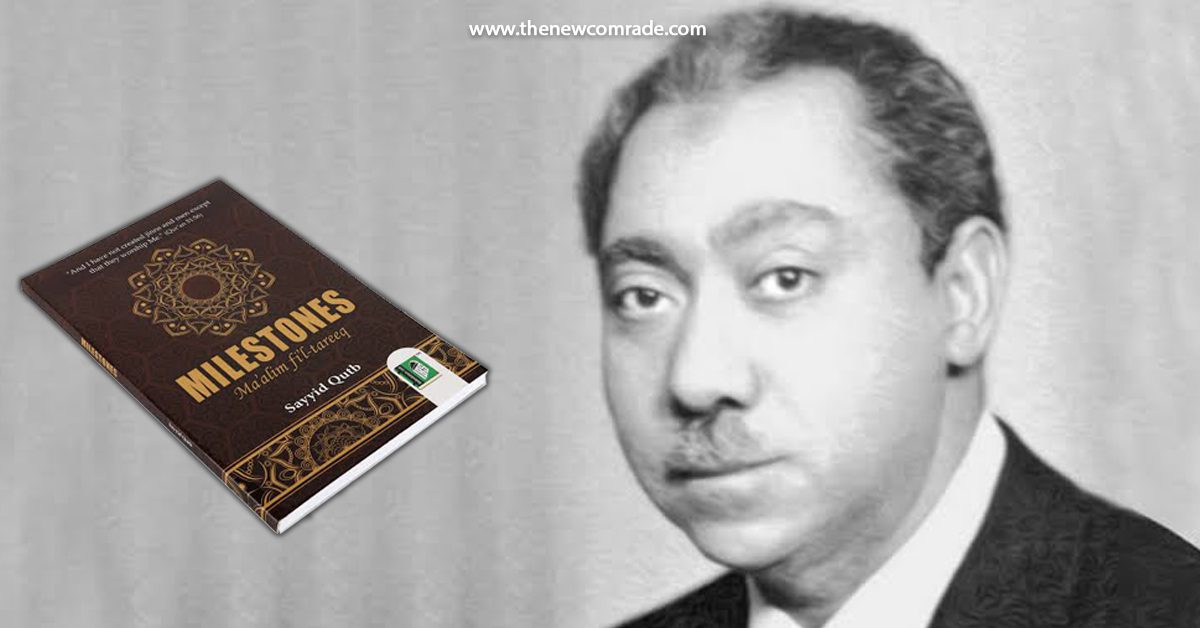
It did not take much time for the English officials to establish direct contact with the regional chieftains and plot for rebellion and secession in the Ottoman state, by the way of British Consul at Jeddah, established in 1838. There were initial such attempts, although feeble, in 1840s itself, long before what materialised decades later, after the World War 1. Establishment of client states has been mentioned earlier in this article. The role played by the client states vis a vis Muslim communities deserves to be sampled and analysed in this context. The primary allegiance of regimes in these states lay with their colonial masters. Their source of power lay not in the population within their geography, rather in the sanction and mandate from their colonial powers. Secondly, while Islamic values and Islamic jurisprudence served as the guiding principles of political work until then, these client states were placed to negate the same, and to chop off the ties of their population with Islam. Further, the introduction of nationalisms created divisions and feuds amongst Muslims itself, which were totally alien to them and their beliefs. Towards these ends, these regimes hardly hesitated to go to any extent. States formed in this series have each got their own cases of haunting own people and committing atrocities and bloodshed. For instance, Indonesia, the state of over seventeen thousand islands and the one with largest Muslim population currently. Sukarno’s rule over the place was established after bloody wars in the whole of 1950s, in West Java rural, Aceh, and South Sulawesi. South Asia, another geography with a large Muslim population, was brought to a situation, in 1947, where the majority of its Muslims were made hostage to a very hostile Hindu-dominated establishment and the remaining ones placed under an exploitative military-feudal nexus. Kashmir became a place where this situation played its worst. In Central Asia, Turkestan regions were placed under oppressive colonial control of either Russian army or Chinese army. Iran was placed under a dynasty that was provided exclusive training by the CIA and later transitioned to a set-up with a bloody sectarian project. Iraq was initially placed under a son of Sharif Husein and attempts to reclaim the place, in 1942, under Rashid Aali al Keilani was curbed by England, despite them being in the height of the World War 2. Later the US would promote many coups and counter-coups in the background – each bringing with it a trail of bloodshed. Saddam Husein, who waged wars in the 1980s would use Chemical and biological weapons against own people. Syria was placed under a son of Sharif Husein, who was then dislodged by the French. This was followed by a republic, which was not allowed to stand for long, by instigating a series of military coups culminating in bloodthirsty Nuseiri-Druze sectarian military regime, which innovated and excelled in methods of killing and massacring whole cities, while being fully tolerant of the Zionist entity’s occasional attacks. A “state of Emergency” was put in place for over six decades. Turkey and Albania made Muslim religious practice itself sort of criminal activity. Egypt was initially placed under a dynasty that would curb and torture any actions aimed at supporting Palestine. When the people responded with massive unrest in January 1952, ‘Free officers’ stepped in to topple the government and change the monarch. ‘Free officers’ was then seen to be infiltrated by figures well connected with the imperialists, headed by Gamal Abd-en-Naser. The prison torture specialists of the defeated German Nazi regime were sent to Egypt to devise for them extortion methods to be followed by the new military regime. The same ruling junta stays till date, despite a short interruption occurring in 2011-13. Tens of thousands of Egyptians were imprisoned for over 2 decades. Leading public figures, like Sayed Qutb – the sole civilian member of the transitional military council of 1952, were executed. Egypt has had less than five years of its time during the whole of monarchy and dictatorial era in normal life, outside “state of emergency”. Libya was placed initially under a dynasty that hosted the largest American military base, followed by Muammar Qaddafi’s brutal military rule. Algerians paid heavily for their freedom from France, with a toll of over one and half million people. What was placed upon them was again another proxy of France that would subject them to a suppressive military rule. Arabian peninsula and the sacred cities were placed under extremely intolerant dynasties that would give precedence to economic and military interests of the US over anything else. The regional focal point of CIA, Kamal Adham was made the first head of a formal Saudi intelligence agency and would be seen coordinating with Egyptian regime and other regimes. Occasionally, these client states would also stage wars, like the one in Yemen in the 1960s between Egypt and Saudi Arabia, which saw a toll of over a hundred thousand. There were also wars fought in Dhofar, Ibri, Bureimi, etc., in Sudan, in Somalia, Nigeria, Chad, etc. Kurds remained divided by the various state borders defined in West Asia by England and France and remained curbed and massacred by Turkey, Iran, Iraq, etc. This depicts the general political situation on the eve of the 11.09.2001 events, connected with the states.
Muslim Brethren to the Services Bureau
Various groups and organisations were founded by the people of the various states, for the purpose of bringing about just order in their respective places. However, the very mention of religious association was to become justification for their suppression, often violently. This holds true for places as remote as Moroland (South Philippines), Egypt, Syria, Algeria, etc. etc. The case of Muslim Brethren (Ikhwan al Muslimun, MB) in West Asia deserves special focus in the context of the 11.09.2001 events.
The MB had been working since its inception against the imperialism of Britain and for the Zionist dagger that they were placing in Palestine. They had conducted campaigns for Suez canal nationalisation. During the 1948 war, they had raised volunteers, including their first rank leaders of various states, to fight against the Zionist gangs. The King of Egypt ordered massive arrests of MB members upon their return and even assassinated their organisation head. Massive unrest followed. Thereafter MB facilitated a Free Officers group in the army which toppled the government and forced a change of the monarch. What gradually followed was a new model – an even more repressive military rule. They were banned in Egypt. Over four thousand members were arrested in 1954 and then again over eighteen thousand in 1965. Most of them were released only after the death of Naser. In the meantime there were infiltrations into their ranks in Egypt, which eventually succeeded in disbanding their volunteer core (“Nidam al khaas”), in introducing a pacifist ideology within their ranks, etc. In the 1960s, their cadre outside Egypt had established chain of bases in Jordan to attack Zionist entity, in which even former Ministers of certain states like Sudan and Yemen would participate. Those bases had to be disbanded with the events of ‘Black September’ in 1970 which was a PLO – Jordan war, aided by other states, like Pakistan. In the 1960s and 1970s they were also banned in other states like Syria and Iraq. Their suppression in Syria was particularly excessive and bloody. In 1982 even a whole city, Hama, was besieged and massacred. Iraq also witnessed suppression though not as bloody as Syria. Their exiles were involved in setting up academic institutions, developmental policies, financial institutions, etc. In various other states in the region where they still were given the space to function. They were also instrumental in setting mosques and religious service centres and organisations in Europe and North America. Following the Camp David accords, in Egypt, the MB was involving itself into electoral presence to the Peoples Council (Majles esh-Shaab) and to winning over Labour Unions (called there as ‘ Guilds ‘, ‘ Naqabat ‘) and Student Unions. After they were set free in Egypt, one leader who stands out in the context of this article is Kamal-ed-din Sananiri, who travelled to Afghanistan in beginning of the USSR occupation and coordinated with the various tribes and factions to unify for liberating from them. Abdullah Azzam is another such figure, from Palestine, who had previously been in the military bases in Jordan, mentioned previously and had then been a university professor in Makkah. Having met and discussed plans in Makkah en route to his native Egypt, after his trip to Afghanistan, Kamal was supposed to return the next year and together go to Afghanistan for aiding the anti-USSR struggle there. However, there he was arrested, in the aftermath of assassination of Anwar el Sadat, and tortured to death by the Egyptian ‘Security forces’ in 1981. The assassination itself was a fallout of the Camp David accords Sadat signed with the Zionist entity, undertaken by a lesser known group, which was initially had a heroic public reception. Abdullah Azzam then undertook the mission himself.

Abdullah Azzam saw in Afghanistan an opportunity to train the community for the “ultimate” battle they expected with the Zionist entity and to establish a pilot Islamic state. He established the Services Bureau (Maktab el Khadamat) in Peshawar to support the ongoing liberation war in Afghanistan and also to channel volunteers from Muslim world wishing to serve in the war. His was one of the couple of such bureaus, such as the ones led by ibn al Munay’, Kuwait Red Crescent , etc. Businessman Wa’el Hamzah Julaidan of Medinah was one prominent figure who supported him in that bureau. Dr Aymen el Dawahiri, who had been arrested in Egypt during the unrest after Camp David agreement, joined as a medical officer. Osamah Mohammed of the entrepreneur Bin Laden family of Saudi Arabia also joined this bureau and its activities. The client regimes were then, as part of the mandate of the post-Camp David phase, keen to let loose a phase of superficial religiosity in order to set stage for the next phase of suppression. By the time, the Iranian regime had been dislodged by Ayatollah Ruhollah Khomeini-led revolution in 1979, which culminated with Khomeini flying in from exile in Paris to rule in Tehran. Also, the twelve day long Makkah Holy mosque capture in 1980 by a group disgruntled by westernisation being imposed by the regime and expecting fulfilment of Messianic predictions. Also, Iraq – Iran war raged for 8 years, viz. 1980 – 88. The regimes, hence, provided liberty to those who were going to volunteer there, to raise funds for the place, etc. Over twelve thousand volunteers are estimated to have taken part in the war, as mentioned by Thomas Hegghammer. They came to be known as the ” Arab Afghans “. The USSR army formally withdrew from Afghanistan in 1989. However, the intelligence agencies of various regimes had planted factionalism in the Afghan fighters. Leaders like Ahmed Shah Masoud, Yunus Khalis, Abdulhaque Humayun Arsala, etc. were in direct contact with the US authorities. With the assassination of Pakistan’s President Zia-ul-Haq in 1988, and rise of Mirza Aslam Beg as the Army Chief CIA was given open access to the Afghan leaders. The 1989 Battle of Jalalabad ended in failure for the Afghan fighters, with the pro-USSR government of Najibullah gaining upper hand. This battle marks the beginning of what was called ” Qaedah al Ansar “, meaning ‘Base of Helpers’, with Osamah bin Laden aiming to face off the “furthest enemy”, i.e. The US, instead of the “nearer enemy”, i.e. The client regimes. Abdullah Azzam had on the other hand aimed at seeing an Islamic government established in Afghanistan. Hence, Osamah saw that objective to be lacking for the cause of Palestine liberation. This name has been narrated by the Libyan leader Abdelhakim Belhaj in an interview, from hearsay. There are other sources which alternatively name it as ” Qaedah al Jehad ” (effectively meaning ‘Base of liberation’). Due to the rivalries of the various intelligence agencies within the Afghan fighters, it took three further years after the departure of the USSR army for them to enter Kabul. Soon, civil war too ensued. Abdullah Azzam was assassinated by one of the intelligence agencies. Arab Afghans largely left Afghanistan with the looming of civil war.
Kuwait invasion to the Square One

In the meantime, Saddam Husein invaded Kuwait over oil revenue disputes, after getting green signal from the US, which they reversed once the invasion was done, in four days. This presented another shock – US, British and French troops were called in to Saudi Arabia and other Arab Gulf states, disregarding alternative offers from various parts of Muslim world. This represented breaching of a red line for many throughout the Muslim world. Previous, religious rulings (fatwas) prohibiting seeking help of imperialist armies were disregarded and newer rulings were issued, first by the Azhar university rector and then the Grand Mufti of Saudi Arabia. Saudi Arabian society experienced a stage of brewing discontent. Opposition to the hosting of Western armies spread about in private and tribal gatherings. Talks by Salman al Awdah and Safar al Hawali could not be countered by the official narratives, leading the state to create a virulently hair-splitting apostasising and extremely statist sect which would be called “Jami” or “Madkhali”, after its pioneers Mohammed Aman Jami and Rabi’ Hadi Madkhali, who originally held in relation to the Makkah Holy Mosque capturing incident in 1979, were let out for future use as leverage in this manner. Similarly, in the following years the US would be embarking upon extensive academic exercises to plant and promote sorts of heterodoxies within Muslim community, globally. Even though, Kuwait was liberated after a couple of months, the western armies stayed on. On the other hand, Iraq was subjected to a crippling economic embargo, which wrecked havoc on the people there. In addition, people of Yemeni nationality were deported in massive numbers from Saudi Arabia simply because their dictator sided with Saddam Husein. While Palestinians lived in huge numbers in Kuwait prior to the occupation, following Yaser Arafat’s adoption pro-Saddam stance, Palestinians were almost shut off from Kuwait after liberation. These were very disturbing sights for many people. Sudan witnessed a coup backed by the political scientist Hasan al Turabi, bringing another military general who infiltrated its ranks, viz. Omar al Bashir, to power. Osamah was forced out of Saudi Arabia in 1992 and he shifted to Khartoum, facilitated by Turabi. In Sudan he would contribute generously for various infrastructural projects like roads and airports. During his time in Sudan his former associates would seek his financial help in monitoring and, if necessary, acting against American interests in and around the Horn of Africa. Around this time, a setback that the American troops had to encounter was the Battle of Mogadishu in 1993, which, like the Beirut American barracks attack of 1983, triggered their withdrawal and exposed that Americans would leave a mission if the costs were high. This was a lesson picked up by the Qaedah leadership, as mentioned by Osamah in the 1998 interview given to ABC News. Also, another significant incident in that period was the 1995 shooting of Egyptian dictator Hosni Mubarak’s convoy in Addis Ababa, where he had arrived for Organisation of African Unity (OAU) summit. Though no casualties resulted, Sudan came under immense Saudi Arabian pressure to eject out Osamah and associates, which forced him to leave the place in 1996. His next destination was again Afghanistan. Where he turned to planning his warfare with the US. In the meantime, the Taliban group had formed and in an Afghanistan tired of civil war between various warlords, managed to quickly secure control of majority of Afghan territory.
:max_bytes(150000):strip_icc():format(webp)/mogadishu-59f3155403f4020010316a8c.jpg)
In this time, the discontent mentioned earlier, in Saudi Arabia, had given way to a written public petition calling for reforms in governance. Met with rejection, the figures voicing those concerns, and thousands of commoners supporting the same, were either imprisoned or forced into exile, like Saad al Faqih and Mohammed al Mas’ari who had leave for London. Osamah had also deputed Khaled al Fawwaz to London to form “Committee of Advice and Reform” in 1994 for the purpose of advocacy for political reforms in Saudi Arabia. Osamah was stripped of his Saudi Arabian citizenship. Intolerance was so intense that even an interview with Saad al Faqih could result in forcing the closure of BBC Arabic TV station in 1996. Qaedah did execute few attacks in Saudi Arabia targeting American military personnel from 1995, like in Riyadh and Khobar. After the developments in Sudan, however, Qaedah operatives conducted bomb attacks upon American embassies in Nairobi and Daressalam, which they claimed targeted the hub of CIA activities in East Africa. The reaction was extreme – even Khaled al Fawwaz and a similar team that had a Egypt-specific office were all arrested to be extradited to the US, despite no reasonable links.
At this stage, the first free elections were conducted in Algeria in 1992 and the Islamic Salvation Front (FIS) was voted with huge majority. However, the Algerian army executed a massive crackdown of FIS and its supporters. Amnesty International, in 1993, records a number of over 12000. In this, the Algerian army was supported by the French government and the other major Arab states. ‘State of Emergency’ was imposed and many false flag operations were conducted by the army to kill civilians and discredit FIS. This was a lesson that Muslim states would not be allowed to have a normal politics, democratic practice or civil liberties by the American-led world order. Though not as bloody, Necmettin Erbekan was blocked by the Turkish army to come take office, despite electoral mandate multiple times. Minimal reasonable steps to change explicitly anti-Islamic laws would be harshly resisted. In UAE, few ministers handling portfolios of Law and Education were witch-hunted and forced out for not being ‘secular’, in the 1980s. In Jordan, ministers belonging to the MB were forced to fail by the state machinery.
Also, other developments in this period were flaring up of Eritrean repression of Muslims, Moro – Philippine strife, outbreak of violent struggle and repression in Kashmir and slow betrayal of Pakistan army, Babri mosque demolition campaign and rounds of state-sponsored anti-Muslim violence to bring extreme xenophobes to power in India, Bosnian genocide, Chechen massacres, Kosovan war of independence, etc. Volunteers from other countries took part in these arenas. Even members of UN peacekeeping forces were seen to have acted against the Bosnians and this was an instance that drew home the lesson that UN’s declared ideals did not cover Muslims. Bosnian leaders were forced to sit with war criminals and accept a humiliating Dayton agreement by the US. Chechnya saw Iranian coordination and support for Russia to breakup the fighters there. Fathi Shiqaqi was assassinated by Mossad in Malta and Iranian hand was widely alleged in the same. The situations of Rohingyans, Uyghurs, Pattani Malays, Ceylonese Moros, etc. were worsening progressively. Even the Turkestani republics that were recently been made independent from USSR were placed under excessively repressive regimes that bore no major difference from the USSR era. Several Egyptian opposition figures were kidnapped from various countries and sent to Egypt to face torture and military trial. These incidents manifested international coordination in the matter of imperialist goals and how claims of rule of law and fairness boasted by Western countries were exclusive to some sets of people. Fuad Allam, the famed torture specialist of Egypt would be instrumental in shaping security agencies in UAE and other Arab Gulf states. Nasrin Abdullah, former spouse of Abu Hafs al Mauritani (Mahfoud Wald al Walid), mentions in an interview about Mauritanian security official questioning them in Abu Dhabi airport in 1997. In the late 1990s Arab Gulf states embarked on a plan to “dry up funding sources” for religious activities based on a plan drawn up by Turki al Faisal – the then head of Saudi Arabian intelligence – targeting philanthropists and criminalising charities. Many leading business houses were forced to close or change hands. While the US President William Clinton was impeached in a sex scandal, he found killing over 1400 Iraqis by means of missile attacks and air strikes as convenient distraction. Prior to that when the scandal surfaced, he would conduct missile strikes on a major pharmaceutical factory in Khartoum and upon coordinates of Osamah in Afghanistan, obtained from his satellite phone served by the UAE company ‘Thuraya’. Worthy of mentioning here would the “Popular Arab and Muslim conferences” conducted in Khartoum by Turabi in 1991, 1993 and 1995, as an attempt for popular coordination, in contrast to the states’ and state-sponsored ones witnessed until then. The participants include most of the living stalwarts of Muslim resurgence and struggles at the time, like Osamah, Aymen el Dawahiri, Rashid Ghannushi, Palestinian leaders Yaser Arafat, Khaled Mishaal, Mounir Shafiq, etc., Gulbuddin Hekmatyar, Abbasi Madani of FIS, leaders of MB of Egypt, Jordan, Iraq, etc. The process could not move beyond 1995. In addition, the blind Egyptian leader in New Jersey Omar Abdurrahman, who was a founder of the Egyptian “Muslim Group” (Gamaah el Islamiyah) and a religious scholar and cleric, was falsely framed in a false-flag operation of 1993 to bomb down World Trade Centre (WTC) in New York and convicted in a sham trial. He was then also charged of ‘guiding conspiracy’ to bomb UN headquarters, FBI Headquarters, major bridges and tunnels, kill Hosni Mubarak during his American visit, etc.! Certain messages attributed to him claimed to him being placed in solitary confinement and subjected to torture.
The portion so far provides the broad circumstances the backdrop of which formed the crucible for the article subject. These concerns had been reflected in Osamah’s interview to the CNN in 1997, mentioning injustice, double standards and tyranny of the US. A formal declaration invoking public to fight the US in Arabian peninsula was made in 1996, through a statement released to the London-based pan-Arab Quds al Arabi daily. In 1998, he declared founding of an expanded international “front”.
Planning and execution
The initial concept of the 11.09.2001 attacks came from Khaled Sheikh Mohammed, an American educated, Kuwaiti Engineer and one of the leaders of Qaedah in 1996 when Osamah had recently arrived from Sudan. Again, in 1999, he put forth this idea to Abu Hafs al Masri (Mohammed Aatef) who forwarded this matter again to Osamah. This time, it was decided to go ahead with. Aatef was tasked with arranging the necessary religious legal rulings (fatwas), which he readied by couple of months. Incidentally by that time, there were methodical research articles by couple of leading religious scholars which concluded that offensive upon US was valid, though it may not be executed due to the damage entailing their possible retaliation being greater. An example was that of Sheikh Homoud al ‘Oqla (“al Shoeibi’). However, the Mufti of Qaedah Abu Hafs al Mauritani had disagreed with the decision and separated from the group. The targets were discussed and debated. It was squared upon three, viz. the symbol of US’ economic power – WTC, the hub of US’ military power – Pentagon, the symbol of US’ political power – Capitol building, which was understood as being more symbolic of political power than White House. George W Bush was then recently elected as President. That was the first time when Muslims in the US voted almost en bloc, in order to prevent Albert Gore’s presidency for two reasons – His Vice President running mate being a Zionist Joseph Lieberman and secondly as a response to Clinton’s shadow wars on Islam and Muslims since 1992, after the fall of USSR. Bush, on the other hand, was assessed to be ignorant and more explicit, acting with a Texan cowboy mindset. So, such an operation was to end the period of the subtle shadow wars and square in to direct face-off. Nasrin Abdullah mentions in her interview about Osamah’s wife being given the choice by Osamah to leave Afghanistan to her native Syria to look after her ailing mother, as “an upcoming operation would change the world”. 20 highly motivated people were to be selected, divided to four groups of five people each. 15 out of the 20 turned out to be from Saudi Arabia, 2 from UAE and one each from Egypt and Lebanon. One person of the 20, viz. Ramzi bin Shibh, of Yemen, had his US visa application rejected and hence the operation had to go forth with 19 people. They were initially trained by the Jordanian ” Abu Turab “, a son-in-law of Dawahiri (real name not known). Mohammed Ata of Egypt led the aircraft to strike the North Tower of WTC, Marwan al Sheikh of UAE led the one to strike the South Tower, Ziyad Jarrah of Lebanon led the one to strike Capitol building and Hani Hanjour of Saudi Arabia led the one to strike Pentagon. They completed courses from flying schools. They were made to stay for a period in Karachi and Indonesia. Selecting simultaneous aircrafts suitable to turn to the targets was challenging. In the final run-up to the events, Dawahiri’s three staged instructions were distributed to the participants, which were a blend of ritual and moral. Those instructions were condensed from his different works, viz. Ma’rakat al aaraa (‘war of ideas’), Fursan tahta raayat an-nabi (‘knights under the banner of the Prophet’), etc.
The first flight hit the North tower at 8.45 am, second one hit the South tower after a quarter hour, third one hit the Pentagon after a further half hour. The fourth one headed for Capitol building was to be another half hour was overpowered by some passengers who had known about the other crashes by then and the aircraft crashed elsewhere. By 9.45 am, airspace in the US was shutdown by the FAA. The final wills of the participants was released by the “Sahab media” of the Qaedah, which was run by the American Adam Yahya Pearlman.

As expected, Bush soon declared his “global war on terror” and thus began the phase of history that continues till date, that has taken huge tolls. Air travel too became very different ever since. Statecraft became quite different, with an era of Orwellian ‘perpetual wars’ – this warfare being conducted aggressively on various different planes and areas of life. This remains the first enemy attack upon the US territory proper after Pearl Harbour attack during the World War 2. Many people hesitate to acknowledge the reality of these events and instead take to the narratives created by some leftists, wary of crediting others with anything in anti-imperialist struggle, that Muslim groups generally and Liberationist (jehadi) groups in particular are tools and puppets of imperialists. Some others tout the claim that we is an insider job and even some people even consider it sort of extraterrestrial activity, some of which were documented in a 2004 article of ABC news. The operation succeeded in the way it sought primarily, the lines of friends and foes were drawn clearly. Some of the Qaedah leaders were killed in subsequent attacks, some were captured and incarcerated in Guantanamo bay Island, where no laws were applicable. Osamah was killed in 2011 and Dawahiri in 2022. Quds still remains a far target.