When a court issues a remanding order, it does not merely restrict motion; by the way the system works in India, it transforms the legal state into an administrative machine that strips citizens of their basic humanity long before a verdict is reached. Under the shield of judicial procedure, these directives weaponise medical neglect and bureaucratic cruelty, quietly reducing constitutional guarantees, like the right to life, health, and dignity, to empty promises on paper.
What is framed as lawful pre-trial custody functions, in practice, as a slow, institutionalised execution chamber for the sick and vulnerable. By denying healthcare and choking off medical bails, the judicial framework actively colludes in the extrajudicial destruction of human lives under the guise of due process. To call this mere detention is a travesty; it is state-sanctioned violence hidden behind the polished veneer of legal authority.
Across India’s correctional facilities, a grim pattern continues to unfold: undertrials and convicts discriminatorily detained under draconian anti-terror laws, most notably the Unlawful Activities (Prevention) Act (UAPA), are slowly killed behind bars or converted to such a condition that they die shortly after release. Long years of pre-trial detention, denied medical bails, and delayed healthcare turn incarceration into a de facto execution before verdict.
A String of Tragic Cases
The recent death of Yasar Arafath has brought this crisis back into sharp focus in Kerala. Arafath, a 37-year-old accused of assisting suspects in the Sreenivasan murder case of Palakkad, was held in judicial custody at the high-security Central Prison of Viyyur by the NIA Court of Kochi. Suffering from severe heart complications, he was shifted first to Thrissur Medical College and later to Thiruvananthapuram Medical College. He died on August 20 following surgery, despite earlier pleas for medical bail that were left unanswered.
Arafath is not the only casualty in that single case. In January 2023, another co-accused, Abdul Nisar, died while in judicial custody.
A survey of high-profile UAPA incarcerations across the country reveals a long, troubling list of similar outcomes:
Muhammed Amin (27): Arrested in March 2021 by the NIA in an alleged “ISIS Kerala module” case, the Malappuram district native was held at Delhi’s Mandoli Jail. He passed away in October 2022 after suffering severe headaches and a brain hemorrhage.
Abdul Khader (62): An undertrial held for 17 years in the Mangaluru blast case, Khader died at the Parappana Agrahara Central Prison in June 2026. Suffering from severe diabetes, he had been reduced to using a wheelchair. His applications for medical bail were repeatedly rejected despite his failing health, and he eventually succumbed to a fatal heart attack.
Sadiq Abdul Hamid Nachan (63): Arrested by the NIA in December 2023, the former SIMI leader was held at Tihar Jail. In June 2025, he suffered a massive brain hemorrhage and died days later at Delhi’s Safdarjung Hospital.
Pandu Pora Narote (33): Convicted alongside Professor G.N. Saibaba in 2017 in a Gadchiroli UAPA case, Narote contracted Swine Flu (H1N1) while incarcerated and died in August 2022 at a hospital after being transferred from Nagpur Central Jail. Though the Bombay High Court eventually acquitted him, Narote did not live to hear the verdict.
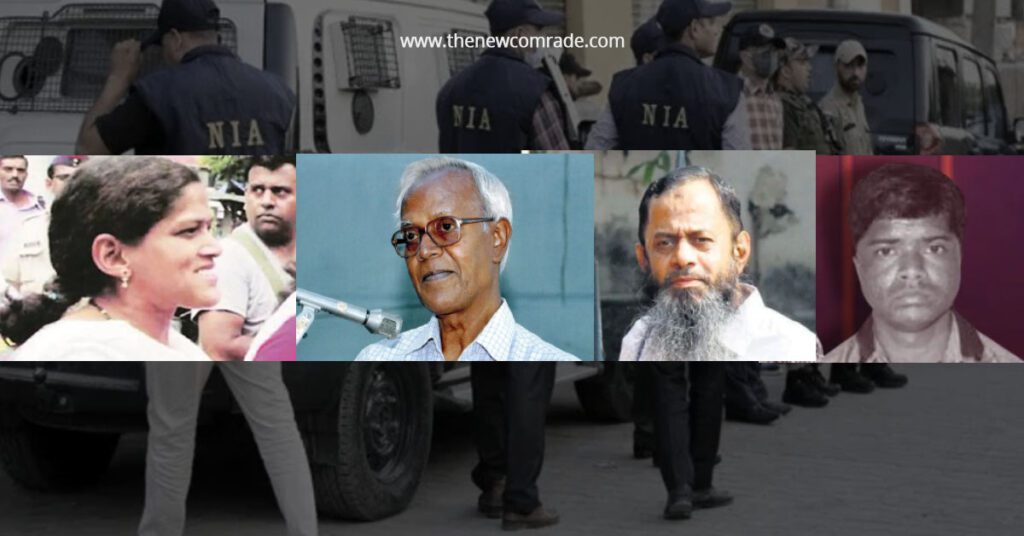
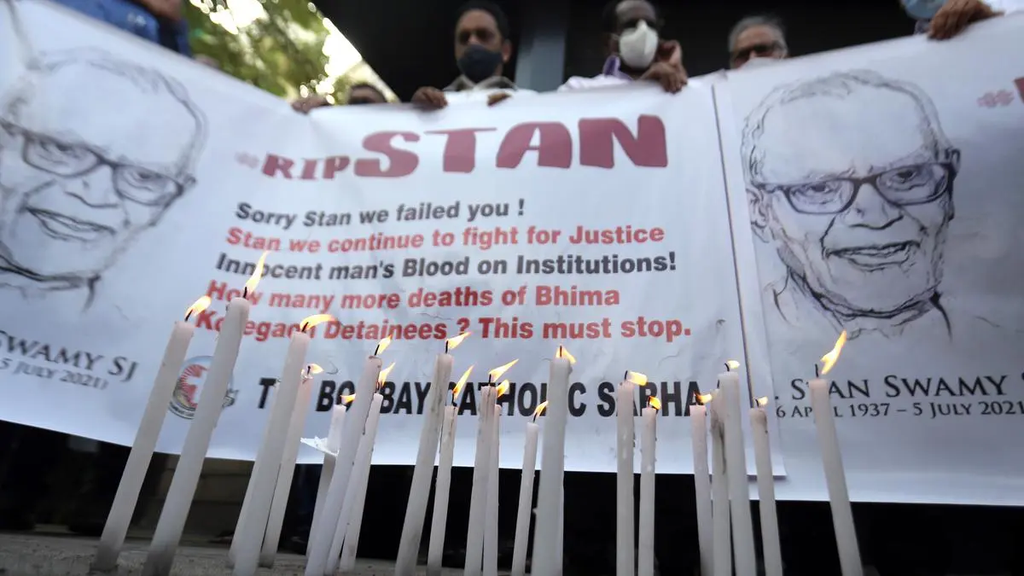
Father Stan Swamy (84): In what is perhaps the most internationally recognised case in this regard, the Parkinson’s disease-afflicted Jesuit priest and activist died in July 2021 as an undertrial in the “Bhima Koregaon” case. His struggle behind bars became iconic of administrative cruelty—whereby basic requests for a drinking straw to manage his tremors were delayed for weeks. He was eventually transferred to a private hospital on High Court orders, where he died on a ventilator.
Kanchan Nanaware (38): Arrested by the Maharashtra ATS in 2014, Nanaware spent years as a UAPA undertrial despite severe congenital heart disease. Her medical bail pleas were repeatedly turned down, and she died in January 2021 following brain surgery at Sasoon General Hospital in Pune.
Ranjit Murmu (55) & Swapan Dasgupta (60): In West Bengal, Murmu died in custody in 2011 due to kidney ailments, with human rights groups noting his family was informed only two days post-mortem. Dasgupta, editor of the Bengali edition of the “People’s March” periodical, died in custody at an ICU in Kolkata in February 2010, mere months after his UAPA arrest.
Then there is the tragic post-script of Professor G.N. Saibaba. Acquitted by the Bombay High Court in March 2024 after years of severe physical disability worsened by prison conditions, Saibaba passed away in October 2024 due to post-surgical complications. Though technically freed by the time of his death, his case remains central to discussions on how prolonged “anti-terror” detention breaks down human health beyond repair.
The Pre-Trial Sentence
Under normal criminal procedure, bail is the rule and jail is the exception. However, Section 43D(5) of the UAPA flips this paradigm, making bail virtually impossible for accused individuals before trial. When combined with India’s overburdened judicial system, undertrials often spend anywhere from 5 to 17 years waiting for a trial to conclude.
When serious illness strikes, the administrative machinery frequently responds with bureaucratic apathy. As highlighted by legal defenders, medical bail applications are routinely contested by prosecution agencies, treating health emergencies as tactical legal manoeuvres rather than a fundamental human right.
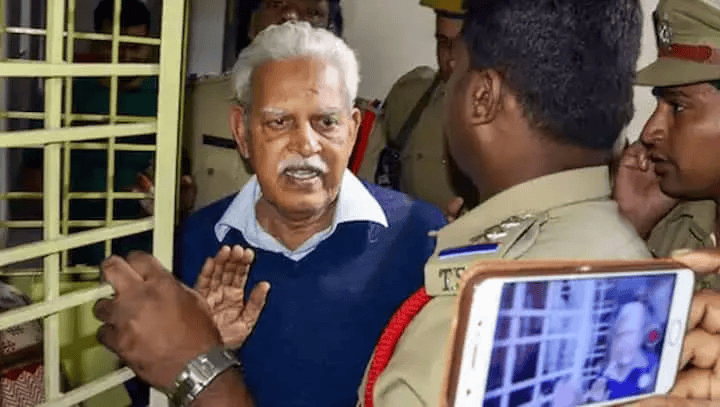
The case of octogenarian Telugu poet Varavara Rao further exposes how Section 43D(5) is deployed to delay relief until an undertrial reaches the brink of death. Arrested in 2018 in the Bhima Koregaon case, Rao spent years in Mumbai’s Taloja Central Prison as his health plummeted due to neurological decline, severe urinary infections, and COVID-19. Despite clear signs of fading cognition, hallucinations, and physical collapse, prosecution agencies persistently opposed his medical bail pleas, insisting that state facilities were adequate. It was only after his condition turned critical—provoking nationwide outrage and urgent interventions—that the Bombay High Court and eventually the Supreme Court granted him medical bail on humanitarian grounds, affirming that the fundamental Right to Life under Article 21 must override statutory bail restrictions. Rao survived, but his ordeal underscores a chilling reality: under India’s anti-terror framework, medical relief is rarely treated as an ongoing constitutional guarantee, but rather as a desperate, last-minute measure reserved for those on the verge of dying in state custody.
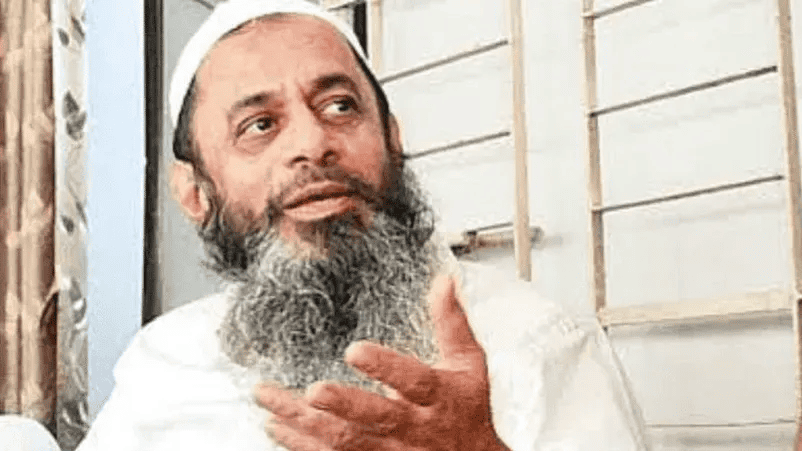
Moreover, Abdul Nasar Maudany’s case shows how anti-terror detentions function as a prolonged toll on physical survival. After spending over nine years as an undertrial in the 1998 Coimbatore serial blasts case before being acquitted of all major charges in 2007, Maudany was re-arrested in 2010 under the UAPA in the 2008 Bengaluru serial blasts case. During decades of continuous incarceration and strictly restricted bail conditions, his health rapidly shattered due to severe diabetic retinopathy, kidney dysfunction, and partial paralysis, leaving him near-blind and wheelchair-bound. His case remains a glaring example of how extended pre-trial custody combined with stringent bail barriers can reduce an individual’s health to a state of permanent physical collapse long before judicial proceedings reach a final conclusion.
Living in the Shadow of Tihar
The crisis is far from over. Today, figures like E. Aboubacker—a senior socio-political leader suffering from advanced Parkinson’s disease, cancer, and old-age ailments—remain incarcerated in Delhi’s Tihar Jail, struggling to secure adequate medical treatment or bail.
Imprisonment is legally meant to deprive a citizen of their liberty as a penalty or preventive measure under law; it is not meant to strip them of their right to health, medical attention, and life itself. When severe illness meets delayed healthcare and rejected bail pleas, pre-trial detention quietly transforms into an execution sentence without a conviction.