Kerala was long regarded as one of the most resistant political terrains in India for the Bharatiya Janata Party (BJP), owing to a durable bipolar contest between the Communist Party of India (Marxist) (“CPI-M”)-led Left Democratic Front (LDF) and the Indian National Congress (Indira) (“Congress”)-led United Democratic Front (UDF), a religiously plural population, and a political culture shaped by high literacy, land tenancy law reforms (‘land reforms’), and organised labour. Despite these structural obstacles, the party has, over eight decades of cumulative organisational work, moved from complete electoral irrelevance to a position in which it now holds three seats in the state Legislative Assembly, one Lok Sabha (national parliamentary) seat, and control of the Municipal Corporation in the state capital Thiruvananthapuram. This transformation was neither sudden nor linear. It proceeded through distinct phases: a long period of shakha-based consolidation under the Rashtriya Swayamsevak Sangh (RSS); decades of near-total electoral marginality for the Bharatiya Jana Sangh (BJS) and, after 1980, as the BJP itself; a slow build-up of vote share through the 1990s and 2000s; a symbolic breakthrough in the 2016 Assembly election; a setback in 2021; a watershed parliamentary victory in the 2024 Lok Sabha election; a historic municipal triumph in 2025; and a further, albeit still modest, expansion in the 2026 Assembly election, even as the UDF swept to a landslide victory state-wide.
Contextualising Kerala
Any account of the BJP’s development in Kerala must begin with an understanding of why the state had been unusually difficult for the party to penetrate. Kerala’s political system since a couple of decades has been dominated by two rival, alternating, Hindu nationalist, aforementioned, coalitions, viz., the LDF and the UDF. For nearly five decades, the government in Kerala changed hands almost mechanically between these two fronts at successive Assembly elections, a pattern so consistent that it became a subject of academic study in its own right. This entrenched duopoly absorbed the major social constituencies of the state: organised labour, the Ezhava castes and sections of the Scheduled Castes gravitated historically towards the LDF, while the Nairs and other privileged castes, the Muslim community through the Muslim League (Kerala), and various Christian denominational bodies found representation chiefly through the UDF. Kerala’s caste – community demography compounds this structural difficulty for a party built on militantly nationalist appeal.
According to the 2011 Census of India, the most recent full census available, Hindus constituted 54.73 per cent of Kerala’s population, Muslims 26.56 per cent, and Christians 18.38 per cent, with the remainder following other faiths or none. This tripartite demographic balance is markedly different from the Hindu-majority profile of most northern and western Indian states in which the BJP has achieved dominance, and it means that a strategy premised on straightforward majoritarian consolidation faces an arithmetical ceiling: even total capture of the Hindu vote would fall short of an outright majority in most constituencies unless it were also accompanied by significant inroads into minority communities or a significant split in the non-BJP vote. Kerala’s exceptionally high literacy rate, robust public sphere, and long tradition of social reform, dating to figures such as Sree Narayana Guru and Ayyankali, further shaped a political culture in which caste and class mobilisation, rather than a Hindu identity alone, historically organised the Hindu electorate. It is against this backdrop that the slow, often frustrating, growth of the Hindu fascist movement in Kerala must be understood. Where the BJP’s country-wide rise after 1980, and particularly after 2014, has often been narrated as a rapid electoral surge, its Kerala story is, instead, one of patient, decades-long organisational accumulation that only began to translate into legislative seats in the mid-2010s.
The origins of this bipolarity lie substantially in the mid-twentieth century. Kerala, formed in 1956 through the linguistic reorganisation of the former princely states of Travancore and Cochin together with the Malabar district of the Madras Presidency, elected the world’s first ‘Communist’ government to come to power through the ballot box in 1957, in the form of CPI, led by E. M. Shankaran Namboodiripad (“EMS”). That government’s early land reforms and educational legislations entrenched that party’s appeal among agricultural labourers and tenant farmers, while the countervailing “Liberation Struggle” of 1959, in which the combination of Congress, and the Syro-Malabar Church (which is, effectively, privileged caste Christians) secured the dismissal of the CPI government by the Union government, cementing the opposing coalition as the institutional home for a wide array of caste and community organisations wary of CPI rule. This foundational contest, replicated and refined at every subsequent election, produced the alternating two-front system within which the BJS, and later its successor – the BJP, would have to find a place. For a party built around Hindu fascism, entering a political marketplace already saturated by class-based mobilisation on one side and multi-caste coalition politics on the other proved to be an unusually difficult proposition, and it is this specific configuration, rather than any singular ideological hostility to Hindu fascism as such, that best explains the party’s prolonged marginality.
Kerala’s economy and social structure add a further distinctive layer to this political culture. The state had, for several decades, sent a very large proportion of its working-age population to the Arabian Gulf states for employment, a pattern of migration that cuts across all three major religious communities – though the subaltern castes are under-represented in that and economic disparity among the caste diaspora generally reflects the situation in the state. That has produced both substantial inward remittance flows and a more internationalised and informed electorate, in comparison to the rest of India, accustomed to comparing Kerala’s governance record against standards observed nationally and abroad. This had tended to sharpen public expectations around administrative efficiency, corruption, and service delivery, themes that all three political formations, including the BJP, have increasingly sought to foreground in their campaigning, alongside more traditional appeals to caste, community, and class. High population density, high literacy rate, an unusually assertive regional print (and later television) media, and one of India’s most extensive networks of public libraries and reading rooms further combine to produce an electorate that is relatively more informed and, according to most accounts, comparatively difficult to mobilise through appeals to caste and nationalistic symbolisms alone, without those appeals being contested vigorously and immediately in the public sphere.
This state-wide demographic balance also conceals considerable district-level variation that has shaped the geography of the BJP’s growth. Hindus form the majority religious community in thirteen of Kerala’s fourteen districts, the sole exception being Malappuram, where Muslims form the majority; the northern districts of Malappuram and Kozhikode, together with parts of Kannur and Kasaragod, have historically had the state’s highest Muslim population shares, while the central districts of Kottayam, Pathanamthitta, and Idukki have the highest concentrations of Christians. The BJP’s own electoral geography maps closely onto these variations: its strongest constituencies have consistently been in and around Thiruvananthapuram in the far south, where the Hindu, specifically Nair and privileged caste, population share is comparatively high and where the party’s oldest organisational roots lie, together with Palakkad in central Kerala, a district with some concentrated privileged caste population pockets and a strong historic RSS presence. Conversely, the party has continued to struggle in Malappuram and in the Christian-majority pockets of central Kerala, notwithstanding the deliberate outreach strategies discussed later.
Twenty Flashpoints – Contributing Currents Behind Kerala’s BJP build-up
The account above traces the BJP’s growth primarily through its own organisational choices, alliance-building, and electoral strategy. A substantial body of commentary, however, argues that the party’s slow accumulation of votes cannot be understood in isolation from a longer, messier history of communal incidents, institutional formations, and propaganda battles in which the Congress and the CPI-M were themselves frequently implicated, whether through innate sympathy to Hindu fascism or otherwise. These episodes are treated unevenly by different political actors: the BJP and RSS cite them as evidence that their rivals share responsibility for vitiating Kerala’s public life, while the Congress and CPI-M contest both the framing and the causal weight assigned to any single episode. What follows sets out such episodes and structural factors, in each case reporting the documented facts first and then the interpretations that have been advanced about their longer-term political effect.
1. Khilafat struggle of South Malabar, 1921
The Khilafat struggle (also called ‘Moplah Rebellion’) began in August 1921 in the Ernad and Valluvanad taluks of what was then Malabar district of British Madras province. It began as a fallout of Khilafat committee’s agitation against British rule (hence the name) and against the region’s feudal landlord (‘jenmi’) system, under which a largely privileged caste Hindu – disproportionately ‘Nair’ and Brahmin ‘Namboodiri’ – landholding class extracted rent from a predominantly Mappila Muslim and subaltern caste Hindu tenant peasantry. As British forces moved to suppress the uprising through the autumn of 1921, the character of the violence in several pockets of the rebellion shifted: alongside continued attacks on colonial administration and landlord property, killings, forced or induced mass religious conversions, and destruction of privileged caste Hindu temples, were witnessed in some localities. Estimates of the death toll vary considerably across sources, with British colonial-era tallies and later academic reassessments differing on both the total number killed and the proportion of casualties who were Hindu civilians as opposed to combatants on either side; the historiography of the rebellion remains, a century later, one of the most contested chapters in the modern history of present-day Kerala.
Interpretations of the rebellion’s communal-caste dimensions have long divided along political lines. Some treated the rebellion primarily as an anti-feudal and anti-colonial peasant uprising. RSS-aligned and other Hindu nationalist historiography, by contrast, has increasingly foregrounded the anti-Hindu violence and forced conversions as the rebellion’s defining feature, drawing on regional folk memory in Malabar and on colonial-era accounts, and has cited the episode as the founding trauma in a longer history. The rebellion’s legacy has also been a recurring site of political contestation in national politics well beyond Kerala, including controversy in 2021 over the exclusion of some rebellion leaders from a Kerala government-commissioned dictionary of Malabar freedom fighters, a decision welcomed by Hindu organisations and criticised by others as an erasure of anti-colonial history. RSS-aligned commentary in Kerala cites the episode as an early and durable source of memory for Hindu antipathy, available for later mobilisation.
2. Chalappuram Gang and Malabar Congress’s pre-1947 bigotry
During the 1920s and 1930s, Congress politics in the Malabar region became associated with a dominant faction within it: a privileged-caste Hindu, largely Nair, group of lawyers and professionals based in the aristocratic Chalappuram locality of Kozhikode, sardonically nicknamed the “Chalappuram Gang” or “Sunday Congress”. The crystallisation of this faction traced its roots to Hindu antipathy expressed by them following the aforementioned 1921 struggle and hardened further over the ‘Guruvayur Satyagraha’ of the early 1930s, in which this conservative casteist group was seen by another faction of Congress professing a broader Hindu consolidation and nationalism, including the future CPI-M leader EMS, as siding with temple trustees against a campaign for Hindu temple entry rights for subaltern castes. These factions, entrenched a habit of organising around caste-community blocs inside later-day parties. This pattern traced forward as a precedent that left privileged-caste Hindu voters, historically associated with the Chalappuram tendency, available to Hindu fascist appeals once the BJS and BJP established themselves in the region.
3. Golwalkar-Mannam Meeting, October 1958
On 13 October 1958, RSS Chief (‘Sarsanghchalak’) M. S. Golwalkar visited Ernakulam as part of a wider Kerala tour, and, at the instance of RSS organisers in the state, Nair Service Society (NSS) founder Mannam Padmanabhan agreed to preside over a large public reception held in his honour at T. D. High School Hall, Ernakulam. Both leaders addressed the gathering, and RSS and NSS commemorative accounts of the visit record that Mannam subsequently remained in Golwalkar’s company for a period following the event, an association both organisations’ later literature treats as having laid the ground for a sustained personal rapport between the two men. Separately, and by RSS-aligned accounts around the same broader period of contact between the two leaders, Mannam, addressing a gathering held in Thiruvananthapuram for Golwalkar’s fifty-first birthday, is recorded, in an account published decades later by the RSS mouthpiece “Organiser” and repeated in tributes paid by senior BJP figures -including current Prime Minister Narendra Modi, as having praised the organisation in terms amounting to an endorsement of the RSS as, in the words attributed to him, “the only effective cure for the lack of strength and organisation” among Hindus, adding that “had I been younger, I would have gladly participated even in the physical activities of the RSS.” A personal and organisational rapprochement between two of Kerala’s most influential communal leaders of the mid-twentieth century, and its documentation rests substantially on RSS, NSS, and BJP-affiliated commemorative sources rather than on the contemporaneous independent press coverage, judicial records, or academic secondary literature and are harder to cross-verify than a police firing or an election result. What is independently attested, including in Mannam Padmanabhan’s own recorded political trajectory, is that he led the NSS into the ‘liberation struggle’ alliance against the CPI government within roughly a year of this reported meeting, and that the NSS’s institutional relationship with Hindu fascist organisations, while never formalised as a political endorsement, has recurred at several points across the following decades, including during the Sabarimala protests of 2018-19.
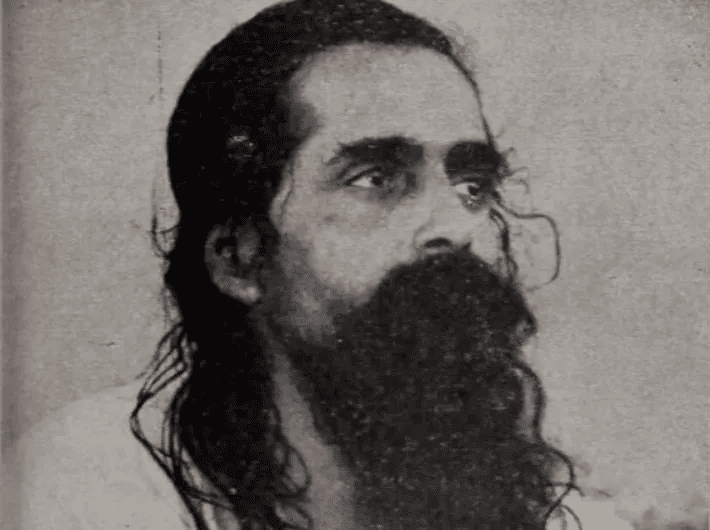
RSS-aligned commentary, including in commemorative material published on Mannam’s death anniversary and birth anniversary and echoed in tributes from BJP leaders, has consistently cited the 1958 meeting and the associated birthday-address remarks as evidence of a foundational, personally sanctioned alliance between Kerala’s most powerful privileged-caste organisation and the RSS, predating the BJS’s own formal establishment in the state and offering the movement an early claim to Nair legitimacy, independent of electoral politics; this reading is used to support a broader argument that Nair receptivity to Hindu fascist organisation in Kerala has deep and personally sanctioned roots rather than being a recent electoral tactic. The NSS’s own institutional position, by contrast, has historically been to describe itself as a non-political, non-bigoted social service organisation open to cooperation with multiple parties and formations. Organisational alliance binding the NSS’s subsequent leadership has in practice moved between the Congress, the short-lived parties like some ‘Kerala Congress’ factions of mid-1960s, ‘National Democratic Party’ (NDP) of the mid-1970s and, more recently, tacitly with the BJP, depending on the specific political moment rather than any fixed ideological commitment traceable to 1958.
4. “Liberation Struggle”, 1959
Following the 1957 formation of CPI government under EMS, the ministry’s Education Act and Agrarian Relations Act provoked sustained opposition from institutions whose interests the legislation threatened, principally private and church-run schools facing tighter state regulation, and landholding interests facing land reform. Through 1958 and into 1959, the Syro-Malabar Catholic Church hierarchy, the NSS, and the Congress units combined in a sustained agitation, viz. ‘liberation struggle (‘Vimochana Samaram’), involving shutdown strikes, protest marches, and, on 13 June 1959, a police firing at Angamaly, a centre of Syro-Malabar Catholic community, in which seven people were killed; the funeral procession for the dead, drawing crowds estimated in contemporary accounts at several hundred vehicles, further intensified the agitation. The Union government under Prime Minister Jawaharlal Nehru dismissed the CPI ministry under Article 356 on 31 July 1959, and fresh elections in 1960 returned a Congress-Praja Socialist Party (PSP)-Muslim League coalition to power.
This episode was foundational to Kerala’s alternating two-front system, and its relevance to Hindu fascist mobilisation specifically is more indirect than most other entries herein: the liberation struggle was not, on the documented record, a Hindu-Muslim confrontation, and its central grievance concerned educational and agrarian policy rather than religious identity as such. RSS-aligned commentary has nonetheless cited the episode as an early demonstration that Kerala’s major community and caste organisations could be mobilised as electoral blocs, a template of community-based mobilisation the RSS itself later adapted for specifically Hindu consolidation purposes.
5. Nadapuram belt’s recurring xenophobic violence
The Nadapuram area straddling the Kozhikode-Kannur districts’ border has experienced repeated cycles of xenophobic and political violence since the late 1960s, distinguished from the broader Kannur RSS-CPI(M) conflict by an additional dimension of tension between the CPI(M), whose local base includes Thiyya Hindu caste, and the Muslim League. Notable flashpoints include serious rioting following the killings of Kadavath Mammu in 1957, VP Abdullah in 1972, skirmishes throughout the 1970s and early 1980s, eight deaths in 1985, Enthullathil Binu in June 2001, Mohammed Aslam in August 2015, and before that, Shibin Bhaskaran in January 2015, after which more than a hundred Muslim homes and businesses in neighbouring villages were attacked, reportedly with the involvement of RSS cadre who joined the funeral procession, per contemporaneous reporting and with the CPI(M) cadre adopting a Hindu-consolidationist posture locally, in informal cooperation with RSS. Nadapuram’s decades-long cycle of retaliatory killings has entrenched a durable communal narrative that Hindu fascist organisers have periodically drawn upon. Also notable in this series was the daylight killing of Abubakar ‘Master’, a prominent social figure, in the neighbouring town of Kuttiyadi in September 1992, which was considered by various observers as a work with joint stakes of CPI- M, RSS, and State agencies, involved.
6. Formation of Malappuram district, 1969
Malappuram district was carved out of the erstwhile Kozhikode and Palakkad districts on 16 June 1969 under a seven-party coalition government led by EMS, a government in which the Muslim League held cabinet portfolios. What was a rational administrative response to the acute educational and economic backwardness of the Muslim-dominated region was depicted by many Hindu nationalists as some sort of undue concession extracted by the Muslim League. The creation of a Muslim-majority district, sometimes disparaged as a “mini-Pakistan,” became, over subsequent decades, a symbol inHindu fascist mobilisation elsewhere in the state, used to depict Muslim political consolidation as a threat and a situation detrimental to their interests and to rally non-Muslim voters, particularly sections of the privileged-caste and land-owning communities inside both the Congress and CPI-M, toward organisations perceived as more assertively “Hindu”. It deserves mentioning here that the Congress and the BJS together campaigned against the formation of this district, at the time. The seniormost Congress leader of the time, K. Kelappan, had even initiated a hunger-strike against this measure, alleging that this district would result in the massacre, forced conversions and exodus of Hindus from the district! The RSS left no stone unturned to highlight this matter nationally, and hence, resulting in extraordinary national media coverage at the time.
7. The Thalassery riots of 1971-72
Communal rioting broke out in the Thalassery taluk of Kannur district in the final days of December 1971 and continued into early 1972; accounts of the toll vary, with some reports citing roughly 140 deaths, and damage to hundreds of Muslim homes, businesses, and mosques. The erstwhile state government, in which Congress’s leader K. Karunakaran served as Home Minister, appointed a commission of inquiry under Justice P. Joseph Vithayathil in February 1972. A procession led by CPI-M, coupled with RSS’s instigation resulted in the violence. Separately, CPI-M later fabricated the legend of a “martyr,” U. K. Kunjiraman, said to have died shielding a mosque, a claim publicly challenged in the state Assembly, by Congress’s P. T. Thomas, as inconsistent with the inquiry commission’s timeline. The episode is widely treated as inaugurating both the enduring RSS-CPI-M rivalry in northern Malabar and a durable local memory of grievance that Hindu nationalist and fascist organisers have periodically invoked in recruitment.
It is interesting to note that the current National Security Advisor, Ajit Doval, had one of his early key assignments to deal with these riots and its aftermath, while being a part of Kerala Police cadre posted in the newly carved Malappuram district police headquarters, at the time. Another notable disturbance that had long preceded this incident, in Kannur district, was in Edakkad and Thalap – Kannur areas in 1934, involving the Thiyya caste, supported by the Congress, against Muslims. Thalassery had the significance of being the epicentre of Muslim politics, media and modern education in Malabar prior to 1947. This had even resulted in the city being deprived of developmental projects and funds after 1947. Though there were other instances of violence in coastal towns of Malabar, like Mathottam (near Beypore), Paravanna, Koottayi (near Tirur), Kottakal, etc. throughout the 1950s and 1960s – involving also the fisherman caste of ‘Dheevara’ alongwith the Thiyyas, Thalassery riots was larger in scale and impact. Later, Marad incidents were to outdo all those.
8. The Meenakshipuram conversions of 1981 and their Kerala echo
On 19 February 1981, roughly 180 Dalit families of the Pallar caste in the village of Meenakshipuram, in Tamil Nadu’s Tirunelveli district, converted to Islam, citing sustained caste oppression by locally dominant Hindu communities. The episode, though outside Kerala, generated an intense nationwide reaction; Hindu organisations, including the RSS and its newly formed affiliate Vishwa Hindu Parishad (VHP), together with figures such as the then-BJS/BJP leader Atal Bihari Vajpayee, visited the village and alleged the conversions had been induced by money from Arabian Gulf states and foreign-funded proselytisation rather than caste grievance, while in reality most economic benefits promised to converts failed to materialise and some even later reconverted. The BJP raised the episode in Parliament after 1984, and Prime Minister Indira Gandhi instructed intensive intelligence gathering. It is widely credited with helping catalyse the national anti-conversion and Ram Janmabhoomi mobilisations of the 1980s. Because Kerala’s Malabar coast shares extensive religious and commercial ties with Tamil Nadu’s Hindu organisations, RSS-aligned commentary in Kerala has frequently cited Meenakshipuram alongside domestic episodes as part of a shared regional narrative of “vulnerable” Hindu communities, a narrative that served the RSS’s Kerala recruitment messaging even though the precipitating event occurred outside the state.
9. The Mattancherry Police Firing and the 1982 Alleppey-Trivandrum Unrest
In May 1982 Vayalar Ravi, a leader who had grown through the ranks of Congress from the aforementioned Liberation struggle, was appointed as the state Home Minister and he is attributed to have initiated a subtle campaign of recruitment of RSS cadres from his home district, viz. Alappuzha, into the ranks of state Police force. In late December 1982, unrest broke out in Alappuzha after the transfer of a police official popular with local Muslim residents; police fired on protesters, killing at least one person.
The news of this shooting spread to Thiruvananthapuram, where businesses closed in protest and, on 30 December, some 500 demonstrators forced their way onto the runway at Thiruvananthapuram airport, disrupting flights. Arson attacks in the days that followed destroyed at least two hotels, a police station, and a number of shops and vehicles in Trivandrum, killing one person.
On 31 December, police in Mattancherry, further north, opened fire into a crowd of roughly 1,500 people who had attacked a police patrol with stones, torches, firecrackers, and acid, wounding several rioters and a number of policemen; by contemporary press accounts, the unrest was described as pitting the state’s Muslim population against police, and the Union government of Prime Minister Indira Gandhi ordered army units to Thiruvananthapuram to restore order.
Because the unrest of December 1982 arose from a specific administrative grievance (a police transfer) rather than an inter-religious dispute, contemporaneous international reporting characterised it as a Muslim-police confrontation rather than a Hindu-Muslim clash, and it should not be conflated with the unrelated, and better-documented, 1953 Mattancherry dock workers’ shootout, an entirely separate labour dispute in which CPI-led port workers clashed with police over recruitment practices. RSS-aligned commentary cited the 1982 unrest, together with the Nilakkal agitation the same year, as evidence of a wider atmosphere of Muslim assertiveness and state security concern in Kerala’s coastal towns during this period that assisted early Hindu organisational messaging in Thiruvananthapuram, where the party’s oldest Kerala roots lie; this is despite the explicit absence of any Hindu fascist organisation as a party to the original dispute. Lok Sabha elections of 1984 threw a surprise in Thiruvananthapuram – despite the Congress wave in the aftermath of Indira Gandhi assassination, “Hindu Front” (‘Munnani’) candidate – Kerala Varma Raja, hailing from the former royal house of Travancore, managed to secure over a 1.1 lakh votes. This lured the mainstream parties to progressively flare up and play to Hindu passions.
10. The Nilakkal Agitation, 1982–83
In late 1982, reports circulated that a cross had been found near Nilakkal, a forest base camp on the pilgrimage route to the Sabarimala shrine in the Western Ghats, and that a section of local Christians, some citing an older tradition associating the site with Saint Thomas the Apostle, intended to construct a church there. Hindu organisations, including the RSS and its affiliates, together with the fledgling Kerala BJP, organised sustained protests characterising the proposed construction as an encroachment on a site sacred to Ayyappa devotees, and the state government under Chief Minister K. Karunakaran ultimately intervened to prevent construction at the disputed site, relocating the proposed church elsewhere. The agitation passed without major recorded casualties but generated sustained state-wide press coverage and cross-district mobilisation of Hindu pilgrimage-linked sentiments.
The episode was an early template for cross-caste ‘Hindu’ mobilisation, and it stands apart from most other entries herein in being a Hindu- Christian rather than a Hindu-Muslim dispute; it was also one of the earliest instances in which the BJP and RSS in Kerala organised a state-wide agitation around defence of a specifically Hindu pilgrimage site, a mobilisation template the party would use on a far larger scale involving the same shrine complex thirty-five years later during the 2018–19 Sabarimala protests. Christian organisations involved in the original church proposal have characterised the episode as a legitimate, and ultimately unsuccessful, assertion of an older devotional claim rather than a deliberate provocation, while RSS-aligned retrospectives cite Nilakkal as proof of the party’s long-standing role as defender of Brahmanical sites against encroachment from other communities.
11. Sharia and Muslim personal law controversy of the 1980s
Following the Supreme Court’s 1985 verdict in the Shah Bano case, which held a divorced Muslim woman entitled to maintenance under the general criminal procedure code, CPI-M’s EMS launched a sustained public campaign in Kerala against Muslim personal law and, more broadly, for replacing it with a uniform civil code, a stance that prompted the Muslim League to quit alliance with it in July 1985. Being an attempt to “play the Hindu card” in the aftermath of the aforementioned Thiruvananthapuram election result, while wearing the reformism garb, EMS’s public criticism of a facet of Sharia lent legitimacy to the broader Hindu nationalist argument that Muslim communal identity received special and undue legal accommodation, an argument central to the BJP’s long-standing campaign for a uniform civil code. This period, viz. 1985 – 1986, also saw CPI-M expelling its leaders, M.V. Raghavan being the most senior among them, who had advocated for allying with Muslim League and promotion of V.S. Achuthanandan, also hailing from the Alappuzha district, from the position of State Secretary, who pivoted a strongly antagonistic stance against Muslim League and Sharia, to the party’s politburo in 1985 – incidentally being the first subaltern caste person to be elected so.
12. Killing of Chiruthakutty a.k.a. Aminakutty
On 2 June 1987, a Hindu Thiyya woman in her twenties named Chiruthakutty, who converted to Islam and had taken the name Aminakutty thereafter, was stabbed to death inside the premises of the district court at Manjeri, in Malappuram district. The killing was carried out by her own brother, Raman, a member of the RSS. The episode was one of the early instances of the RSS’s historical involvement in the killing and torture of converts to Islam in Kerala. This killing predates, and is a forerunner to, the two other RSS-linked famed unprovoked killings of such converts : the August 1998 killing of A. P. Yasir in Tirur and the November 2016 killing of P. Faisal in Kodinhi, both in Malappuram district.
This incident reflected the organisation’s Kerala buildup through a recurring pattern of lethal family-based violence against converts to Islam, and that the movement’s cadre have periodically resorted to killing rather than persuasion when faced with religious conversion within a family. Impunity or under-investigation of such killings, when it has occurred, was quite exposing of the other parties’ claims of even-handedness. The October 1990 killing of A.V. Ali Maulavi inside the mosque that he used to be serving in Kattoor, Thrissur district, by the RSS cadre is another instance that deserves mention in this time-frame.
(to be continued to Part 2)