13. Killing of Sirajunnisa, 1991
Sirajunnisa, an eleven-year-old girl, was shot dead, without any provocations, by the Kerala Police on 15 December 1991 while playing in the courtyard of her home on Pudupalli in Palakkad, amid tensions generated by BJP leader Murli Manohar Joshi’s provocative “Ekta Yatra” rally in the buildup to the Ayodhya Babari Mosque demolition movement and a related “upayatra” that had been heckled in the nearby Mepparambu area days earlier. The then Deputy Inspector-General of Police, Raman Srivastava, ordered police to fire on the locality, reportedly demanding “dead bodies of Muslim bastards,” an order relayed down the chain of command and executed by constables who fatally shot the child. The police first information report, rather than acknowledging the killing of a bystander, alleged that Sirajunnisa had herself been leading a mob of some three hundred people toward a nearby Brahmin-dominated settlement, an allegation that was formally withdrawn only years later following a protracted legal battle that reached the Supreme Court. Srivastava was never prosecuted for the killing and was subsequently promoted to Inspector General and then Director General of Police by the Congress-led government of Chief Minister A. K. Antony’s successor Oommen Chandy, and later served as a security adviser under CPI-M Chief Minister Pinarayi Vijayan, a career trajectory emblematic of both major fronts’ unwillingness to hold police accountable for anti-Muslim violence, in contrast to the swift and continuous political attention paid to violence involving CPI-M or RSS cadre elsewhere in the state and serving their consolidation.
14. Poonthura Riots, 1992
In Thiruvananthapuram district’s coastal belt, the historically Muslim fishing hamlet of Beemapally adjoins the Latin Catholic hamlet of Cheriyathura, and has recorded several episodes of unrest since the 1959 Angamaly firing associated with the “liberation struggle”. On 18–21 July 1992, rioting broke out at Poonthura, a neighbouring coastal locality, in the charged atmosphere generated nationally by the Babari mosque demolition movement. The immediate trigger was stone-throwing between RSS cadre conducting a drill and members of the short-lived Islamic Sevak Sangh (ISS), a Muslim organisation that had been implicated in the earlier 1992 unrest in the Kochi region, with tensions further inflamed by provocative speeches and meetings referencing the unfolding Ayodhya dispute. Two days of rioting left six people dead and twenty injured, with hundreds of homes and businesses looted or damaged; the state’s most senior police officer was reportedly absent from the city without proper leave at the height of the unrest.
RSS-aligned commentary treats the episode as evidence of the ISS’s organised provocation and of a wider pattern of communal assertiveness by Muslim organisations, following the Babari mosque demolition movement, using it to argue for the necessity of Hindu organisational vigilance, while ISS itself was organised on an explicitly RSS-mirroring model, though on a grossly miniature scale, which was no match for RSS. It is noteworthy here that the specific trigger was the post-Babri mosque demolition campaign political atmosphere rather than any local disputes, distinguishing Poonthura from the unrelated, apolitical altercation that triggered the 2009 Beemapally firing seventeen years later.
15. Demolition of the Babari mosque and its Kerala Aftermath, 1992
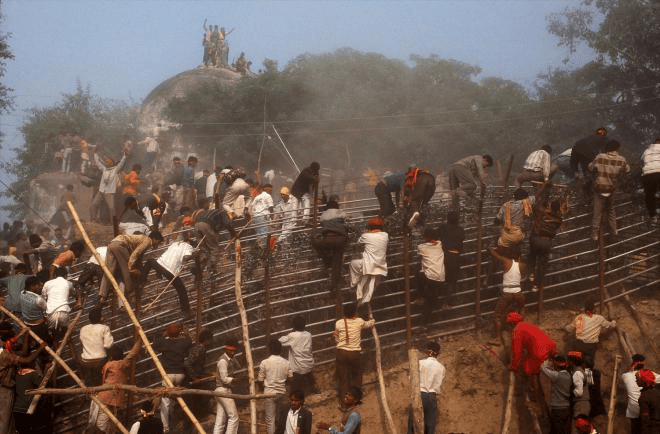
The Babari mosque in Ayodhya, Uttar Pradesh, was demolished on 6 December 1992 by a crowd of some 150,000 people mobilised by the VHP, RSS, Shiv Sena, and BJP as part of a sustained movement. The demolition triggered several months of anti-Muslim rioting across India that killed at least 2,000 people, most severely in Bombay. Kerala’s own reaction was comparatively contained by the standards of northern and western India, though the Poonthura riots described above, together with related unrest elsewhere in coastal Thiruvananthapuram, Kochi, Kasaragod, etc. earlier, as well as participations from the state in the demolition mob, demonstrate that the demolition’s shockwaves were not absent from the state.
The demolition’s most consequential long-term effect on Kerala’s communal landscape was less the immediate 1992 unrest than its catalytic role in the growth of more assertive organisation building in the state through the 1990s and 2000s. The Kerala BJP itself recorded no immediate surge in vote share attributable to the demolition, its state-wide Assembly vote share remaining in the range of six per cent through the early 1990s as part of the party’s “wilderness years.”
16. Killings of Muslim religious leaders
Kerala has witnessed few roughing up incidents and killings of Muslim clerics associated with unconventional theological positions. One particular case however which deserves a place in this article is the July 1993 disappearance of the P. K. Mohammed Abul Hassan, known as ‘Chekannur Moulavi’, whose case a CBI court concluded in 2010 amounted to a murder motivated by “fundamentalist” opposition within Muslim community. The Chekannur case is cited as a case of intra-community intolerance that Hindu nationalist and fascist propaganda subsequently exploited. While the investigations of this case were directed towards people affiliated to a Barelvi faction led by AP Abu Bakar Ahmed, this faction was then seen going into overdrive in hosting high-ranking figures associated with RSS and BJP into their events and institutions. Initially, in 1996, they were seen hosting S.B. Chavan the then Home Minister of P. V. Narasimha Rao, whose association with RSS is a matter acknowledged by RSS itself and who had an extremely low standing with Muslims in view of facilitating the Babari mosque demolition. Soon thereafter they were seen hosting senior-most BJP leader of Kerala, viz. O Rajagopal. Eversince, the exchanges between the faction and the RSS have continued till date, to the point of even occasionally clerics associated with this faction seen campaigning for BJP. Whereas, the BJP was also seen hosting the followers of Chekannur Moulavi into some of its programmes and thus, gradually effectively bringing them under its wings.
17. The prolonged detention of Abdunnaser Madani
Abdunnaser Madani, a Muslim cleric, founder of ISS, and, later, chairman of the Kerala-based People’s Democratic Party (PDP), has spent more than a fourth of his adult life in pre-trial custody across two separate bomb blast cases. He was acquitted in 2007 after spending more than nine years in Coimbatore’s and Salem’s Central Prisons by being implicated in the 1998 Coimbatore bombings case. He was arrested again in August 2010 as the thirty-first accused in the 2008 Bangalore serial bomb blasts case, in which he was held for years without conviction despite documented ill-health, including severe diabetes, impaired eyesight, and a prior leg amputation resulting from an earlier bomb attack upon him by the RSS. Several of the prosecution’s witnesses either could not identify Madani or gave testimony under questionable circumstances. Such a prolonged, repeated pre-trial detention of such a prominent figure, together with delays in providing adequate medical treatment, amounted to punitive incarceration pursued. The Supreme Court itself queried in 2023 why Madani could not be permitted to return to Kerala once trial arguments in the second case were largely complete. Mainstream Kerala media coverage of the case, and the CPI-M’s distancing from PDP after their unsuccessful 2009 Lok Sabha alliance, reflected a broader reluctance among the non-BJP parties to be seen defending a Muslim political figure facing ‘terrorism’ charges, regardless of the strength of the evidence against him, a reluctance quite contrasting with the vigorous public defence mounted for individuals facing charges connected to Hindu fascist organisations.
18. Reservation, Narendran Commission, privileged-caste antagonism
A three-member inquiry commission was appointed by the Kerala government in February 2000 under a retired Kerala High Court judge, viz. K. K. Narendran, to study the caste and community wise representation in public sector jobs in Kerala. The commission reported in November 2001 that a highly uneven distribution existed: they calculated a backlog of several thousand posts owed to specific communities relative to their population share, including several thousand additional posts deserving for Muslims alongside smaller backlogs for Dheevara, Nadar, Latin Catholic, and Converted Christian communities. Various organisations pressed the successive UDF and LDF governments to implement its recommendations in full by conducting special recruitment from the communities suffering from this backlog, while the NSS and affiliated privileged-caste organisations, representing castes excluded from the reservation system, challenged the report and organised opposition. This episode has amplified a recurring anti-reservation current within Kerala’s privileged-caste organisations, including subsequent NSS advocacy for a dedicated ‘Forward Communities Welfare Corporation’ and calls to set reservation on economic basis rather than caste and community criteria; Hindu nationalist commentary has drawn on this current to argue that reservation policy in Kerala disproportionately privileges Muslim and Christian communities relative to economically comparable Hindu privileged castes. However, various data including the state’s own 2024 employment data show the unreserved privileged castes, Christians and Hindus, holding a considerably larger share of government posts than Muslims relative to population. However, the underlying political potency of the anti-reservation argument within segments of the Nair and Ezhava electorate was specifically targeted by the RSS and BJP. The reservation in public sector jobs and higher educational institutions are a far cry from the reservations in the legislative bodies that were available in India until 1950 and were discontinued upon Congress demand put at the Constituent Assembly and thus opening the way for ever increasing Hindu aggressiveness.
19. The Marad riots of 2003
The Marad beach violence, treated in this article’s main narrative in the context of northern Kerala’s communal geography, is revisited here specifically as one of the contributing episodes cited in Hindu nationalist reconstructions of the state’s political history. Following an initial clash in January 2002 that left two Hindus and three Muslims dead followed by rampant rioting and arson, a retaliatory attack on 2 May 2003 saw eight Hindus and one Muslim killed at Marad beach in Kozhikode district. A judicial commission under Justice Thomas P. Joseph constituted to deal specifically with the second incident concluded that the killings were a premeditated conspiracy and found evidence implicating individuals associated with the Muslim League and CPI-M. A special court subsequently convicted sixty-two of sixty-three accused, sentencing them to life imprisonment in January 2009, though it found no evidence of any wider international conspiracy. RSS-aligned commentary has cited this second Marad incident extensively and repeatedly, alongside Beemapally and other episodes described below, as evidence of a pattern of anti-Hindu violence that they allege other major parties underplay for reasons of Muslim vote-bank politics, using the episode in recruitment material aimed at Hindu fishing communities along the Malabar coast. The commission’s findings and inference drawn were contested by many, arguing that individual criminal culpability, established through the courts, does not establish a community-wide conspiracy. Hindu organisations have used the verdict selectively while paying comparatively very little attention to the 2002 original clash in which Muslims were killed more.
This incident was coupled with various trends that were intended to push into the collective Muslim psyche a sense of Hindu domination. Riding on the atmosphere of Islamophobic wave after September 2001 WTC attacks, banning of Students’ Islamic Movement of India (SIMI) by the BJP-led Union government soon thereafter, October 2001 Afghanistan occupation by the US – in which India’s stance was with the US, December 2001 Parliament attacks, March 2002 enactment of a draconian law named ‘Prevention of Terrorism Act (POTA)’, mass arrests of Muslims in various parts of India, Gujarat pogroms beginning in February 2002, Iraq occupation of 2003 by the US – in which the Union government refused to explicitly condemn the US, it was moulded into a watershed moment for Kerala, despite being a very local issue. The State Home Ministry at the time was handled by the Chief Minister itself, viz. A.K. Antony, who was also, similar to aforementioned Vayalar Ravi, a person who rose through the ranks of Congress beginning with the participation in the ‘Liberation struggle’ and had cultivated deep relations with the military-security establishment of India and was, at a time, the Defence Minister of India and even touted to be the future President of India. He had the history of being instrumental in unseating the only Muslim Chief Minister of Kerala in 1979 and also making caustic remarks targeting Muslims in Kerala. The BJP-appointed Governor of the time, Sikandar Bakht, was functioning with a mandate to appoint BJP leaders to various bodies.
This was the first time when a full-time passionate media campaign was conducted by the recently emerged vernacular TV channels, echoing the talking points of the RSS. Almost the whole male Muslim population of Marad was arrested, including minors, ill and the elderly. There was almost daily high security transportation of these undertrials through the midst of Kozhikode city for over 5 years. Sentencing over sixty people for the murder of nine people looked more like an encrypted message than a natural legal process. In addition, most of the acquittals too were overturned in 2012. Those who were really acquitted were handed out stringent terms, like ban on moving beyond a certain distance, staying in certain places, etc. This episode served as a visible shot in the arm for the BJP.
20. Emergence of the “Love Jihad” Narrative in Kerala, 2007–2010
The phrase itself did not originate in Kerala. Most retrospective accounts trace its first organised use to Karnataka in 2007, where the Hindu right-wing group Hindu Janajagruti Samiti began using the term to describe what it alleged as a coordinated effort to convert Hindu women through romantic relationships with Muslim men. The narrative entered Kerala’s public discourse two years later. A Malayalam newspaper, Kerala Kaumudi, ran a front-page article in 2009 that used the term “Romeo Jihad,” citing an unnamed intelligence report alleging that young Muslim men were carrying out a campaign of seduction against Hindu women. Around the same time, two Hindu women from Pathanamthitta district eloped with Muslim classmates, an episode subsequently held up as the first incident in Kerala explicitly framed as “love jihad”. In August 2009, two fathers separately petitioned the Kerala High Court seeking help locating daughters who had left home in July, alleging their daughters had been entrapped into religious conversion under the guise of marriage.
The Catholic Church’s entry into the controversy that same year gave it wider institutional standing. The Kerala Catholic Bishops’ Council (KCBC) alleged that roughly 4,500 women, and separately that around 4,000 cases between 2005 and 2012, had been targeted for conversion through this method, a claim that drew a welcome response from the (VHP), whose former state president stated that his organisation had raised the issue years earlier without being heard. The Kerala High Court, hearing the 2009 petitions, directed the state police to investigate; the then-DGP Jacob Punnose filed an affidavit stating that police had no confirmed evidence of an organised “love jihad” movement or of foreign funding, while committing to remain vigilant and to act on any credible complaint. The court itself, while directing that inter-religious marriages be recognised and protected, noted that some police reports submitted to the DGP suggested a concerted effort to convert girls of particular religions with the backing of certain organisations, and said this warranted public and governmental concern. A rights group, the Association for Human Rights, separately petitioned the court to bar police and media from using the term “love jihad” altogether in connection with such investigations, a request the court declined to entertain on procedural grounds. A formal police inquiry that reported to the court concluded no organisation or movement by the name “Love Jihad” or “Romeo Jihad” had been identified as operating in Kerala, that no evidence existed of an all-India dimension, foreign financial backing, or any link to smuggling, counterfeiting, or terrorism, and that complaints beyond the two cases then before the court had not been received. By 2012, Kerala police had gone further, stating there was no substance to the broader claim that an organised “love jihad” was taking place in the state.
The question resurfaced nationally in 2018, when, in the context of the Hadiya case, the National Investigation Agency examined eleven interfaith marriages referred to it by Kerala police and found no evidence of coercion sufficient to support prosecution, though it noted that individuals associated with the Popular Front of India (PFI) had assisted conversions in some of the marriages examined.
RSS-aligned commentary treats the 2009 Church statement and the High Court’s own cautionary observations as independent corroboration, from a source with no prior stake in Hindu fascist politics, that organised conversions to Islam through romantic entrapment was a real and documented phenomenon in Kerala, predating and validating the movement’s own long-standing warnings; this reading has been carried forward into later episodes, including the 2021 “narcotic jihad” remarks and the 2023 release of The Kerala Story. Obscured political use, successive official findings, the 2009–2010 police affidavits, the High Court-ordered inquiry, and the 2018 NIA examination, each failed to substantiate the existence of any organised conspiracy, and that the Church’s 2009 figures were never independently verified. “Love jihad” framing strips young women of any agency in their own relationships, treating them instead as passive objects over whose bodies organisations involved contest honour. The 2009 Kerala episode, rather than any single national event, supplied the specific vocabulary and the initial evidentiary claims that Hindu fascist organisations, and later sections of the Christian clergy, would draw on repeatedly over the following decade and a half, feeding directly into the 2021 Kallarangatt “narcotic jihad” controversy and the 2023 “Kerala Story” film controversy.
21. 2009 Beemapally police shooting
On 17 May 2009, police opened fire on residents of Beemapally, in Thiruvananthapuram, killing six people, including a sixteen-year-old boy, and injuring more than forty others, in what independent accounts describe as the second-largest police shooting in Kerala’s post-1957 history. The firing followed days of tension between Beemapally and the neighbouring, predominantly Latin Catholic, locality of Cheriyathura, arising from an altercation involving a local individual, and occurred under the LDF government of Chief Minister V. S. Achuthanandan, with Kodiyeri Balakrishnan as Home Minister. The police, led by then city police commissioner Jacob Punnoose, justified the firing as necessary to prevent an armed mob from Beemapally attacking Cheriyathura and its church, and cited the presence of explosives allegedly traced to sources outside the state; a subsequent CBI probe into the explosives closed without establishing how they arrived or who was responsible. Independent fact-finding investigations by the People’s Union for Civil Liberties and the National Confederation of Human Rights Organisations rejected the police account, finding no evidence of a communally motivated mob or any attack on Cheriyathura, and a judicial commission under District Judge K. Ramakrishnan, reporting in 2012, nonetheless broadly endorsed the police version and concluded the firing had prevented a larger riot, a finding the Beemapally Muslim Jama-ath Action Committee rejected as one-sided. Mainstream media largely reported the police narrative under the label “Cheriyathura firing,” a framing that obscured the fact that all six fatalities were Muslim residents of Beemapally and that no injuries were reported on the opposing side. Also noteworthy was the episode’s muted political response, coming under an LDF government, showing that the killing of Muslims in police action received markedly less mainstream political or media attention than comparable episodes involving other communities, an asymmetry that Hindu nationalist commentary considers rightful while, for Muslims, it was yet another instance of repeated institutional indifference.
22. T. J. Joseph Blasphemy and Hand-Chopping Cases, 2010
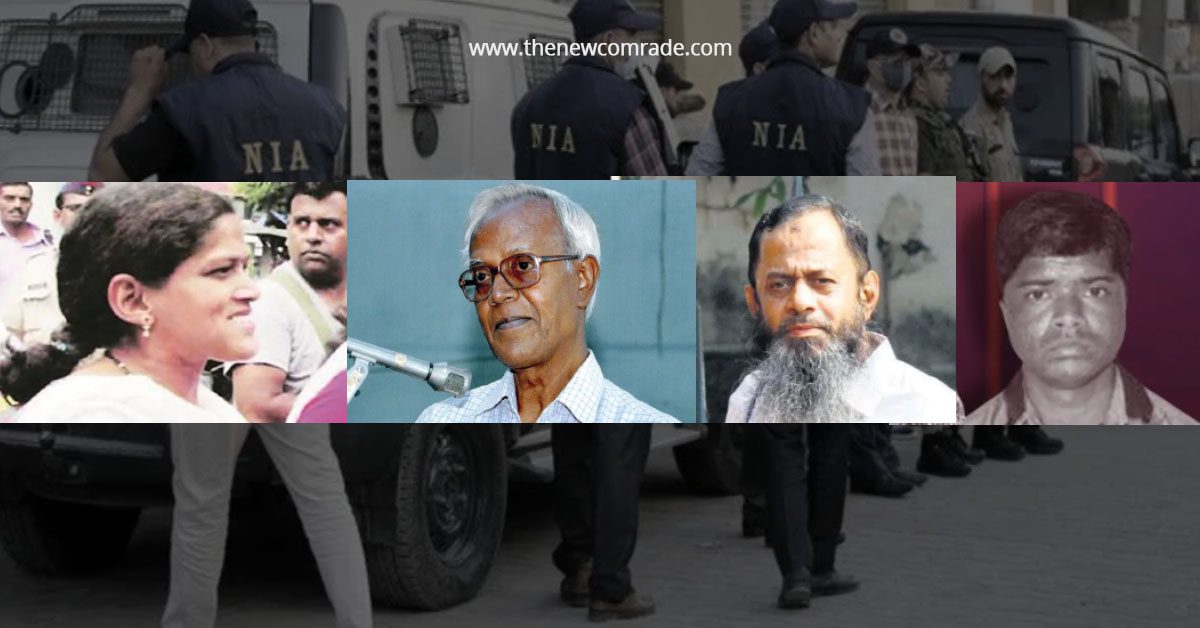
A significant episode of the Islamophic incidents that sprung after 2001 was the blasphemy against the Holy Prophet Mohammed (SAAWS) in Denmark in October 2005, sparking worldwide uproar. The sustained support for such a blasphemy by the European and American officials encouraged similar incidents in other countries thereafter. In March 2010, Kerala had its own such episode. A Professor of a Syro-Malabar Catholic-run College of Thodupuzha, viz. T. J. Joseph, prepared a language question paper denoting the Holy Prophet (SAAWS) to be schizophrenic and being abused by God Almighty, sparking wide protests. In response to the protests, an FIR was filed against him, a nominal arrest was made, released quickly on bail, and then acquitted, resulting in widespread resentment. On 4 July 2010, he was attacked by some Muslims of the region, by being pulled from his vehicle, and his right hand being severed. This amputated hand was sutured soon. Similar to the Marad incidents, the second instance was blown out of proportion with even terrorism-related National Investigation Agency (NIA) being handed over the case. The scale and magnitude of media coverage of this second incident was huge. Seeing the sentiments involved, the management of the College, then suspended and later terminated him from service. A special NIA court convicted nineteen individuals in phases between 2015 and 2024. This episode, again, served to severely and durably strain relations between Christian and Muslim communities in central Kerala, ending decades of political alignment between them between the UDF and LDF. RSS-aligned commentary cited the case extensively as an instance in its broader argument concerning the threat posed by Muslims to others. The sentencing court itself, in 2015, described the attack as a challenge to the secular fabric and an attempt to impose a parallel, extra-constitutional system of justice.
23. The “Fifth Minister” controversy of 2012
In April 2012, the allocation of a fifth ministerial berth in the UDF government of Chief Minister Oommen Chandy to the Muslim League, with Manjalamkuzhi Ali sworn in to the post, became the subject of a sustained public controversy created in Kerala, framed as a disproportionate concession to Muslims. Despite it being in tune with the demographic share of Muslims in the state and the seat tally of Muslim League, organisations representing forward and intermediate Hindu castes, including the NSS and, to a lesser extent, the Sree Narayana Dharma Paripalana Yogam (SNDP) representing the Ezhava community, publicly voiced concern that the move reflected a broader pattern in which Muslim political interests had accumulated disproportionate influence within the UDF’s internal arithmetic as Kerala’s demographic balance shifted, citing the earlier political eclipse of Congress veteran K. Karunakaran as a marker of declining Hindu leadership influence within the party. RSS-aligned commentary cited the episode as evidence that the Congress had become structurally dependent on Muslim League support to the point of accommodating disproportionate representation, using the controversy in outreach material aimed at Nair and Ezhava voters as part of the broader social-engineering strategy. These objections coincided with, and were arguably driven by, Muslims’ parallel grievances over recommendations made around the same period by the Narendran Commission on backward-class representation.
24. The Nadapuram Communal Clashes, 2015
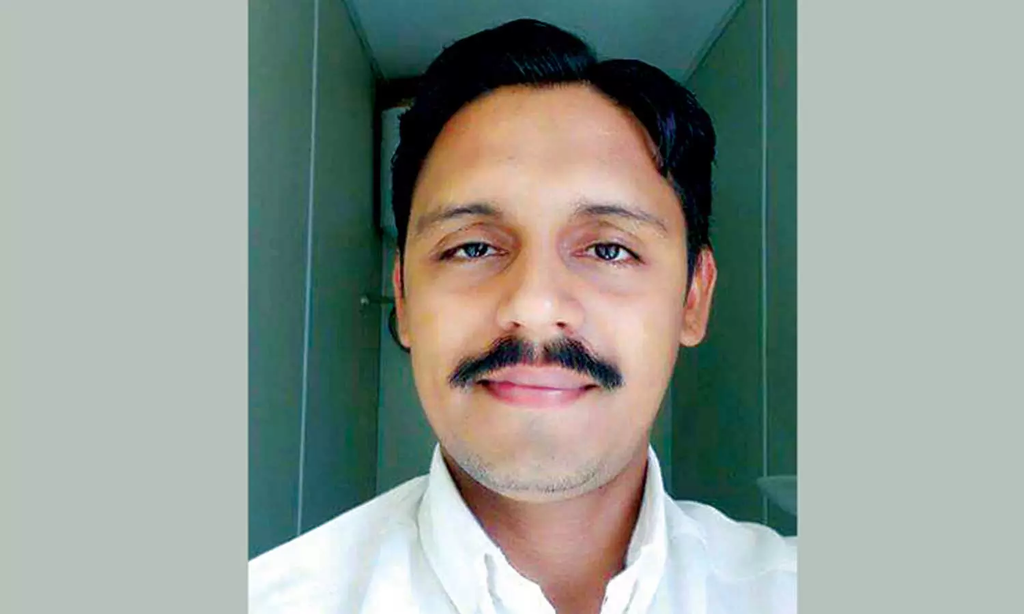
Following the murder in January 2015 of Shibin Bhaskaran, a nineteen-year-old DYFI activist, in circumstances local CPI-M leaders attributed to individuals connected with the Muslim League, retaliatory violence broke out in villages around Nadapuram. More than a hundred Muslim homes and businesses in neighbouring villages were attacked in the aftermath, with RSS cadre joining Bhaskaran’s funeral procession, yet another instance of CPI-M cadre adopting a Hindu-consolidationist posture, at points in informal cooperation with RSS elements.
This episode is best understood as illustrating the entanglement of Kerala’s long-running LDF-Muslim League political rivalry with RSS-organised mobilisation in a single incident; RSS-aligned commentary nonetheless cites the scale of the destruction of Muslim homes as evidence of the organisation’s capacity, and, in some triumphalist accounts, willingness, to mobilise large numbers of Hindu residents rapidly in response to a perceived provocation.
25. Caste identity and Scheduled Caste/Scheduled Tribe mobilisation
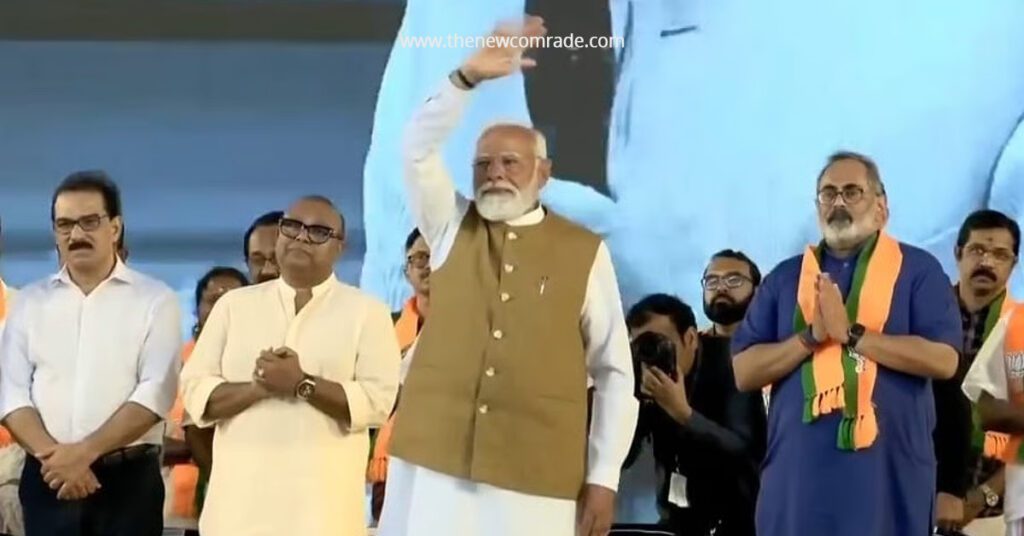
Kerala’s Hindu population is itself divided along caste lines that have historically structured party allegiance more than religious identity: Ezhavas and other Other Backward Class communities, along with a substantial share of Scheduled Caste voters, have traditionally anchored the CPI-M’s support base, while Nairs have divided their support between the Congress and, progressively, the BJP. Since the mid-2010s, the RSS and BJP have pursued deliberate caste-specific outreach, including the BDJS alliance among Ezhavas and dedicated Scheduled Caste and Scheduled Tribe wings, premised on the argument, made explicitly by RSS leaders, that caste divisions rather than religious plurality represent the more tractable obstacle to Hindu consolidation. Analysts characterise this outreach as instrumental, offering limited substantive gains to Dalit and Adivasi communities while seeking their electoral loyalty; RSS-aligned commentators state that the organisation has long-standing programmes, including training Dalits as temple priests, aimed at eroding caste barriers within Hindu practice, distinct from electoral calculation. In this respect it is worthy noting that Narendra Modi himself inaugurated the conference of Kerala Pulaya Mahasabha in Ernakulam in February 2014, claiming himself to be a ‘victim’ of untouchability. The usual modus operandi has been to use those castes as fodder, while leadership positions remain within the privileged castes.
26. 2016 Kodinhi murder of P. Faisal (Anil Kumar)
On 19 November 2016, Faisal, formerly known as Anil Kumar or “Unni,” was hacked to death in a drain at Farook Nagar in Kodinhi, Malappuram district, months after converting to Islam. Kerala police booked sixteen men with RSS affiliations, including relatives of Faisal’s wife, and the prosecution’s case alleged the killing was motivated by anger at his conversion; all those arrested were released on bail by mid-2017, and two of the accused were subsequently themselves killed in retaliatory attacks. Nine members of Faisal’s family converted to Islam in the aftermath. The case has become a recurring reference point for critics who argue that RSS-linked violence against religious converts in Malappuram, a district with relatively lesser RSS institutional presence, illustrates the movement’s willingness to resort to targeted violence to counter erosion of Hindu numbers even in areas of overwhelming Muslim majority; the trial’s prolonged delay has itself become yet another of the umpteen instances of the care and concern the RSS and its affiliates receive from the State and its institutions.
27. Hinduisation of Kannur district
Kannur has recorded the highest concentration of politically motivated killings in Kerala’s modern history, with figures cited in various investigative accounts placing the toll at more than 200 deaths since 1980 and roughly comparable numbers of victims from the CPI-M and the RSS-BJP over the 1972-2017 period. Researchers describe the conflict as originating in disputes over agrarian reform, control of the beedi-manufacturing workforce, and caste-linked recruitment patterns among former CPI-M cadre who subsequently joined the RSS. With the background of CPI-M in Kannur district itself linked to Hindu nationalistic mobilisation, meandering through chapters like Uralungal movement and Thiyya caste Hinduisation, this schism was more tactical than strategical. Since 2017, however, there has been a tacit understanding between the two groups, after a series of talks beginning in 2016 between top leaders of CPI-M and the RSS in the mediation of a spiritual figure called “Sri M”. In this regard, this person’s institution, viz. Satsang Foundation, was allotted four acres of land in Thiruvananthapuram.
28. The Tripunithura “reconversion centre” case, 2017
In September 2017, a 28-year-old Ayurveda practitioner from Kannur district, Shwetha Haridasan, filed a complaint with Udayamperoor police and an affidavit before the Kerala High Court, that she had been confined for twenty-two days over July and August at the Sivasakthi Yogavidya Kendram, a yoga and “reconversion” centre at Tripunithura in Ernakulam district, in an effort by the centre’s staff to make her abandon her marriage to a Christian man, Rinto Isaac. She alleged physical and mental torture, including being beaten, and stated that more than sixty other women were being held at the centre under comparable conditions; a division bench of the Kerala High Court, hearing her petition, described the allegations as “shocking” and directed police to submit a probe report, at one point asking whether the centre amounted to Kerala’s own version of the Dera Sacha Sauda, the Haryana-based sect whose head was convicted of rape in 2017. The centre’s founder, K.R. Manoj, known to followers as “Guruji,” acknowledged in a Facebook post that the centre conducted reconversion, or “ghar-wapsi”, stating that an affiliated body, the Arsha Vidya Samajam, had been working alongside other RSS-affiliated organisations on this activity; he and several staff subsequently evaded a police investigation, though at least one trainer was arrested. A separate woman, from Bengaluru, later corroborated the pattern, telling police and the press that she had been detained at the same centre from March to May 2016 and subjected to comparable treatment in an attempt to end her relationship with a Christian colleague, before she engineered her own escape by staging an acceptable marriage.
The Tripunithura case exposed the coercive underside of Kerala’s periodic public “ghar-wapsi” reconversion ceremonies, such as the mass reconversions of Christian families organised by the VHP and Hindu Aikya Vedi (HAV) in Kottayam district around Christmas in past years, arguing that the same reconversion impulse that operates openly and, in the VHP’s own account, voluntarily at public temple ceremonies can shade, in less visible private settings, into unlawful detention and abuse. There were exposes of similar centres functioning in other districts by a couple of other individuals. However, there has been no visible action by the state agencies in this regard.
29. Media reporting patterns
Kerala’s exceptionally dense and competitive media landscape has itself become a subject of the bigotry debate. Critics writing after the 2017 spate of Kannur killings argued that certain national and Kerala-based outlets gave disproportionate coverage to attacks on RSS and BJP workers relative to comparable attacks on CPI-M cadre, a pattern some attributed to specific proprietors’ BJP ties. A separate, longer-running strand of criticism, focused on Malayalam dailies such as Malayala Manorama and Kaumudi, argues that mainstream reporting on interfaith relationships helped popularise the “love jihad” narrative during the early 2010s, a framing subsequently adopted more explicitly by Hindu nationalist organisations, even though Manorama later distanced its coverage following criticism from Muslim organisations. These patterns suggest a media bias in Kerala that has favoured the gradual growth of the BJP.
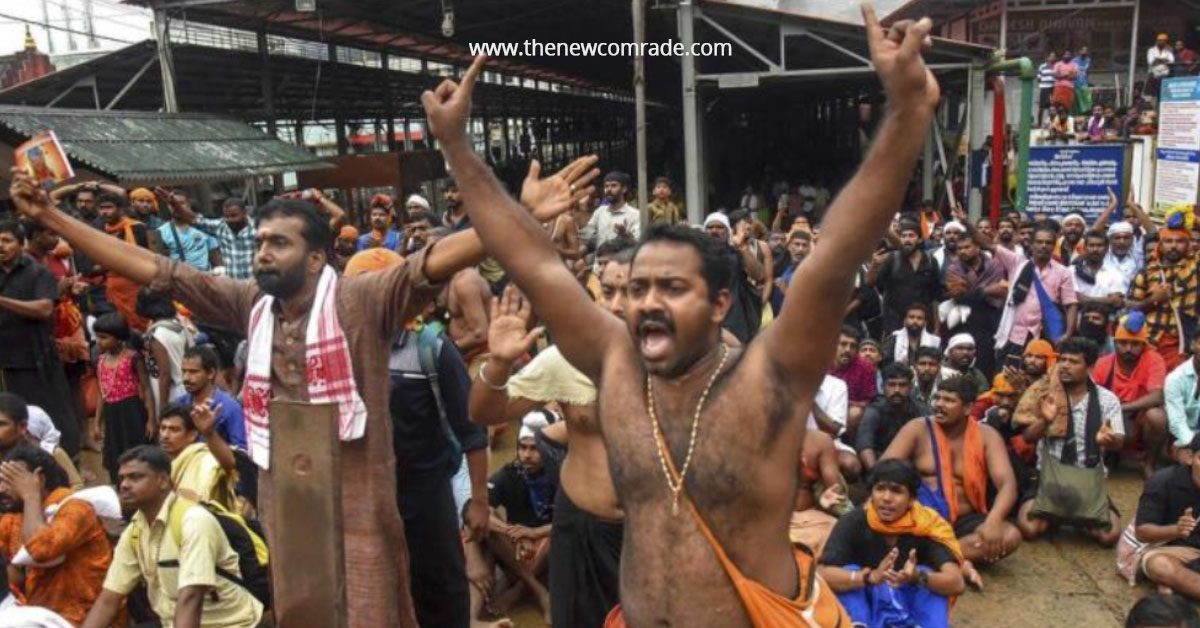
30. The Sabarimala Temple Women’s-Entry Protests, 2018–19
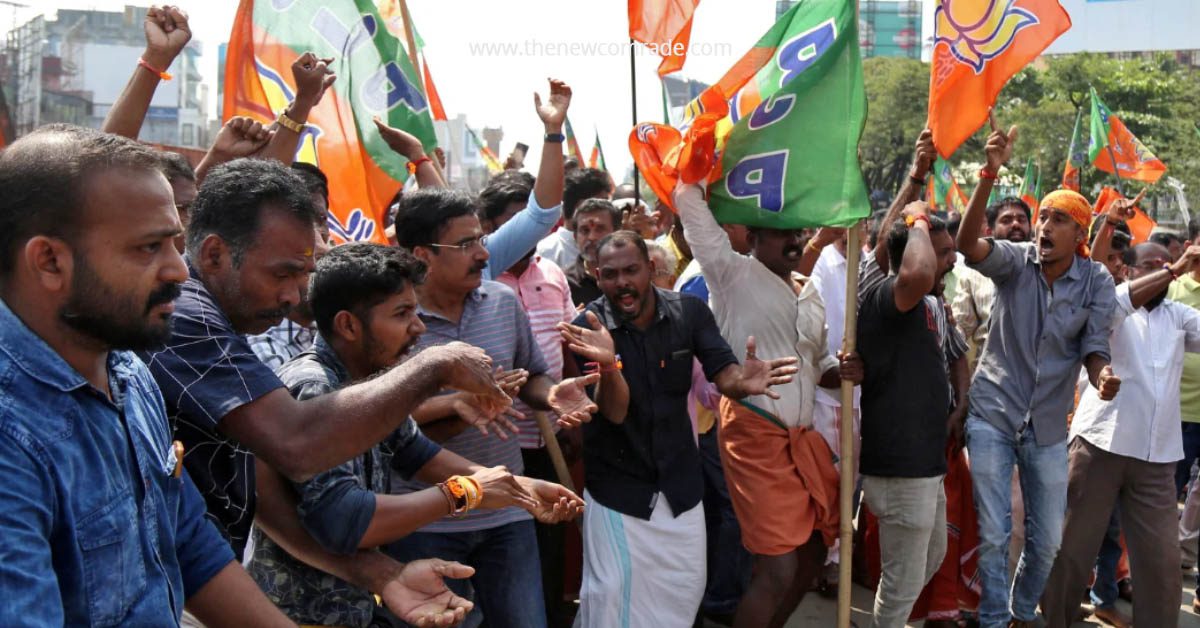
In September 2018, a Constitution Bench of the Supreme Court ruled, by a four-to-one majority, that the traditional exclusion of women aged ten to fifty from the Sabarimala temple violated the constitutional rights to equality and freedom of religion. The LDF government under Chief Minister Pinarayi Vijayan, who also held the Home Ministry portfolio, announced that it would implement the verdict, prompting sustained, and at points violent, protests led by the BJP, RSS, and affiliated organisations operating as the ‘Sabarimala Karma Samithi’; more than one hundred people were injured, close to 5,800 individuals were arrested within a single month according to contemporary reporting, and both the United States and United Kingdom issued travel advisories covering affected districts. On 2 January 2019, two women succeeded in entering the temple, triggering further unrest including a purification ritual performed by temple priests. This episode was the single largest instance of religious mobilisation in the BJP’s Kerala history.
Its inclusion in a chronological list of factors said to have increased “anti-Muslim mentality” specifically warrants a clarifying note: Sabarimala’s was a dispute over Brahmanical religious practice and the relationship between constitutional equality and religious freedom, and did not, at the level of its central legal or organisational dispute, involve the Muslim community as a party. However, the narrative created at the time strongly fumed with antipathy towards Muslim community. This episode demonstrated Hindu fascist organisations’ capacity to mobilise large-scale, sustained ‘Hindu religious sentiment’ behind the BJP, a mobilisation capacity RSS-aligned strategists have subsequently sought to apply, with more explicit reference to interfaith relations, to the later controversies addressed below.
31. Christian denominational politics and Hindutva sympathies
Sections of Kerala’s Christian community, particularly within the numerically dominant Syro-Malabar Catholic Church, have in recent years shown greater public receptivity to the BJP than in earlier decades, a shift visible in the emergence of self-described “Chris-sanghi” groups such as the Christian Association and Alliance for Social Action (CASA), and in statements by senior clergy, including Archbishop Joseph Pamplany, linking potential support to specific economic demands such as higher rubber prices. Converging factors could be seen at interplay here : shared anxieties over interfaith “love jihad” narratives targeting Christian women, casteist self-conception among Syrian Christian communities tracing family lineage to privileged-caste converts, the declining institutional strength of the Congress and Kerala Congress factions that traditionally channelled Christian loyalty, etc. Other Christian denomination leaders, including the heads of the Malankara Orthodox and Syrian Orthodox churches, have publicly rejected any accommodation with the BJP, citing attacks on churches by the Hindu fascist bodies elsewhere in India.
32. Sainik Schools and related training-camp controversies
Bhonsala Military Academy in Nasik, Maharashtra has been one of the central organs in the functioning of the RSS, since 1937. This Academy has functioned with de-facto official blessings ever since. It has been providing recruits to the Indian Army regularly. This is in addition to the various ideological and military training ‘shakhas’ which form the basic unit of RSS functioning in every place.
In 2021, the BJP-led Union government introduced a “public-private partnership” model for new Sainik Schools, the network of institutions that prepare students for entry into the National Defence Academy and other armed-forces training pathways, until then run exclusively as thirty-three fully government-funded schools under the Sainik Schools Society, an autonomous body under the Ministry of Defence. Under the new model, the central government provides partial fee support to private schools that receive Sainik School affiliation. By 2023-24, memoranda of understanding had been signed for roughly forty of a planned hundred new schools. Some 62 per cent of these forty new Sainik Schools were run by individuals or organisations linked to the RSS-BJP-Sangh Parivar, other Hindutva-aligned bodies, or Hindu religious organisations more broadly, in a small number of cases including sitting BJP politicians or the relatives of a chief minister. Kerala’s own addition to the scheme was 1) Sree Sarada Vidyalaya at Kalady in Ernakulam district, approved for Sainik School affiliation in 2023 and run by the Adi Sankara Trust, a unit of the Sringeri Sharada Peetham, a long-established Brahmanistic monastic institution ; 2) Vidhyadhiraja Vidyapeetom in Mavelikkara, Southern Alappuzha district and 3) Vedavyasa Vidyalaya near Ramanattukara at the border of Malappuram and Kozhikode districts. Separately from the Sainik School scheme itself, Kerala has seen a series of controversies over RSS-organised arms and “Officer’s Training Camp” drills, including a 2025 camp on the grounds of the Christian-run Mar Ivanios College in Thiruvananthapuram, and a pattern of similar drills at temples that led the Travancore Devaswom Board to issue a 2023 circular banning RSS and other organisations’ training activity, including armed drills, on the premises of the roughly 1,200 temples under its management.
Channelling state-subsidised, armed-forces-track education through organisations affiliated with the RSS-BJP aims at embedding its ideological formation within an institution. Commentary linking the Sainik School controversy to the separate temple- and college-ground training-camp episodes has argued that both illustrate a widening RSS effort to secure a foothold within Kerala’s religious, educational, and now defence-preparatory infrastructure; the RSS’s own public position, consistent with the account given elsewhere in this paper of the Officer’s Training Camp as a routine and decades-old feature of shakha-level cadre training, treats these camps as an ordinary and long-standing organisational activity rather than a new or escalatory departure, a position the Devaswom Board’s own 2023 circular implicitly disputes with respect to temple premises specifically.
33. The Alappuzha and Palakkad Retaliatory Killings, 2021–2022
Kerala recorded a cluster of xenophobic killings between RSS-BJP and PFI-SDPI-affiliated individuals across late 2021 and early 2022. In February 2021, RSS worker Nandu R. Krishna was killed at Vayalar, Alappuzha, prompting a BJP hartal. On the night of 18 December 2021, SDPI state office-bearer K. S. Shan was killed in Alappuzha, by RSS-linked assailants; within roughly twelve hours, on the morning of 19 December, a group identified by police as SDPI- and PFI-affiliated hacked BJP OBC Morcha state secretary Ranjith Sreenivasan to death at his home in Alappuzha, in retaliation for Shan’s killing. Fifteen men were convicted of Sreenivasan’s murder in January 2024 and sentenced to death the following month, one of the rare death sentences of the sequence; the prosecution of Shan’s killing, by contrast, had not reached trial as of the most recent reporting cited here, despite an earlier-filed chargesheet, a disparity Shan’s family and commentators have cited as evidence of unequal institutional urgency. In April 2022, a further cycle occurred in Palakkad: SDPI functionary Subair was killed on 15 April, followed within roughly twenty-four hours by the hacking death of RSS OBC-wing figure S. K. Srinivasan, which police described as retaliatory and suspected to also avenge the November 2021 killing of RSS worker Sanjith in the same district; a senior police officer investigating the Palakkad killings stated publicly that both murders were the product of a “planned conspiracy” rather than spontaneous violence.
BJP-aligned commentary has repeatedly invoked the killings of Sreenivasan, Srinivasan, and Sanjith as evidence of what it characterises as an organised campaign of Muslim violence against Hindu workers, using the episodes in state-wide mobilisation and in campaigning for the 2022 Union government ban on the PFI. The markedly faster judicial resolution and harsher sentencing outcome in the Sreenivasan case relative to the Shan case reflects an institutional asymmetry in how the state treats comparable political killings depending on the victim’s community and political affiliation.
34. The Halal and Food-Culture Controversies, 2021–present
From around 2021 onward, Kerala saw the emergence of sustained digital and, at points, street-level campaigns, associated with Hindu fascist social media networks and some RSS-affiliated organisations, calling for a boycott of “halal-certified” restaurants, hotels, and food businesses, framed variously as opposition to a specific religious certification economy, as a claimed instrument of covert religious taxation benefiting Muslim organisations, or, in some formulations, as linked to broader “love jihad” and “narcotic jihad” narratives concerning food and hospitality establishments allegedly used to target non-Muslim customers. The campaign, echoing similar controversies in Karnataka and other states during the same period, generated coverage in Malayalam and national media. The campaign formed an added pretext for economic boycott rather than a genuine food-safety or consumer-rights concern.
Unlike the other discrete, dated incidents catalogued here, the halal controversy has taken the form of an ongoing, diffuse campaign rather than a single triggering event, and assessments of its electoral significance accordingly differ in kind from the other entries. Being a template borrowed from Hindu fascist mobilisation in northern, central and western India, its principal function has been to normalise the treatment of routine commercial and culinary choices as markers of communal loyalty in a state where, historically, food culture had been comparatively free of such coding. The campaign has, at minimum, contributed to a wider public discourse in which everyday civic and commercial life in Kerala is more frequently discussed in explicitly communal terms than was the case a decade earlier.
35. The “Love Jihad” and “Narcotic Jihad” Controversies, 2020–2021
In September 2021, Bishop Joseph Kallarangatt of the Syro-Malabar Catholic diocese of Pala, addressing devotees at a church function in Kuravilangad, Kottayam district, alleged that Christian girls in Kerala were falling prey to what he termed “love jihad” and “narcotic jihad,” describing the latter as a deliberate strategy of inducing drug addiction among young non-Muslims, and citing rising drug use among Catholic youth as evidence, while offering no documentary substantiation for either claim. The remarks produced an immediate and sustained public controversy: the KCBC, representing the Syro-Malabar, Syro-Malankara, Knanaya Catholic, and Latin Catholic churches, subsequently issued a statement declining to use the specific terminology while defending the underlying pastoral concern; the Muslim Coordination Committee at Kottayam filed a police complaint, and a magistrate’s court ultimately directed police to register a case against the Bishop on charges of promoting religious hatred; Chief Minister Pinarayi Vijayan while verbally criticised the remarks, sternly declined to pursue prosecution; the BJP publicly defended the Bishop and later sought police protection for him after further protests.
This episode is widely cited as a significant marker of a broader, if uneven, warming between sections of Kerala’s Christian clergy and laity and the Hindu fascist movement, driven by a shared narrative of anxiety about interfaith relationships and radicalisation networks targeting Christian and Hindu women alike; some Catholic commentators, have characterised the Bishop’s remarks as an echo of pre-existing currents within the Church’s own discourse rather than a novel development.
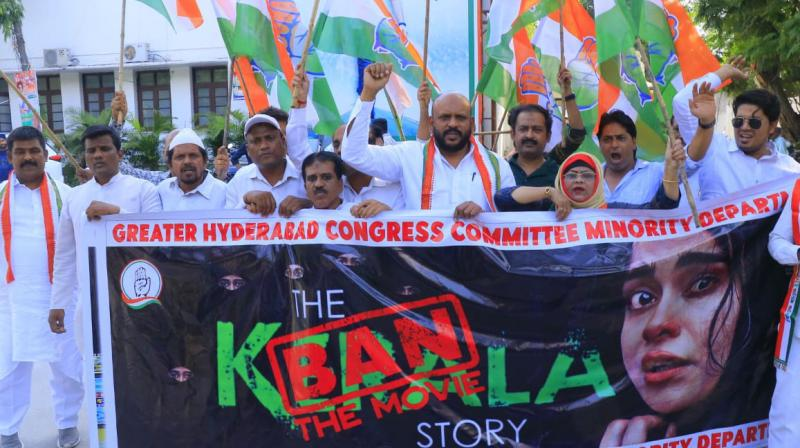
36. “The Kerala Story” Film Controversy, 2023–2024
The Hindi-language film “The Kerala Story”, released in May 2023, dramatised a narrative in which non-Muslim women from Kerala were shown being systematically converted to Islam as part of a ploy, and recruited into the “Islamic State” organisation, a claim its marketing had initially framed around a figure of 32,000 such women before the film’s own disclaimer scaled the figure back considerably following legal and factual challenges. Despite it being a factually unsubstantiated and defamatory portrayal of the state, the BJP promoted the film prominently, including tax exemptions and endorsements in several BJP-governed states, and Prime Minister Modi himself referenced the film’s underlying narrative in campaign remarks elsewhere in India. Within Kerala, some sections of the Christian clergy and laity organised or endorsed public screenings of the film, a further data point in the Christian-BJP convergence mentioned earlier.
RSS and BJP-aligned commentary has cited the film, and Kerala clergy support for it, as evidence of growing Christian receptivity to the party’s warnings about organised Muslim radicalisation in the state. Its promotion served as a polarising exercise timed ahead of the 2024 Lok Sabha election campaign; the film’s makers and BJP supporters have maintained that its broader narrative, if not every specific figure, reflected a genuine security concern documented in isolated recruitment cases that had drawn state and national investigative attention in preceding years. However, the revelations by a noted RSS-linked security affairs journalist Praveen Swami that India’s own intelligence agencies were involved in the recruitment and transport of those isolated recruitment cases to territories in Afghanistan controlled by “Islamic State” organisation did not elicit any discussion in mainstream public discussions in this regard.
37. The Kalamassery Convention Centre Bombing, 2023
On 29 October 2023, a series of improvised explosive device blasts struck the Zamra International Convention and Exhibition Centre in Kalamassery, near Kochi, during a three-day regional convention of the Jehovah’s Witnesses attended by more than 2,000 people; the attack killed a total of eight people, including a twelve-year-old girl, and injured more than fifty others. Within hours, Dominic Martin, who identified himself as a disaffected former member of the Jehovah’s Witnesses, posted a video online claiming responsibility and citing personal grievances with the group’s teachings, before surrendering to police in neighbouring Thrissur district; he was subsequently charged under anti-terrorism law, and investigators found no evidence connecting the attack to any organised conspiracy, treating it instead as the act of an individual estranged from the targeted community.
Though the perpetrator’s identity and stated motive being established and publicised within the same day as the attack, extensive speculative finger-pointing across on social media preceded Martin’s surrender, with rumour and conjecture briefly circulating that attributed the attack to organised terrorism linked to Muslims. The Police even summoned many Muslim past acquittals for taking them again to custody, until the perpetrator’s public confession spoiled their plans. The episode is cited here not because the underlying attack itself involved inter-religious conflict, since it did not, but to point to the speed and intensity of unfounded xenophobic speculation that preceded the disclosure of the actual perpetrator’s identity, an illustration of how sensitised Kerala’s public discourse around religious-community violence had become by 2023.
38. The role of bureaucracy, police, and judiciary
Critics across the political spectrum have periodically alleged that elements within Kerala’s police and bureaucracy have shaped investigations and public narratives in ways that disadvantaged the state’s Muslim population, a charge most prominently made in 2024 by sitting Nilambur MLA P. V. Anvar, who accused a senior police officer of colluding with RSS figures and disproportionately implicating Muslims in narcotics and gold-smuggling cases. Separately, the commission that investigated the 2003 Marad killings claimed to have found evidence implicating Muslim League-linked figures in a premeditated conspiracy, while critics have argued it reflected selective institutional attention depending on which community was victimised. Because such allegations run in more than one direction and are frequently advanced by actors with a direct stake in the outcome, they are best read as evidence of a long-standing contest over the perceived neutrality of Kerala’s law-and-order machinery rather than as settled findings.
39. Whether the RSS has been treated as a threat to secularism
Neither major front has campaigned against the RSS with the institutional seriousness each applies to Muslim organisations such as the Popular Front of India, notwithstanding the RSS’s documented history of confrontation with the CPI-M and its being named as an organisation whose founding ideology denies the legitimacy of a civil order based on fairness and natural justice. The manner in which Kerala’s mainstream parties calibrate their rhetoric to the interests of the deeper state and elements within it and unapologetically subscribe to the Hindu nationalist narrative, remains an area deserving extensive study and articulation. It has been worth noting that often the leaders and the media of both the parties in both the fronts have repeatedly propagated the talking points of the RSS and normalised them, fed into the agendas of the RSS and given them almost an undeclared impunity from any legal action for their words or deeds. It would be imperative here to mention here the voluminous annual compilation and documentation done of the Islamophobic media coverage and public statements done in Kerala during the years since 2023 by the Kerala Network against Islamophobia. Worse still, even the resurrection of Babari mosque demolition movement in the early 1980s could be traced to the work done by the former Chief editor of the mouthpiece of CPI-M (first one following its coming into the hands of the dominant faction after the split in CPI), viz. V.T. Induchoodan, in the late 1970s.
(Will be continuing to Part 3)