Review of Maryam Jameelah, Islam versus Ahl al-Kitab: Past and Present. Mohammad Yusuf Khan, 1968; rev. ed., 1978.
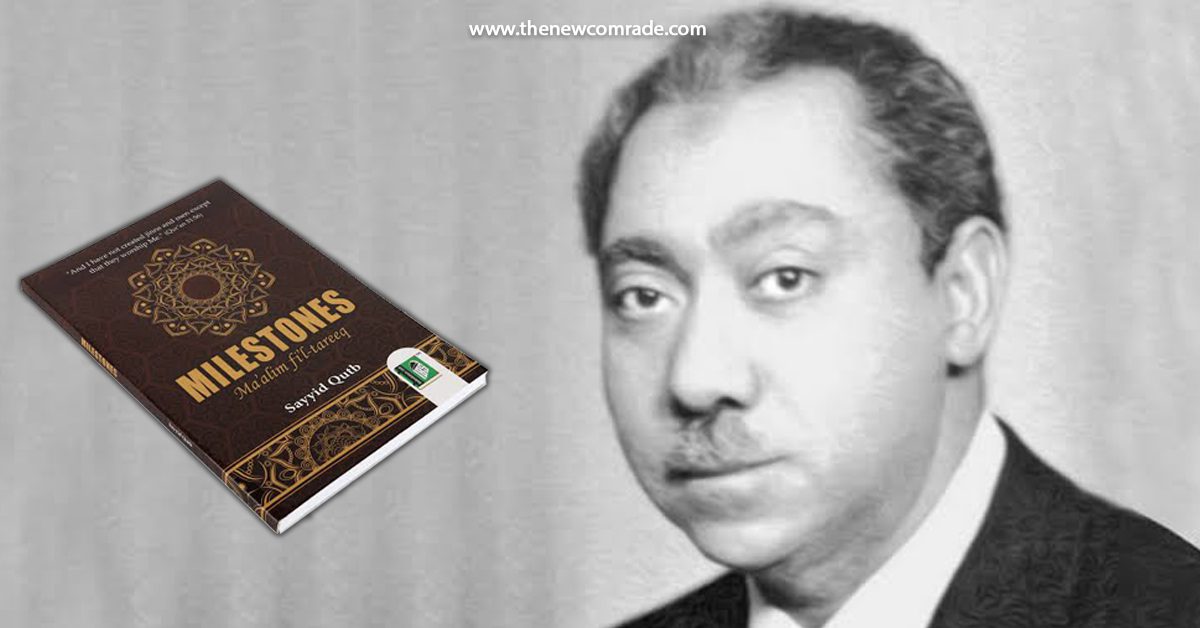
Few figures in twentieth-century Islamic literature are as singular, or as difficult to classify, as Maryam Jameelah. Born Margaret Marcus in 1934 into an assimilated Jewish household in New York, she travelled in the course of a decade from the liberal intellectual climate of postwar American Jewry to the austere, self-consciously anti-modern traditionalism of Islamicist Lahore. That journey generated its own small scholarly literature on conversion and postcolonial identity. It is also inseparable from the book under review. Islam versus Ahl al-Kitab: Past and Present, first published in Lahore in 1968 and substantially revised in 1978, is at once a work of comparative theology, a historical narrative of prophecy and scriptural transmission, an autobiographical settling of accounts and, above all, a political intervention. It runs to some 417 pages in its revised edition, and it is the argument of this review that its most durable significance lies not in its theology, which is a means, but in the political conclusions to which that theology is made to lead.
The book’s subtitle announces its organising conceit. The theological deviations that Jameelah attributes to Judaism and Christianity are, in her account, not inert facts confined to antiquity. They are living forces, visible in contemporary geopolitics, in the character of Western secular modernity and, most urgently for her intended readership, in the internal life of the Muslim community itself. The book therefore moves, with remarkable fluidity, between registers: Qur’anic exegesis gives way to potted intellectual history of the Reformation and the Enlightenment; polemical set-pieces against Reform Judaism and liberal Protestantism alternate with long citations from Orientalists, Zionist ideologues and biblical critics; and a defence of Islamic civilisational holism sits beside a closing warning to Muslim modernists that they are repeating the errors that hollowed out the other two Abrahamic traditions from within.
This review attempts to take the book on its own terms and then to test it against the historical record. It draws on two kinds of evidence, and the reader is owed a candid account of both. The first is the full volume, whose argument and page references are used below for its theology, its treatment of Judaism and Christianity, and its warning to Muslim modernists. The second is the condensed essay version that circulates online and reproduces the book’s closing political programme, together with descriptive records of the full text.
The review proceeds in four movements. It first examines the author as a political witness, whose biography supplies the book’s rhetorical authority. It then reconstructs the theological premises, universality, scriptural integrity and the Shariah as total order, showing how each is converted to a political proposition. It next turns to the two great political claims, concerning Zionism and concerning the imperial vision of the West, and tests them against the historiography of Christian Zionism, political Zionism and Anglo-American policy. Finally, it assesses what survives that test and what does not. The conclusion, in brief, is that the book is strongest where it is most historical and weakest where it is most categorical, and that its thesis is analytically useful when disaggregated and politically hazardous when taken whole.

The Author as Political Witness
Jameelah’s authority in this book rests substantially on a claim of experiential insiderhood. She does not present herself as someone who has studied Judaism and Christianity from without. She presents herself as someone who has lived within the Jewish household and the broadly Protestant-inflected civic culture of mid-century America, and who found each wanting before she ever encountered Islam. When she describes the ‘intellectual dishonesty, hypocrisy and superficiality’ that she detected in the Reform Judaism of her childhood, and then expresses dismay at finding an analogous tendency among modernising Muslims, she is trading on the authority of testimony rather than argument alone (p.10-11). The reader is invited to trust her diagnosis not simply because she cites the relevant scholarship, though she does so at length, but because she claims to have watched the decline happen from the inside.
Her own account of her path gives the political content of that testimony a sharper edge than the theology alone would suggest. She records that she attended the Ethical Culture Sunday school between the ages of eleven and fifteen and that at eighteen she joined Mizrachi Hatzair, a religious Zionist youth movement. She left within months, recalling that she had come to believe the Zionist programme made hostility between Jews and Arabs irreconcilable. A university course on Judaism and Islam at New York University completed what she describes as her disillusionment, and she embraced Islam in 1961. After an extended correspondence with the prominent ideologue Sayyid Abul A’la Maududi she moved to Lahore in 1962 at his invitation, married a member of the Jamaat-e-Islami, and remained there for the rest of her life, producing some thirty-odd books and pamphlets before her death in 2012.
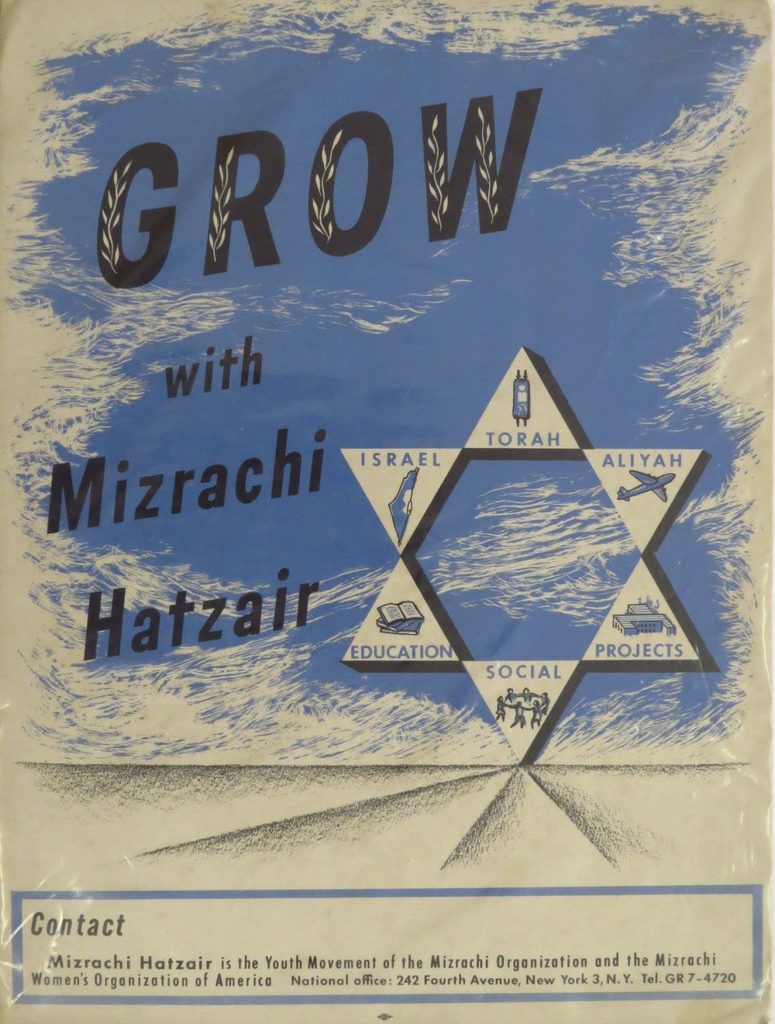
The significance of this biography is political before it is spiritual. A former member of a Zionist youth movement who has become a disciple of Maududi is, for her Muslim readers, a uniquely valuable witness: she can testify from memory to the psychological mechanisms, the accommodations, euphemisms and selective emphases, by which a religious community builds chemistry with nationalism and secular modernity. For her critics the same biography is a warning. For them, her personal experiences are a narrow basis for generalisations about Jewish theology and Western statecraft. The register of the book follows from this. It is not a detached survey of interfaith relations. It is the work of a convert who regards the rejection of her former communities as a condition of truth, and who offers her biography as corroborating evidence for her claims.
She writes from a historiosophical framework in which religious history is not a story of gradual moral progress but a repeated cycle of decline. An original, pure monotheism is revealed to successive prophets (as); it is progressively corrupted by tribal self-interest, political expediency and philosophical speculation; and Allah Almighty intervenes again with a fresh corrective revelation. Judaism and Christianity are, on this reading, not rivals in a pluralistic marketplace of faiths but earlier chapters in a continuous revelatory history that culminates in the Qur’an. The political corollary is immediate. If history is a cycle of corruption and correction, then the present is a moment of acute danger, since the Muslim community stands where earlier communities once stood and may repeat their fate. The book is, in this sense, a political warning using the language of comparative religion. The definition of Islam with which she opens sets the tone for all that follows: submission to Allah’s will through unquestioning obedience to His law as contained in the Qur’an and the Sunnah of the Prophet SAAWS (p.1). The definition is an axiom, and Jameelah is consistently more interested in deduction from it than in the comparative fieldwork that might complicate her conclusions. Politically, the axiom matters because obedience to law is not confined to private devotion. A law that governs criminal justice, economic exchange and political sovereignty cannot be obeyed in a social order that does not enforce it. The theology therefore carries within it, from its first page, a theory of the state.
From Names to Sovereignty: The Theological Premises
The opening theological move of the book is deceptively simple. Judaism, Jameelah observes, takes its name from a tribe and Christianity from a person, whereas ‘Islam’ denotes neither a founder nor an ethnic group but a universal condition, submission to Allah, available in principle to every human being. From this onomastic observation she derives a substantive claim: that truth, by its nature, must be universal, and that a revelation intended for the whole of humanity could not sensibly be named after a single tribe or individual (p.1-2). The argument moves quickly to a sweeping claim about comparative scriptural reliability. Its rhetorical efficiency, however, should not be underestimated. In one gesture she has established a hierarchy among the Abrahamic traditions that governs the rest of the book: Judaism and Christianity are particular, ethnically and historically bounded; Islam is universal.
The condensed essay sharpens the political implications of this premise. As ‘conclusive proof’ of Judaism’s falsity Jameelah offers a statement by Isaac Franck, executive vice-president of the Jewish Community Council of Washington, that Judaism is valid only for Jews and does not seek to impose its views on others. A God who is omnipotent, she reasons, would not confine truth to one people. Christianity fails the same test from the opposite direction: its claim to universality is voided by its acceptance of secularism, and its moral content is compromised by the Trinity and vicarious atonement. The result is a structural diagnosis rather than a mere doctrinal disagreement. If Judaism is tribal, its political expression, Zionism, is the logical outcome and not an accident. If Christianity has surrendered moral universality to secular statecraft, its political expression is imperial power wielded without ethical limit. The essay makes the contrast explicit: Islam alone created a state dominated by religious and moral motives, showing that political power can and should serve ethical ends. By implication, other civilisations subordinate morals to power.
The second premise concerns scripture, and it is here that the book supplies what it regards as its empirical ballast. The Qur’an, Jameelah maintains, survives as it was first recited, preserved in a language that continues to be spoken, read and studied by hundreds of millions of people. The Torah and the Gospels, by contrast, exist only in translation, have been reworked by successive generations of scribes and editors, and can no longer be separated from later human interpolation by any scholar, Jewish, Christian or secular (p.1-2). The most striking feature of the argument is its use of Western scholarship against its own tradition. Rather than relying solely on Islamic sources, she turns to the ‘Higher Criticism’, the historical-critical method developed within Protestant and secular European universities to analyse the Bible as a human document assembled and revised across centuries. She notes with evident satisfaction that few contemporary Jewish or Christian scholars regard their scriptures as verbally infallible dictation. The strategy is one of turning the master’s tools against the master’s house: the apparatus that Western universities exported around the world becomes an indictment of the very scriptures it was founded to study.
There is a linguistic argument alongside the textual one, and it deserves to be taken seriously on its own terms. A revelation addressed to the whole of humanity cannot remain locked in a language that has died out and is accessible only to a guild of philologists. The Qur’an, preserved in a classical Arabic that remains a living liturgical and scholarly language and memorised in its entirety by an unbroken chain of huffad, meets that condition in a way that she believes neither Biblical Hebrew nor Koine Greek does for their communities. The earlier scriptures, she adds, were addressed to particular peoples with legal and ritual provisions suited to local circumstance, whereas the Qur’an presents itself explicitly as a message to all humankind, formulated as a complete and timeless code (p.309-310).
The political bearing of the scriptural argument is easily missed. A complete and timeless code is a code that is capable of being enforced as law. The claim that the Qur’an alone is uncorrupted is therefore also a claim about legitimacy: only a polity governed by an uncorrupted text can claim to be governed by Allah Almighty. The scriptural argument does not stand beside the political one. It is its foundation. A third element is the prophetic model. Where the lives of earlier prophets survive only in fragmentary and contested form, Jameelah observes, the life of Muhammad – SAAWS – has been documented in detail: his habits, his conduct in war and peace, his treatment of family, strangers and enemies, his private devotions and public judgments (p.14). This comprehensiveness is a theological necessity. If the Qur’an is the final revelation for all humanity, the human exemplar who first embodied it must be documented completely enough to serve as a practicable model in every generation and every walk of life, as father, ruler, warrior, judge and statesman at once. She adds a subtler point, that the sheer intimacy of the record is itself evidence of the Prophet SAAWS’s moral transparency. It allows her to present Islam as a total way of life with a fully worked-out practical exemplar, including an exemplar of statecraft and war, in explicit contrast to the thinner and more theologically mediated access that Jews and Christians have to the lives of their own prophets.
The Shariah, Secular Dualism and the Question of the State
The book’s positive vision reaches its fullest expression in its account of the Shariah as a comprehensive and integrated system governing private devotion, family structure, economic exchange, criminal law and political sovereignty alike. Jameelah presents this integration as Islam’s principal advantage over the other two traditions and develops the claim through a critique of what she regards as their characteristic failure modes: Judaism’s retreat into legalistic and ethnic particularism, and Christianity’s structural bifurcation of the spiritual and temporal orders.
Her rejection of monasticism and asceticism is among the book’s more forceful passages. Spiritual progress, she argues, is to be sought through active engagement in ordinary life rather than withdrawal from it, and Islam is characterised by simplicity, moderation and freedom from the theological complexity and ritual elaboration that she believes burden the other traditions (p.38-39). The correct posture of the believer is not to determine independently how Allah Almighty ought to be worshipped but to receive that determination from revelation and to submit to it without negotiation. The political implication is already visible: a religion that refuses withdrawal and seeks transformation of ordinary life cannot be indifferent to who governs ordinary life.
The critique of Christian dualism is historically ambitious and the most consequential section of the theological argument. Jameelah contends that the early Church’s acceptance of a separation between spiritual authority, vested in ecclesiastical institutions, and temporal authority, vested in the state, left Christianity permanently vulnerable to erosion by secular power. When the shocks of the Renaissance and the Enlightenment arrived, Christian theology had no conceptual resources with which to resist the state’s steady annexation of domains, law, economics, education and family policy, that had once fallen under religious jurisdiction. The eventual result was a Christianity confined to private conscience, perpetually renegotiating its teaching to accommodate the shifting norms of secular liberal society. Islam, by contrast, never accepted the bifurcation, and therefore possesses at least in principle the doctrinal resources to resist secularising erosion, provided that Muslim societies do not themselves succumb to the temptation to imitate the West’s historical trajectory.
Here the book’s central political proposition comes into focus. Because the individual believer cannot fully realise the ethical demands of Islam within a social order organised on secular principles, the establishment of a matching ‘environment’ is, for Jameelah, not a matter of political preference but of religious necessity. Every domain of ordinary life, domestic, economic, political and military, functions as an examination whose successful completion requires undivided attention to revealed guidance, and that in turn requires a social and political environment structured according to the Shariah. The doctrine of tawhid, the absolute unity of God, is accordingly presented not merely as a metaphysical proposition but as a total orientation of the personality: the believer who submits wholly to Allah alone is freed from servility to worldly powers, since no earthly authority can help or harm someone whose fate rests entirely with Allah. This conviction, she argues, produces moral courage, psychological equanimity and generosity of spirit towards all of Allah’s creatures.
It is important to record that Jameelah insists, at this level of the argument, that the conviction of possessing the final truth should not translate into contempt for non-Muslims. Islam, she maintains, commands justice and equitable dealing towards them and enjoins believers to regard every human being as a potential recipient of guidance rather than a permanent adversary; the appropriate posture of the confident believer is humility rather than triumphalism, since one’s own community might yet fall into error while individuals outside it might yet find the truth. The condensed essay reaffirms the point: Islam commands justice and kindness towards non-Muslims, and no one may be compelled to accept the faith. As such, the book contains two registers, one of ethical restraint and one of civilisational conflict, and that the relation between them is never fully resolved. The third premise, which the essay makes plain, concerns the nature of conflict itself. Jameelah rejects the idea that common humanity can reconcile rival ideologies. She points to the failure of the League of Nations and the United Nations, and offers the analogy of a husband and wife who agree on nothing and cannot save their marriage merely by asserting that both are human. In the ideological battle, she concludes, the human tie alone is not enough. This is a realist argument, and it is the hinge on which her political programme turns. Interfaith dialogue, on this view, is not wrong because it is insincere but because it mistakes the nature of the contest: between traditions that each claim final and exclusive truth, conciliation without a shift in the balance of power merely disguises a retreat. The theology of universality, the theory of scriptural integrity and the realism about conflict together prepare the ground for the two political claims to which the review then turns.
Conditional Tolerance: The Political Theory of Coexistence
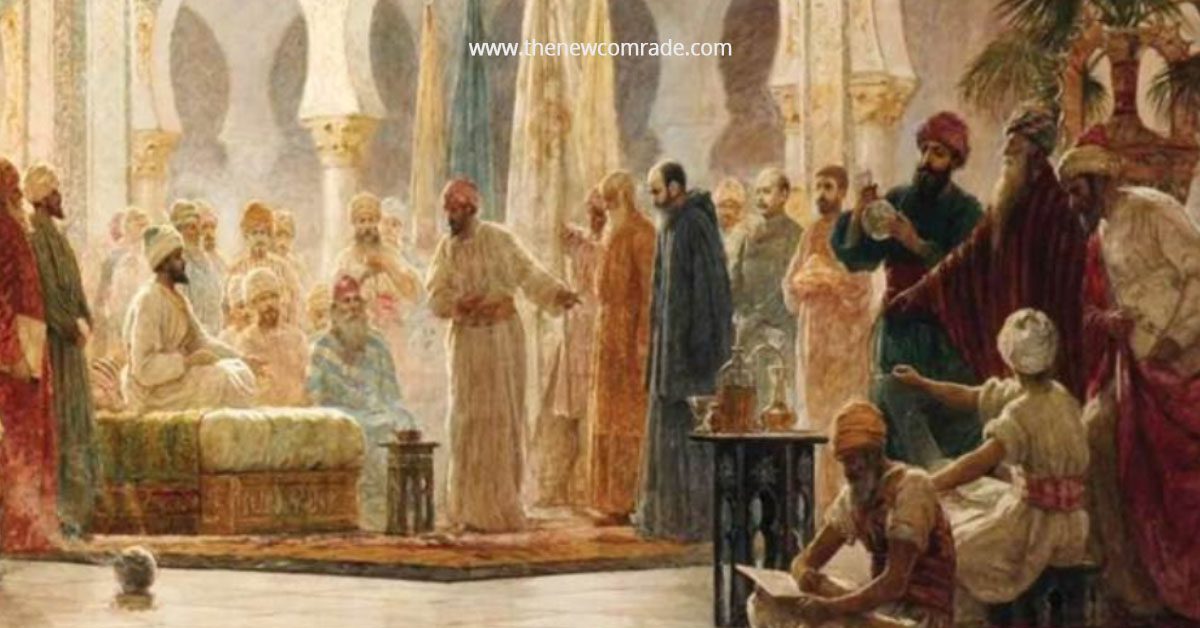
A reader approaching the book for its politics will want to know what it implies for the position of non-Muslims within the Islamic order that it advocates, and the answer is more textured than the polemical passages suggest. Jameelah draws a pointed historical contrast between the treatment of Jewish communities under medieval Muslim rule, citing in particular the flourishing of Jewish intellectual and cultural life in Muslim Spain, and their treatment under Christendom. The comparison serves two purposes. It rebuts the charge that Islam is inherently intolerant, and it supports a counter-charge that the Western tradition, which prides itself on pluralism, was for centuries the more persecuting civilisation. In a book published in 1968, when the Muslim-Zionist conflict was widely presented in the West as a struggle between a tolerant democracy and an intolerant region, the historical reversal carries an obvious polemical charge.
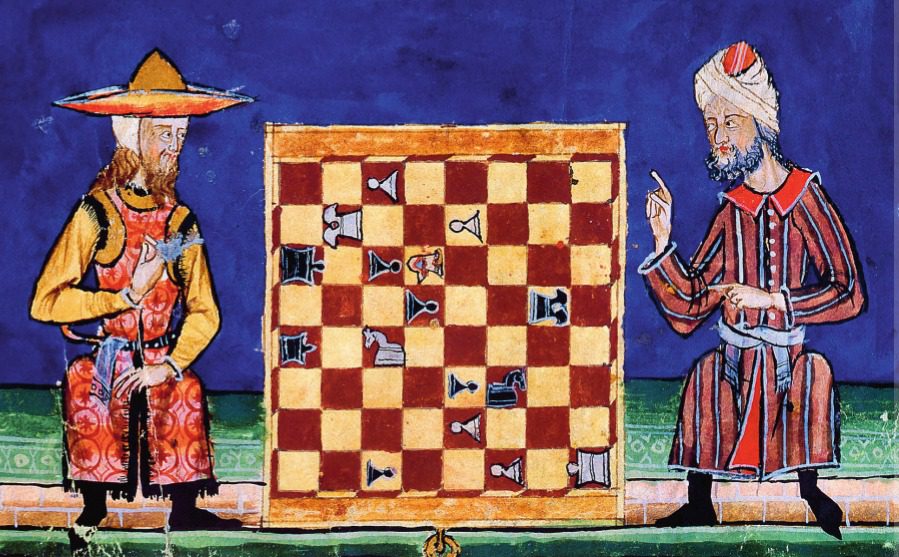
What distinguishes Jameelah’s version of the argument is the condition that she attaches to it. The historical tolerance of Muslim societies, she insists, was contingent upon those societies maintaining confidence in, and the institutional integrity of, their own religious and legal framework. It did not rest on any principle of religious relativism. Contemporary Muslim engagement with Jewish or Christian communities must therefore proceed from a position of doctrinal and civilisational self-assurance rather than from a spirit of theological compromise. The implication is that tolerance is a by-product of strength. A confident Islamic order can afford to protect minorities because it is not threatened by them; an anxious or modernising Muslim society, which seeks the approval of the West, will neither protect them well nor defend its own tradition.
This is a recognisably classical position, in that it echoes the logic of the dhimma, the covenant of protection under which non-Muslim communities of the book were permitted to practise their religion and manage their internal affairs in return for acknowledging the political supremacy of the Islamic state. It is also, for the modernist liberal, a deeply unsatisfactory one — whereby they view, disregarding the sanctity historically accorded to Shar’iah, that a protection that is granted from a position of superiority can be withdrawn by the same authority, and the minority has no claim of equal citizenship against it. Jameelah does not confront this objection. She states that a just Islamic state will treat its minorities justly, and she offers the history as evidence; she proposes no explicit constitutional mechanism by which that justice would be secured if rulers failed. By the orthodox Muslim doctrine, sovereignty belongs to Allah alone and the state is the instrument by which divine law is administered on earth. In that framework the categories of democratic politics, popular sovereignty, majority rule and the equality of citizens irrespective of belief, are not neutral procedures but expressions of a rival theology. Her warning against Muslim modernists is a warning against precisely those who would anchor the state to those categories.
Judaism, Zionism and Racism
The chapters on Judaism are the most complex, not least because they resist summary as simple polemic. It is here that Jameelah’s biographical proximity to her subject is most evident, and it is here that the argument reveals a layered structure considerably more nuanced than the title might suggest. Three qualifications are worth recording before the political charge is examined.
First, Jameelah affirms that the Torah, the Psalms of David (AS) and the Gospel of Jesus (AS) were, in their original form, genuine revelations bestowed by Allah upon earlier prophetic communities (p.5-6). Moses (AS) is regarded with a reverence comparable to that which Muslims accord Muhammad — SAAWS, and the Mosaic law functioned for centuries as an authentic and sacred code (p.25). She traces with evident scholarly interest the process by which the oral law was codified in the Mishnah and the Gemara into the Talmud, which many Jews came to revere as divinely inspired (p.30-31). The book does not propose that Judaism was false from its inception. It proposes that Judaism began as authentic revelation and was corrupted through a historical process, which she locates in part in the work of Ezra and the post-exilic scribes, whose final redaction of the Five Books, she argues, reflected the nationalist and ethnic preoccupations of a community in the aftermath of exile rather than the universal monotheism of Moses (AS) himself (p.37-38).
Second, she insists that the Qur’an’s criticism of the historical conduct of Bani Isra’il is not a blanket condemnation of Jews as such. The Qur’anic text distinguishes between the collective failures of certain communities and the standing of individual believers who remained righteous within them (p.12). This distinction between communal-historical critique and individual moral standing recurs as a structural feature of her argument and complicates any characterisation of the book as straightforwardly racialised.
Third, and most significant, she insists that Zionism must be understood as historically and theologically distinct from traditional Judaism rather than as its natural political expression. She characterises it as a nineteenth-century Jewish modernist movement, shaped by European nationalism and secularism, which emerged in considerable hostility towards traditional Judaism. Secularised Jewish intellectuals appropriated the vocabulary of covenant, chosenness and promised land and redeployed it to legitimate a modern territorial nation-state, a project she regards as a further and more radical secularisation of an already corrupted tradition rather than the fulfilment of prophecy. She frames the persecution of Jews in Christian Europe and the emergence of Zionist nationalism as a tragic irony: a community that endured centuries of European antisemitism absorbed some of the nationalist and militarist assumptions of the civilisation that had persecuted it. She also contrasts the flourishing of Jewish intellectual life in Muslim Spain with the treatment of Jews in Christendom, while insisting that this tolerance was contingent upon Muslim societies maintaining confidence in their own religious and legal framework rather than on any principle of relativism.
Against these qualifications must be set the register of the condensed essay, which is markedly less careful. The descriptive record summarises the book’s argument as the growth of a ‘racist’ religion, dressed in modern political and military sophistry, into the menace of Zionism, and it describes a closing chapter that sets racist Judaism against neo-imperialist Christianity as the twin foils of Islam. The pairing is revealing. Whatever the nuance of the theological chapters, the book is organised politically around two faces of one adversary. The reviewer must hold both facts in view at once: the book distinguishes Zionism from Judaism, yet its commendatory framing, and the logic of its tribal-versus-universal premise, tend to collapse the distinction again. If Judaism is tribal by nature, its nationalism is not a deviation from it but its fruit.
The historical record resists that collapse. Political Zionism arose in the 1880s and 1890s as a response to pogroms in the Russian empire, to the failure of emancipation in central and western Europe and to the rise of European ethnic nationalism. Its founders, Leon Pinsker and Theodor Herzl, were largely secular, and the movement drew on the language of national self-determination rather than religious commandment. Religious Jews were deeply divided. The Reform movement’s Pittsburgh Platform of 1885 declared that Jews were a religious community and no longer expected a return to Palestine, and much of ultra-Orthodoxy regarded a human-made return as a usurpation of divine prerogative. Mizrachi, the movement Jameelah herself joined, was founded in 1902 to argue for a religious Zionism and was, in effect, a minority position within a largely secular movement. Zionism thus used religious symbols for national ends, which is a different phenomenon from Judaism naturally issuing in nationalism. In this respect the book’s own distinction between Zionism and Judaism is better supported by the evidence than the equation implied by its framing, and the review’s first judgment is that Jameelah is at her most persuasive when she separates the two and at her least when she merges them.
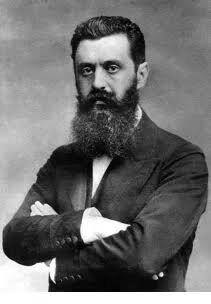

Where she stands on firmer ground is in the colonial character of the project, a claim that Zionist leaders themselves did not hesitate to make in their own day. Herzl sought a charter from the Ottoman sultan and, failing that, from the German and British governments. The financial vehicle created in 1899 was named the Jewish Colonial Trust. In his pamphlet he presented the future state as an outpost of European civilisation facing Asia, a framing that invited the patronage of an imperial power. In 1923 Vladimir Jabotinsky, founder of the Revisionist tradition, argued in his essay ‘The Iron Wall’ that colonisation could only proceed behind a force that the native population was unable to breach, because no people would consent to be displaced. These statements do not prove that Zionism was merely colonialism, but they show that the vocabulary of colonial settlement was native to the movement before it became a term of the Muslim polemic.
Edward Said, in The Question of Palestine, set the Zionism project within the history of Western representation and domination of the East. Jameelah’s insistence that Zionism cannot be understood without its colonial and imperial context lies well within the range of serious scholarship, irrespective of how theologically she places it.
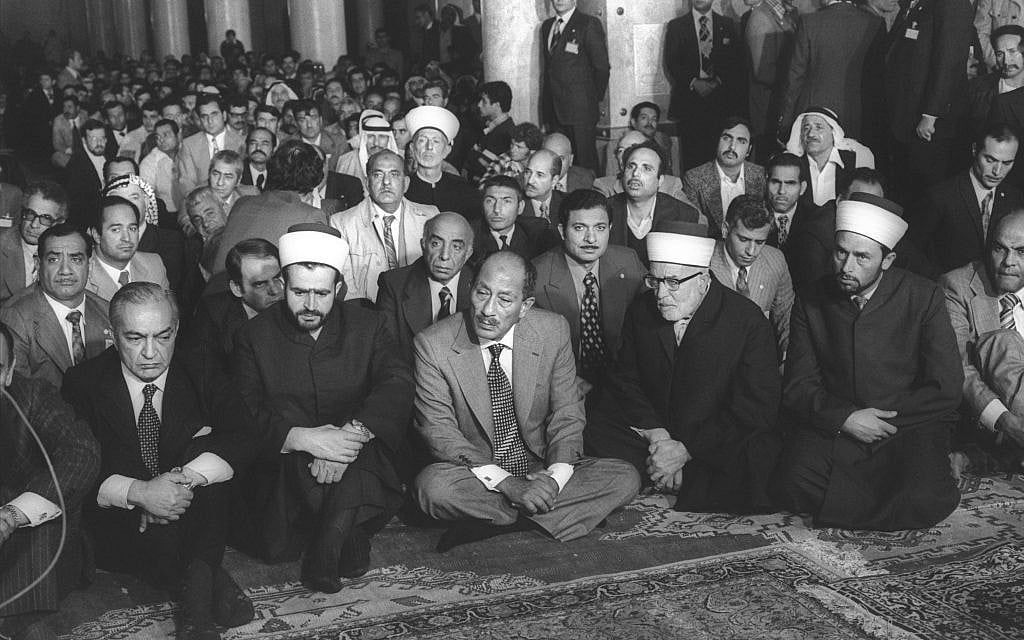
One passage in the book captures its ambivalence in miniature. Jameelah reproduces an account of an interfaith exchange in which the Egyptian Azharite scholar Muhammad Abd ur-Rauf ( d. 2004 — Teacher at Religious Institute of Kuwait in the late 1940s and 1950s, Director of Islamic Centre in New York City since 1965 and then in Washington DC since 1971, until being expelled for being part of President Anwar el Sadat’s normalisation delegation to Jerusalem and later the first rector of International Islamic University of Malaysia ) speaks of a shared core of religious values and the German-American Rabbi Henry Siegman ( Chaplain at US Army, fellow at Council of Foreign Relations, 1978 – 1994 Executive Director of American Jewish Congress ) speaks of a common religious and cultural legacy binding Judaism and Islam. She juxtaposes it with Qur’anic passages critical of the historical conduct of certain Jewish communities and uses the contrast to ask how far theological reconciliation can honestly proceed given unresolved doctrinal disagreements (p.4-5). It is a political as much as a theological manoeuvre. The common ground is acknowledged and then declared politically inert.
Christendom, Restorationism and the Origins of Christian Zionism
On the evidence of the essay and the descriptive records, Jameelah places the role of Christendom before, and as a condition of, the Jewish movement. The commendatory description speaks of a Zionism ‘bred on the support of Western treachery and collusion’, and the essay bundles Zionism with Christian missions and Orientalism as parts of a single Western offensive. This review does not claim to reproduce her chapter-level narrative, which it could not verify. It sets out instead what the historical record shows on the question she raises, since the record is more favourable to her ordering of events than critics sometimes allow.
The roots of Christian Zionism lie in the Protestant Reformation. The translation of the Bible into vernacular languages and the elevation of scripture over tradition made the Old Testament a living political text, and Puritan England in particular drew on its imagery of covenant, exodus and return. Seventeenth-century divines such as Thomas Brightman and Henry Finch argued that the conversion and restoration of the Jews were prophesied events, and the debate over the readmission of Jews to England under Cromwell was conducted partly in those terms. Restorationism at this stage was a theological expectation rather than a programme of state, but it established the idea that the political fate of the Jews in Palestine was a Christian concern.
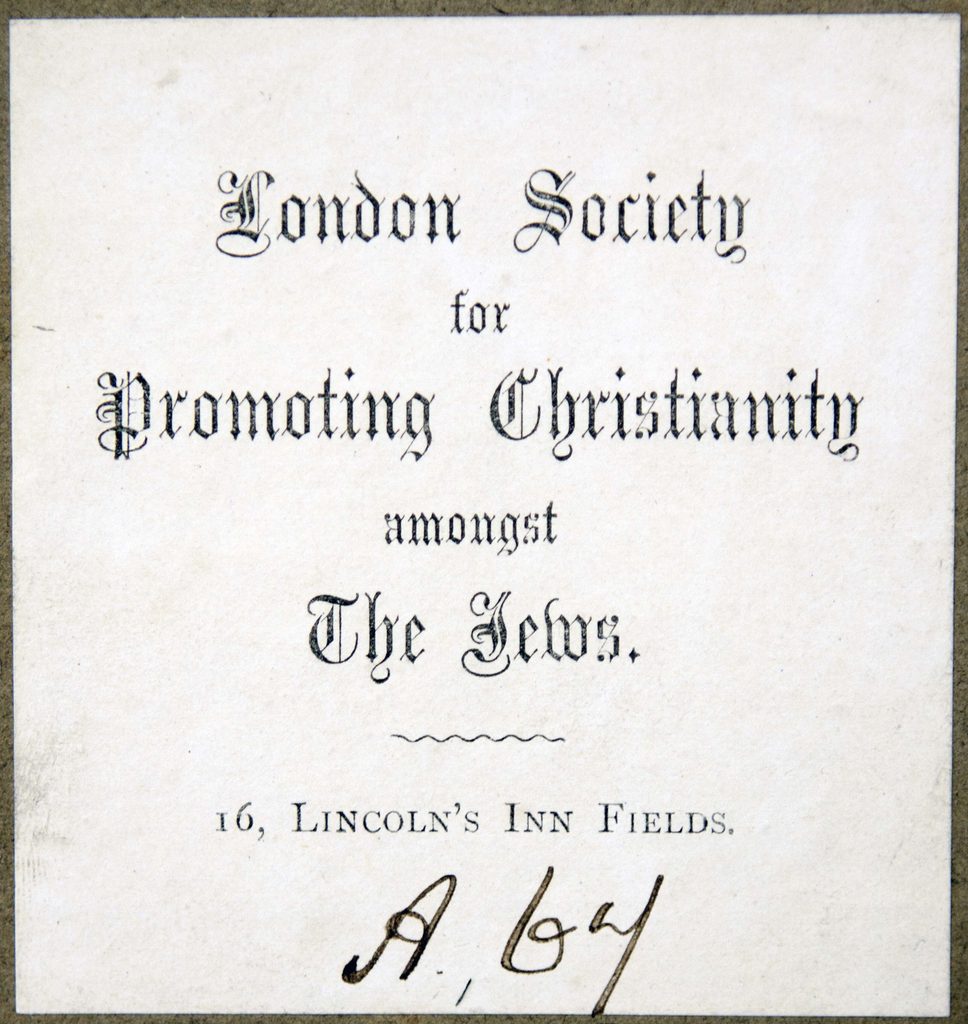
In the nineteenth century the expectation acquired institutions and diplomatic force. The evangelical revival in Britain produced the London Society for Promoting Christianity amongst the Jews, founded in 1809, and the premillennial teaching of John Nelson Darby, whose dispensationalism separated God’s purposes for Israel from those for the church. Lord Shaftesbury, the most influential evangelical statesman of the age, campaigned for Jewish settlement in Palestine as part of Britain’s mission, and his diary phrase of 1853 about a country without a nation for a nation without a country became the template for a long-lived slogan. Palmerston sponsored a British consulate in Jerusalem, and in 1841 Britain and Prussia created a joint Anglican-Lutheran bishopric there, headed by a Jewish convert to Christianity. These measures mixed missionary zeal, rivalry with France and Russia, and a conviction that Britain had a providential role in the Holy Land.
Across the Atlantic the same current flowed through American evangelicalism. The Blackstone Memorial of 1891, a petition to President Benjamin Harrison urging support for a Jewish homeland, was drawn up by the Chicago businessman and lay preacher William Blackstone and attracted signatures from leading public figures. The Scofield Reference Bible of 1909 embedded dispensationalist notes in the margins of a text read by millions of American Protestants, and in the later twentieth century preachers such as Hal Lindsey and Jerry Falwell turned the doctrine into a mass political force.
Two features of this history support Jameelah’s ordering. First, Christian Zionism did precede Jewish Political Zionism. Herzl published The Jewish State in 1896, and the Anglican chaplain William Hechler, who had worked for restoration for years, was among the first to welcome it and to open doors to the Kaiser and the Grand Duke of Baden. Stephen Sizer and other critics have gone further and argued that Christian Zionism supplied the larger and more durable political base for the project. Second, the doctrine had little to do with affection for Jews as such. In the dispensationalist scheme the return of the Jews is a sign and precondition of the end of the age, and the same passages that foretell restoration foretell that most Jews will perish or convert in the tribulation that follows. Jews are actors in a Christian drama whose script they did not write.
Here the record reinforces the instrumental reading that Jameelah’s framework requires. The point is not that Christian Zionists are insincere, for many are devout, but that their Zionism is a function of Christian theology and, in some cases, of an older Christian ambivalence towards Jews. Regina Sharif articulates that Western Christian support for a return of the Jews has long gone hand in hand with the wish to remove them from Europe. Ismail al-Faruqi, writing in 1980, argued that Christian theological charges against the Jews, above all the charge of deicide, shaped Europe’s treatment of its Jewish minority and so created the conditions in which Zionism arose. These facts sit comfortably with Jameelah’s lines that Western Christendom, and not Jewish nationalism alone, must bear responsibility for the Palestine problem. It also exposes the irony at the heart of the alliance: The Christian civilisation that persecuted Jews and the Christian enthusiasm that sponsored their return derive from one theological source.
Empire, Mission and Orientalism
The second pillar of the thesis is the claim that Christianity, in its Western political form, is imperial. For Jameelah, as for other Islamist writers of her generation, the nineteenth-century alliance of gunboat, trading company and mission station was not a chapter of the past but the continuing structure of relations between the West and Islam. Her book devotes a substantial portion of its treatment of Christianity to the missionary movement in the colonial and postcolonial Muslim world. Missionary activity, she argues, was rarely if ever separable from European expansion, and the provision of medical care, education and social welfare by mission institutions frequently functioned, whatever the personal sincerity of individual missionaries, as an instrument for eroding Islamic cultural and religious identity in the service of Western domination.
There is considerable evidence for the first part of the claim. European missionary enterprise in the Middle East in the nineteenth century was part and parcel of imperialism. The celebrated Protestant educational institutions, among them the Syrian Protestant College founded in Beirut in 1866 and Robert College in Istanbul, trained local elites in the languages and assumptions of the West, and the protection of Christian communities was a standing pretext for European intervention in Ottoman affairs. Orientalism, as Said argued in his influential book of 1978, was not a neutral academic discipline but an institutional style for dominating and restructuring the East, and its authority fed directly into imperial administration. Jameelah’s coupling of missions and Orientalism as instruments of one project echoes this matter. It is also an ironic coupling, since her own method relies so heavily on Orientalist and biblical-critical scholarship. She quotes Western scholars against their own traditions while condemning the institutional setting from which they write.
The imperial dimension is clearest in the diplomacy of the First World War. Britain made overlapping commitments: promises of Arab independence in the Hussein-McMahon correspondence of 1915 and 1916, an agreement with France in 1916 to partition the region, and on 2 November 1917 a letter from Arthur Balfour to Lord Rothschild stating that the government viewed favourably ‘a national home for the Jewish people’ in Palestine (Balfour). British motives were mixed. Some ministers, notably Balfour and Lloyd George, were products of a biblical Protestantism that took the restoration of the Jews seriously. Others calculated that a client Jewish presence in Palestine would secure the approaches to the Suez Canal and the route to India, and that the declaration would rally Jewish opinion in the United States and Russia. Chaim Weizmann addressed these strategic concerns directly and presented the Zionists as a reliable client for British interests. When General Allenby entered Jerusalem on foot in December 1917, the British press celebrated the event in the language of the crusades, and a Punch cartoon of the month showed Richard the Lionheart looking down on the city. Whatever Allenby intended, the symbolism was not lost on Muslim opinion.

The League of Nations mandate of 1922 wrote the substance of the Balfour Declaration into an international instrument, and it is here that Jameelah’s narration of collusion has its sharpest edge. A colonial power took responsibility for a territory inhabited by an Arab majority and was charged with facilitating a national home for a minority that was largely not yet present. After 1945 the United States took over Britain’s role as patron, and the alliance acquired its Cold War and later its energy-security justifications. Seen from Lahore in 1968, a year after the Six-Day War, the sequence of Reformation restorationism, British mandate and American patronage looked clearly a design, not coincidence. That perception is the ground on which the book stands.
The imperial reading nonetheless requires qualification, and the qualification concerns the unit of analysis. Mainline Protestant denominations in the West, far from forming a monolith, have repeatedly debated various policies. A thesis that holds Christendom responsible for the Zionist project must account for this variety, and the essay does not.
The Moment of Composition: 1968 and After
The first edition appeared in 1968, within a year of the Arab defeat in the June War of 1967, an event that transformed the Palestine question from a regional dispute into a defining grievance of the Muslim world. The loss of East Jerusalem, and with it the third holiest site of Islam, gave the book’s central claim, that a Western-sponsored Zionism threatened the religious integrity of the Muslim community. The revised edition of 1978 appeared in the aftermath of the 1973 war and in the year before the Iranian Revolution and the Afghan War, when Islamicist politics was about to move from the margins to the centre.
The broader intellectual context was a crisis of the secular nationalist and socialist regimes that had dominated the Arab world and much of South Asia since decolonisation. Secular nationalism, charged by Nasser, had been humiliated in 1967, and the discrediting of its promises created an opening for explanations that located the cause of defeat. Jameelah’s book belongs to this moment. Its argument that Muslim societies have lost to Zionism because they have subdued themselves to the West, rather than because they have lacked power, is notable that the interpretation was offered by a person who had been, only a few years earlier, a member of a Zionist youth movement. The convert’s testimony gave the argument credentials that no indigenous author could have supplied.
The Cold War forms the second backdrop. Pakistan was aligned with the United States through the Baghdad Pact and later SEATO. Jameelah’s book, with its sweeping condemnation of Western secularism, nevertheless says relatively little about communism, and its analysis of imperialism is directed almost wholly at the Christian and Zionist West rather than at the Soviet bloc. The omission is itself a political choice. It suggests that the enemy is defined by religion and civilisation rather than by the ordinary categories of great-power rivalry, which is precisely the sense in which the thesis is both powerful and limited. Seen in this light, the book’s recommendation that Muslims withhold reconciliation with the Ahl al-Kitab until they hold the upper hand is neither idiosyncratic nor merely rhetorical. It reflects a widely shared assessment, among writers of her generation, that the balance of power, post-World War 1, was so unfavourable that dialogue could only be an exercise in submission – talks conducted under conditions of weakness ratify the existing distribution of power, especially when the dominant one is an oppressive power bereft of moral values. The later developments, in which several Muslim regimes and the Palestinian secular leaders negotiated with the Zionist entity without having first achieved the strength she demanded, followed by the disastrous results it brought has yet again proven the validity of her point, as much as it held true for the historical instances preceding the book publication.
Jewry and Christendom Joining Hands
The essay’s central political sentence is blunt: ‘Jewry and Christendom have joined hands to destroy us’. Four instruments are named: Zionism, freemasonry, Christian missionary activity and Orientalism. Together, she says, they aim to annihilate Muslims religiously, culturally and physically. The remedy follows in sequence. Muslims must abandon apologetics and associate with Islam forthrightly; they must convert nominal Muslims to true believers; they must establish sovereign good governance; they must then defeat these conspiracies with the pen and the sword. Reconciliation with the Ahl al-Kitab is ruled out until Muslims have the upper hand.
The claim invites the question of mechanism, and the historical record suggests five channels through which Christian and Jewish Zionists have in fact collaborated.
The first channel is diplomatic. From its beginnings political Zionism sought the patronage of a great power, and Christian sympathisers served as intermediaries. Hechler’s introductions of Herzl to European rulers in 1896 and 1898 are the earliest example. Twenty years later Weizmann worked through British politicians sympathetic for religious as well as strategic reasons, and the Balfour Declaration was the product of that collaboration. The Zionist leadership understood that its programme depended on the goodwill of imperialist states and showed skill in finding the argument each state would find persuasive: strategic for Britain, providential for devout ministers.
The second channel is theological. Dispensationalist Christians read the establishment of a Jewish state as the fulfilment of prophecy, which gives them an enduring reason to support it that does not depend on the policies of any particular Zionist government. Zionist leaders from Menachem Begin onwards have recognised this and cultivated evangelical leaders, notwithstanding the discomfort of many Jews at the end-time scenario in which they are cast. The partnership rests on convergent behaviour and divergent beliefs, each party seeing in the other’s actions a confirmation of its own narrative.
The third channel is institutional and electoral. In the United States, Christian Zionist organisations, of which Christians United for Israel, founded in 2006 by John Hagee, is the best known, claim memberships in the millions and have become a significant presence in conservative politics. John Mearsheimer and Stephen Walt, in a study that provoked intense controversy, argued that American policy towards Israel is shaped by a lobby that includes Jewish organisations and Christian evangelicals alike, and that their combined weight exceeds what strategic interest alone would explain. Whether domestic coalitions drive American policy towards the Zionist entity is now a mainstream subject of scholarly debate; however, it was a Muslim polemic that raised the question in a hostile register decades before it entered the political-science journals in one respectable for Western circles.


The fourth channel is ideological. In the twentieth century the phrase ‘Judeo-Christian’ moved from the margins into general use as a name for a shared civilisational heritage, and after 1945 it served to position Jews as insiders in a Western identity that had once excluded them. Jameelah would see in this a rhetorical device that places Muslims outside the circle. Said’s argument that Orientalism supplies Western publics with a ready vocabulary for the Muslim as alien is relevant here, since the same vocabulary is available to Zionist and Christian Zionist advocates alike (Said, Orientalism).
The fifth channel is mutual instrumentalisation. Each party obtains something it cannot obtain alone. Zionism obtains political, financial and military backing from the most powerful state in the world. Christian Zionism obtains a role in the fulfilment of prophecy and a sense of standing at the centre of history. Neither needs to share the other’s goals. A Jewish leader may welcome evangelical votes while rejecting evangelical theology, and an evangelical preacher may champion the Zionist entity while regarding Judaism as incomplete. This is the sense in which the alliance is real but contingent, and it is also the sense in which Jameelah’s image of two parties who have ‘joined hands’ is tidier than the evidence permits. The convergence is instrumental and asymmetrical.
European Colonial Roots of the Crisis of Asia and Africa
The political map of Asia and Africa was drawn largely in European capitals between the fifteenth and twentieth centuries. Many of today’s conflicts, including the insurgencies, banditry and communal violence in Nigeria, cannot be understood without asking how that map was drawn, who benefited, and what ideas justified it.
Explanation for this runs through religion. Europeans who expanded overseas carried a Christian vocabulary of mission, providence, dominion and civilisation, and they quoted the Bible to defend their conquests. Maryam Jameelah argues that the Western encounter with the Muslim world has been shaped by Christian and Jewish religious legacies as well as by modern materialism, and that Christian missionary activity and Western power worked together against Muslim societies. She traces the biblical and theological roots of European colonialism.
Colonialism was driven by trade, strategic rivalry, extraction of labour and minerals, and national prestige. Historians such as Walter Rodney (How Europe Underdeveloped Africa) emphasise that economic logic. Religion mattered differently: it supplied the moral language, the legal justifications and a body of personnel (missionaries, chaplains, educators) who made empires workable on the ground.
Two biblical texts were used again and again. The first is Genesis 1:28, the charge to “subdue” the earth and have dominion, read by many early modern Europeans as a licence to claim and “improve” land they regarded as unused. The second is Matthew 28:19, the Great Commission to make disciples of all nations. It gave the missionary movement its universal ambition, and for centuries Catholic and Protestant states treated the spread of Christianity as part of their legitimate purpose overseas.
The legal expression of this theology appeared in a series of fifteenth-century papal documents. Dum Diversas (1452) authorised the Portuguese crown to subdue and enslave “Saracens” and pagans, and Romanus Pontifex (1455) confirmed Portuguese claims along the African coast. Inter caetera (1493) divided newly encountered lands between Spain and Portugal, a division adjusted a year later in the Treaty of Tordesillas. Together these texts built what later scholars call the Doctrine of Discovery: the idea that Christian sovereigns could acquire title over non-Christian lands. Spain’s Requerimiento (1513), read to indigenous peoples who could not understand it, demanded that they acknowledge the Church and the Spanish crown or face war. Religious difference was thus turned into a legal basis for dispossession.
Protestant settlers in North America and the Boers in southern Africa often read their own migrations through the Exodus and conquest-of-Canaan narratives, casting themselves as a chosen people and local populations as obstacles to a promised land. The same texts have also been read in entirely different ways, but the colonial reading was common and consequential.
Genesis 9:20-27, the story of Noah’s curse on Canaan, the son of Ham, was twisted into a justification for the enslavement of Africans. Nothing in the text mentions skin colour or Africa, and the reading was a later invention, but it circulated widely in Christian, and also in some Muslim and Jewish, writing, and it gave the transatlantic slave trade a veneer of scriptural legitimacy. Jameelah herself notes this episode as an example of what she regards as the corruption of the biblical text.
In the nineteenth century, abolitionism and evangelical revival fused with commerce. Thomas Fowell Buxton and David Livingstone are associated with the formula that Christianity, commerce and civilisation would together uplift Africa, and the idea that the colonised were to be “civilised” as well as governed became a staple of imperial rhetoric, memorably in Kipling’s “The White Man’s Burden” (1899). The General Act of the Berlin Conference (1884-85), which set rules for European claims in Africa, spoke of suppressing the slave trade and promoting the “moral and material well-being” of indigenous peoples while carving the continent up among European powers.
The theological record is not one-sided. Bartolome de las Casas denounced Spanish cruelty in the sixteenth century. Quakers and evangelicals such as William Wilberforce led the campaign against the slave trade. Missionaries occasionally opposed settler abuses, translated scriptures into African languages and built the schools and clinics from which many anti-colonial leaders emerged. Colonial governments, for their part, sometimes kept missionaries out when they feared unrest, as mentioned below in the Nigerian case.
In her preface Jameelah describes the subject as the traditional religious legacy of the West and the effect of modern materialism on Judaism and Christianity, and how Western political, economic, scientific and military supremacy has in turn affected Muslims. Several claims run through the book:
- A shared but contested heritage. Muslims, Jews and Christians share a scriptural lineage. Qur’an restores a pure monotheism that earlier communities distorted. Her chapters compare doctrines, scriptures and worship to show where she thinks Judaism and Christianity departed from revelation.
- Islam as a rival the West cannot ignore. She claims that Islam remains the most formidable potential rival to the modern West, and that Western universities and “Islamic institutes” study Islam in order to weaken it from within.
- Missionaries and empire working together. The book treats Christian missions in Muslim lands as an instrument alongside Western political power, not as an independent humanitarian enterprise. In the same line of argument, she presents Zionism as having joined hands with British imperialism through the Balfour Declaration of 1917, with Western backing continuing after the Second World War.
- Westernised elites and secular nationalism. In her wider writing, including The Resurgence of Islam and Our Liberation from the Colonial Yoke, she holds that colonial powers left behind westernised ruling classes who marginalise Islamic law and values, and that nationalism, socialism and capitalism are imported ideologies and systems that divide Muslims.
- Islam as the only solution. The remedy she proposes is a return to Islam, with its faith and politics, not reform within secular frameworks.
In Jameelah’s reading, Nigeria is a textbook case. Britain conquered the Sokoto Caliphate in 1903, a Muslim polity with its own law, scholarship and administration. It then joined that north to the predominantly Christian and animist south in 1914 as one colony. Missionary education produced a Western-educated, largely southern Christian elite, and the modern state that this elite inherited at independence in 1960 was secular, English-speaking and built on colonial institutions. Within this framework, the tensions between northern Muslim and southern Christian Nigeria, the resentment of Western education, and the demand for Islamic law in the northern states can be read as consequences of a colonial order imposed from outside.
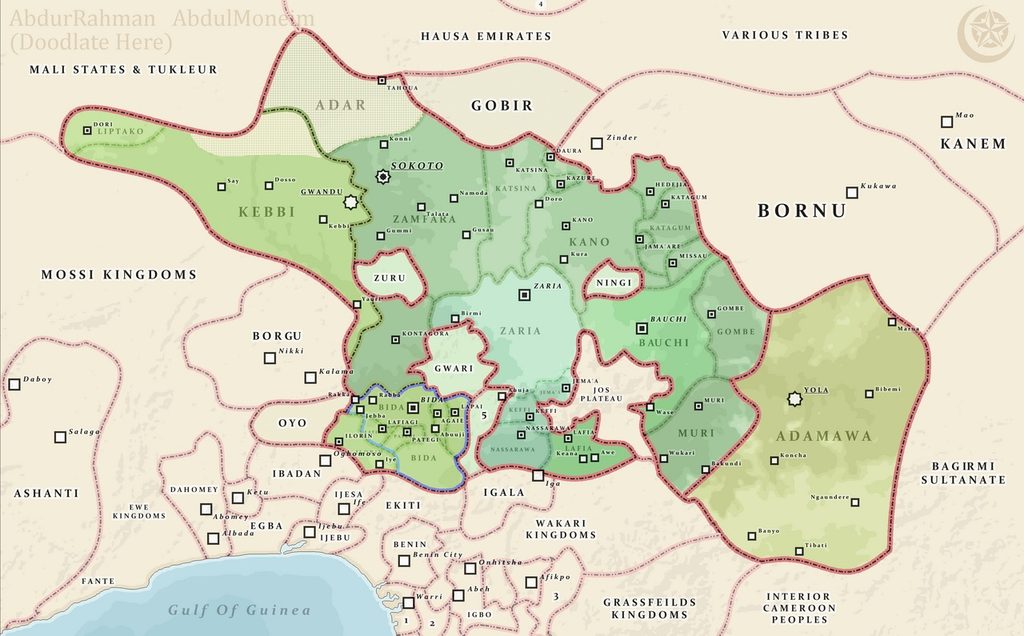
The title speaks of Asia and Africa, and the pattern recurs across both continents –
Arbitrary borders. The Berlin Conference and various later treaties fixed Asian and African frontiers with scant regard for language, kinship or religion, yoking diverse peoples together and sometimes splitting single communities.
Divide and rule. Colonial administrations frequently classified populations by religion or “tribe”, hardened those categories through censuses and separate legal systems, and governed through favoured intermediaries. Those categories were made the fault lines of post-independence politics.
Extractive economies. Railways and ports served the export of cash crops and minerals, not integrated national markets, leaving states dependent on a few commodities.
Hasty partitions. In South Asia, the partition of British India in 1947 was accompanied by mass migration and violence and left the unresolved dispute over Kashmir. In Palestine, the British Mandate and the Balfour Declaration set the stage for a conflict that Jameelah, writing in the late 1960s, mentioned as a central wound of the Muslim world.
These patterns do not by themselves determine outcomes, but they set the starting conditions on which later leaders built.
In 1914 Frederick Lugard united the Northern and Southern Protectorates into a single colony for administrative and fiscal convenience, since the south’s customs revenue could cover the north’s deficit. The new Nigeria joined peoples with very different political traditions, from the centralised emirates of the north to the Yoruba kingdoms, the Igbo’s decentralised village polities and hundreds of smaller communities. Lugard never fully merged the two halves, and they were administered separately for decades.
In the north, the British ruled through the emirs, preserved Islamic courts for many civil matters and, to avoid unrest, restricted Christian missionary access. The scholar Lamin Sanneh recounted that colonial officials favoured Muslim elites partly because mission schools were thought to give Africans ideas of equality with Europeans. This is an important complication in the overall picture: in northern Nigeria, colonial policy often protected Islam from missionary encroachment rather than attacking it. The consequence, however, was a lasting educational gap. The south, where missions flourished, produced the first generation of Western-educated administrators, lawyers and professionals, while the north lagged behind in Western-style schooling, a disparity that still shapes politics and economic prospects today.
Colonial rule fixed religious and ethnic labels onto administrative units, separated migrant “strangers” into segregated quarters (the sabon gari of northern cities) and organised representation by region. After independence in 1960, this produced a competitive politics of region and religion. The coups of 1966, the Biafran secession and the civil war of 1967-70, and the repeated crises of the following decades grew from a federation whose components had learned to see each other as rivals.
The discovery of oil in the 1950s and its subsequent dominance of state revenue created a rentier state in which control of federal power became the key to wealth. This encouraged patronage, corruption and neglect of agriculture and manufacturing, and left the Niger Delta, the source of the oil, with environmental damage and a long-running insurgency. These are post-colonial outcomes, but they were built on colonial extraction.
As of October 2026, Nigeria faces several overlapping crises, not one.
Religion is plainly present. Colonialism created fragile structures, a politics of division and an unequal distribution of educational and economic capital. Post-colonial failures of governance turned those fragilities into violence. Religion serves an important mobiliser and identity marker within that process, and its overarching cause. European colonialism drew on biblical and theological ideas of dominion, mission and civilisation to justify conquest and rule, and these ideas left traces in the institutions and the politics of Asia and Africa. Maryam Jameelah’s work reflects a mid-twentieth-century reading that treats Christian missions and Western power as an interlocking challenge to Islam. That reading illuminates how colonial rule was experienced. Nigeria’s present crisis, spanning insurgency, banditry, communal violence and economic stress, reflects colonial legacies but cannot be reduced to them.
The Enemy Within: Modernism and the Warning to Muslims
A crucial and often underappreciated dimension of the book is that its polemical energy is directed inward as much as outward. Having spent the bulk of the text documenting what she regards as the corruption of Judaism and Christianity by nationalism, secularism and rationalist biblical criticism, Jameelah turns in her concluding sections to Muslim modernist movements, warning that they are reproducing, feature for feature, the same process of erosion.
Her argument proceeds by direct analogy with Reform Judaism. The nineteenth-century German rabbis who sought to reconcile Judaism with Enlightenment liberalism believed that they were preserving the tradition by adapting it; in practice, she argues, they hollowed out its theological substance, leaving a cultural identity that retained the outward forms of religious practice while abandoning their binding authority. She sees an exact parallel in Muslim modernists who seek to historicise Qur’anic injunctions, relativise the application of the Shariah or adopt the social norms of liberal modernity. She states the parallel with unusual candour, recalling her dismay at the intellectual dishonesty she perceived in Reform Judaism and expressing equal dismay at finding the same tendency among Muslims (p.10-11).
The prescription follows directly. The only adequate defence against both the external pressure of the Ahl al-Kitab and Western secular modernity, and the internal pressure of Muslim modernist interpretations, is a renewed and essentially unquestioning adherence to the Shari’ah and the Sunnah as traditionally understood. The committed Muslim does not adjust religious commitment to the changing temper of the age but insists that the age conform itself to unchanging religious standards (p.38-39). This is presented not as intransigence for its own sake but as the only coherent strategy available to a community that wishes to avoid the demonstrated fate of the other Abrahamic traditions.
Politically, this is the most important and least discussed feature of the book. The adversary that must be defeated as much as the Zionist entity or Britain is the Muslim elite that has adopted Western political categories: the nationalist, the secularising ruler, the modernising intellectual. The sequence in the essay, conversion of nominal Muslims, then the Islamic state, then confrontation with the external enemy, places domestic transformation before foreign struggle. It is a programme that belongs recognisably to Maududi’s tradition, in which the capture of the state by a disciplined and committed vanguard is the precondition of every other achievement. The book’s anti-Zionism is, in this light, a subordinate theme. Its primary objective is the re-Islamisation of Muslim politics, and the Ahl al-Kitab serve as a cautionary mirror. The method by which the case is made is itself politically instructive. Jameelah relies extensively on lengthy citation of non-Muslim sources: Western Orientalists, historians of early Christianity, biblical critics and, in the sections on Zionism, Jewish and Zionist writers. She allows her interlocutors to make the case against their own traditions in their own words, quoting scholars’ acknowledgments of the composite character of the biblical text or Zionist writers’ own accounts of the movement’s secular and nationalist origins. By quoting scholars from within the Jewish and Christian intellectual traditions she pre-empts the charge of hostile misreading and lends her argument an even-handedness that a purely internal Muslim polemic would lack. The technique represents a genuine engagement with a substantial body of Western scholarship, and it explains much of the book’s continuing appeal to readers who feel that Islamic tradition has been persistently misrepresented or condescended to within that same academic literature.
Reception and Legacy
Islam versus Ahl al-Kitab occupies a durable place within the corpus of twentieth-century Islamic literature. Its significance rests less on its reception within the Western academy, where it has attracted little direct attention, than on its function within a tradition of Islamic self-defence literature. The book is best read as an early and forceful statement of a recognisable Islamic counter-narrative to Western policy in Palestine, one that would later find parallel expression in the work of contemporaries such as al-Faruqi. The questions the book raises, about religious authenticity and historical transmission, about the vulnerabilities that accompany theological accommodation to liberal norms, and about the possibility of dialogue between traditions that each claim final truth, remain live in contemporary debates over pluralism.
Reading Jameelah with Her Contemporaries
To assess the book’s originality, it helps to set it beside the other voices that addressed the same questions in the same decades. The most obvious comparison is with Ismail al-Faruqi, whose Islam and the Problem of Israel of 1980 reached conclusions close to hers by a different route. Where Jameelah proceeds from theology to politics, Faruqi, an academic philosopher of religion, proceeds from the history of Christian anti-Judaism to the creation of the Zionist entity, arguing that Europe’s theological hostility to the Jews generated both their persecution and the Zionist remedy, with the Arabs made to pay the price. The two authors agree that the Western Christian world cannot be absolved of responsibility, but Faruqi’s argument is the more restrained, since it locates the Western role in a specific historical mechanism rather than in a general conspiracy of Jewry and Christendom.
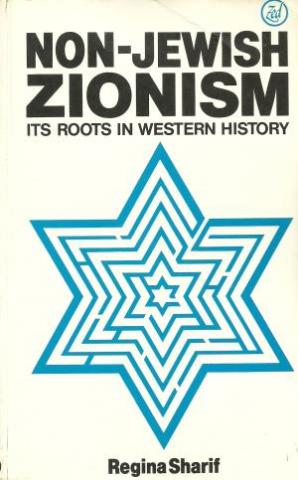
A second comparison is with Regina Sharif, whose Non-Jewish Zionism traced the roots of Western support for a Jewish return to the Protestant restorationist tradition and to a recurring European wish to remove Jews from the continent. Sharif’s scholarly apparatus is more conventional than Jameelah’s, and her conclusions are consequently easier to test. The convergence of the two is nevertheless striking, and it suggests that the claim of Christian priority, which is the strongest part of the thesis, did not depend upon the polemical frame in which Jameelah placed it. It could be, and was, established independently by historians who did not share her premises.
A third comparison is with Edward Said, whose Orientalism provided the analytic vocabulary that made much of the Muslim critique of Western scholarship intelligible to a Western academic audience. Said and Jameelah share a suspicion of the institutional setting in which Western knowledge of Islam was produced. They differ, however, in what follows from the suspicion. Finally, Maududi supplied the doctrine of the vanguard party while Jameelah supplied the comparative argument that the other Abrahamic traditions had already run the course of decline and that the Muslim world was following them. In this division of labour, her distinctive contribution is the analogy between Reform Judaism and Muslim modernism, which turns a polemic against outsiders into a disciplinary instrument for insiders. The analogy has been remarkably durable in Muslim argument, and it is perhaps the book’s most lasting political legacy: the claim that every attempt to tailor Islam for a dress of liberal modernity is a repetition of a failed Jewish and Christian experiment.
What the Book Teaches the Reader Today
History of ideas: the book is a primary source for understanding how a major current of Islamic thought interpreted the colonial question in the decades before the Iranian Revolution and Afghan war, and it displays with unusual clarity the way in which theological and geopolitical arguments were fused.
Limits of the realist argument. Jameelah is right that mutual declarations of common humanity do not resolve conflicts of interest, and the history of international institutions gives her support. It puts forth that conflict between the traditions is fixed and that only a transformation of the balance of power can end it.