A Japanese revolutionary who passed away couple of days ago deserves some attention from the public in this political scenario. Kozo Okamoto did not belong to the geography that would define his life. Born in Japan in 1947 he came of age in a moment when revolution was imagined as a shared horizon rather than a national project. The late twentieth century produced a generation that refused distance and for Okamoto Palestine became the site where conviction took form.
He arrived not as a diplomat nor as a journalist but as a militant shaped by the currents of the Japanese Red Army. For him Palestine was not external to his own struggle. It was its continuation. He crossed language history and culture and placed himself within a movement that saw liberation as indivisible.
Those who encountered him in the early days did not immediately trust him. A young man from distant East Asia appearing in resistance camps carried the shadow of suspicion. Yet suspicion gave way to recognition. What he carried was not performance but resolve. He insisted on presence and risk and refused the distance that often defines international solidarity.
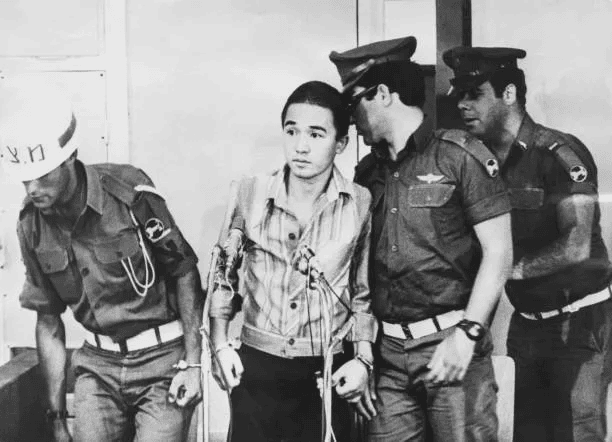
In 1972 his name entered history at Lod Airport. The event would define him in ways that no later chapter could fully displace. Captured at the scene he was taken into Israeli custody where he would spend thirteen years in prison. Those years were marked by isolation and harsh treatment that reshaped his body but did not extract renunciation.
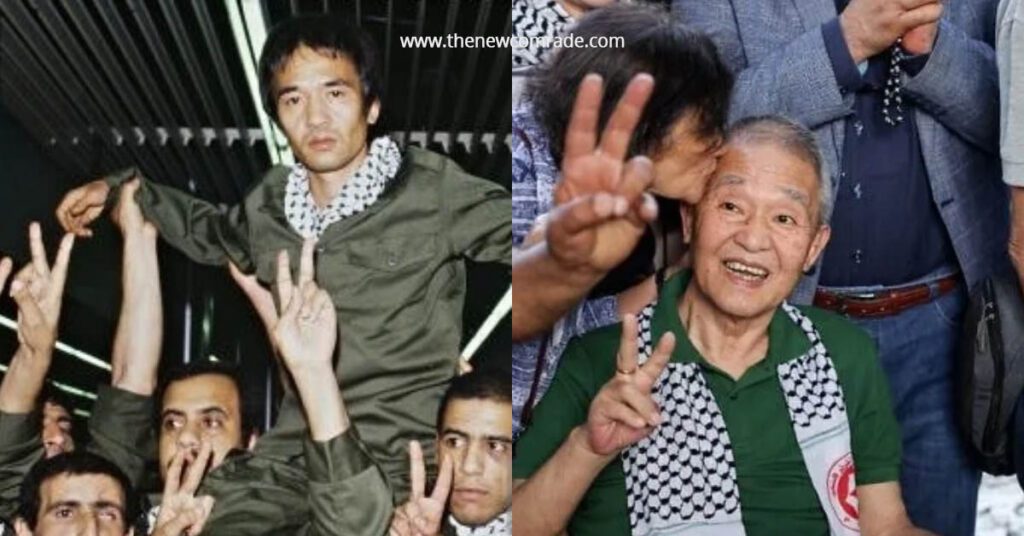
His release in 1985 came through a prisoner exchange that included hundreds of Palestinian and Arab detainees. From prison he moved into another kind of confinement. Exile carried him through Libya and Syria before Lebanon became his final place of residence. There he embraced Islam and took the name Ahmed al Yabani signaling not an erasure of origin but a reorientation of belonging.
Life in Lebanon did not offer visibility or celebration. It was marked instead by restriction and quiet. Arrest followed by asylum placed him within a narrow space where speech itself was limited. He lived away from cameras and statements and the cycles that produce public memory. What remained was a figure suspended between past action and present silence.
Okamoto’s life traced a line that unsettles conventional boundaries. He was not Palestinian yet he tied his fate to Palestine. He was not driven by career or recognition but by an idea that struggle could exceed nation. In that sense he stood within a broader history of transnational militancy that defined an earlier era of political imagination.