Regarding Rohith Vemula Act for Kerala Campuses
The struggle against caste discrimination and Islamophobia cannot be sustained merely through resistance to injustice. It must also be guided by positive democratic action. It is from this standpoint that we raise the demand for the Rohith Vemula Act.
The demand itself begins with a simple question: what happens when a student experiences discrimination on campuses today? In many institutions, there is no independent, credible, or legally enforceable mechanism that students could genuinely trust. Complaints are often handled within the same institutional hierarchy against which allegations are made, and by the time any action is taken, the academic, physical, and psychological consequences may be irreversible.
The proposed Rohith Vemula Act seeks to shift the focus from individual incidents to institutional responsibility. Discrimination is rarely confined to explicit abuse. It often appears through biased evaluation, exclusion from academic opportunities, delays in scholarships, social isolation, or everyday practices that communicate to a student that they do not fully belong.
The intended Act therefore seeks to create a statutory obligation on educational institutions to prevent discrimination, establish independent grievance mechanisms, and ensure accountability when institutions fail to uphold constitutional values. Ultimately, the demand is about making equality a lived experience within campuses, rather than a promise that exists only in law.
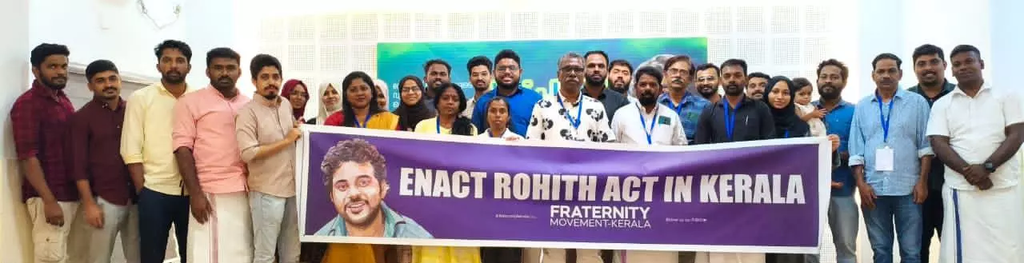
Karnataka Law vs Kerala Proposal
Discrimination in higher education is not merely a matter of individual prejudice. It is often institutional, reproduced through administrative practices, academic cultures, and unequal power relations that appear routine but have deep unequal consequences. That is precisely why Karnataka’s recognition of institutional and indirect discrimination marks an important shift. It acknowledges that exclusion is not always visible or intentional; it can also be embedded in the everyday functioning of educational institutions.
Having said that, Kerala should not be simply replicating the Karnataka model. Every legal framework must emerge from the specific social realities it seeks to address. If we begin from the assumption that our institutions are already egalitarian, we risk overlooking the experiences of students who continue to face exclusion and marginalisation. Therefore, the proposed Rohith Vemula Act is not simply to be a law prescribing penalties, but a framework for democratising higher education.
Penal provisions are certainly necessary because discrimination cannot remain without consequences. Yet the larger objective is preventive rather than punitive. The law should clearly define institutional and indirect discrimination, establish independent and credible grievance redressal mechanisms, protect complainants from retaliation, and place a statutory obligation on institutions to prevent discrimination rather than merely respond to it after harm has occurred.
We would also like the Kerala legislation to have a wider institutional vision. It should encourage regular institutional reviews, transparent reporting, and a culture of accountability so that compliance is measured not by paperwork but by the lived experience of students. Ultimately, the success of such a law will not be judged by the number of prosecutions it leads to, but by whether it helps create campuses where every student, irrespective of caste, religion, or social background, can participate with dignity and equal confidence. That is how Kerala can build upon Karnataka’s initiative while responding to its own democratic responsibilities.
Regarding 2012 UGC Regulations
The 2019 demand raised by the families of Rohith Vemula and Payal Tadvi in courts was significant. It recognised that the problem was never simply the absence of guidelines. It was the absence of meaningful enforcement. The 2012 UGC Regulations acknowledged that discrimination exists within higher education and required institutions to establish mechanisms to address it. Yet the experience of the last decade has shown that these mechanisms have often remained weak, inconsistent, or entirely dependent on the willingness of individual institutions to implement them sincerely.
Discrimination cannot be addressed through advisory mechanisms alone. When institutions themselves become the sites where exclusion is reproduced, expecting those same institutions to regulate themselves without adequate legal accountability inevitably creates a structural limitation. Students frequently hesitate to approach grievance mechanisms because they fear academic retaliation, institutional bias, or prolonged delays. A right that cannot be effectively enforced gradually loses its meaning.
This is precisely where a state law assumes importance. The argument is not that the UGC regulations should be discarded; on the contrary, they remain an important normative legal framework. But regulations by themselves do not always create enforceable legal obligations or institutional accountability. A state law can complement those regulations by giving them statutory force within the state’s higher education system, creating independent grievance redressal mechanisms, clearly defining discriminatory practices, and prescribing legal consequences where institutions repeatedly fail to uphold their obligations.
There is another reason why state-level legislation has become necessary. Education is experienced within particular social contexts. Kerala has its own institutional history, social hierarchies, and patterns of exclusion that require context-specific responses. A state law allows these realities to be recognised while remaining consistent with constitutional principles and national regulatory frameworks.
Ultimately, this is not a question of choosing between stricter implementation and new legislation. The two are complementary. A strong law cannot substitute for institutional commitment, just as institutional commitment cannot substitute for legal accountability. If we are serious about ensuring that no student is denied dignity because of caste, religion, or any other social identity, then we need both the robust implementation of existing safeguards and a legal framework that makes equality an enforceable obligation rather than a matter of administrative discretion.

Islamophobia and the Proposed Law
Only by accurately identifying and documenting caste- and race-based discrimination that exists on campuses in Kerala could the political demand for implementing a Rohith Vemula Act in the state take a concrete shape. Under the existing UGC Equity Regulations and the Rohith Vemula Acts and frameworks formulated by the governments of Karnataka and Telangana, the focus is primarily on Scheduled Caste (SC) and Scheduled Tribe (ST) students.
In contrast, the Rohith Vemula Act in Kerala that we propose aims to establish a comprehensive legal framework that addresses not only caste discrimination but also racial and religious forms of discrimination, including Islamophobia, and extends protection to all those who become victims of such discrimination.
Alongside the discrimination experienced by students, the law should also recognise and address the racial and caste-based discrimination faced by teachers and faculty members from these marginalised communities within campuses. While legal mechanisms such as the Scheduled Castes and the Scheduled Tribes (Prevention of Atrocities) Act already provide avenues for addressing discrimination against SC and ST students and teachers, the absence of comparable legal provisions to tackle racial discrimination, including Islamophobia, remains a significant challenge to this initiative.
Society and Politics of Kerala
The known image of Kerala is that it is a progressive state, socially. High literacy, a long Left political tradition, and the legacy of reformers such as Sree Narayana Guru and Ayyankali are repeatedly celebrated as evidence that Kerala has transcended caste. This image, rather, often prevents one from seeing how caste has adapted rather than disappeared. The idea of “progressive Kerala” itself becomes a mask that normalises everyday caste violence by making it appear exceptional whenever it surfaces.
Unlike in many parts of India, caste in Kerala rarely announces itself openly. It survives through institutions, everyday interactions, and the distribution of dignity. It determines who feels at home in a university, whose knowledge is taken seriously, who gets mentorship, who occupies positions of authority, and whose experiences are dismissed as exaggeration or “identity politics.” This is what makes caste in Kerala particularly difficult to confront: it is hidden behind the language of merit, civility, and progress.
The Left has often treated caste as a problem that would naturally disappear through class politics and economic redistribution. In doing so, caste was managed rather than dismantled. Redistribution without confronting Brahminical social power leaves caste privilege largely intact.
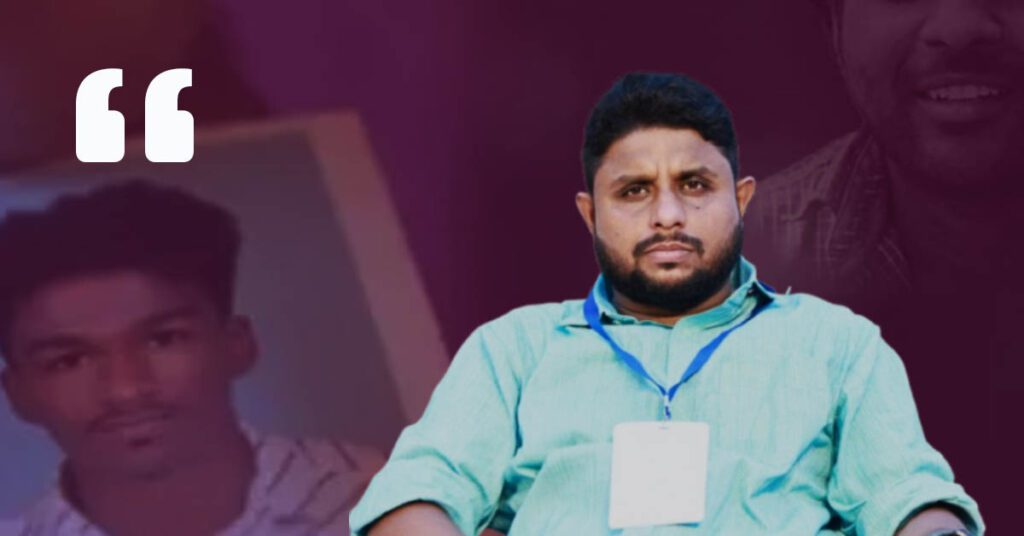
Recent events demonstrate that this is not merely a theoretical argument. The murder of Dalit student Nithin Raj in Kannur, amid allegations of caste humiliation, forced Kerala to confront uncomfortable questions about discrimination within its educational institutions and revived demands for a Rohith Vemula Act in the state. Similarly, allegations of casteist remarks against a senior professor during a PhD defence at Kerala University exposed how caste can shape academic spaces that proudly identify themselves as progressive. Cases involving casteist remarks against schoolchildren also remind us that literacy alone does not eliminate caste prejudice.
This is precisely why the proposed Rohith Vemula Act in Kerala is necessary. Rohith Vemula’s institutional murder was not only about one university in Hyderabad. It exposed how institutions that claim to be democratic and progressive could still systematically deny dignity to Dalit, Bahujan, and Adivasi students. Kerala is not outside that reality.
Our demand is not based on the assumption that Kerala is uniquely casteist. It is based on the refusal to accept the myth that Kerala has already resolved the caste question. Real progress could not be measured through mere literacy rates, welfare indicators, or electoral success. It must be measured by whether historically oppressed communities could study, organise, question authority, and live with dignity without fear of humiliation. Until then, the image of “progressive Kerala” risks becoming a comforting narrative that conceals the everyday operations of caste rather than confronting them.
Recurrence of Caste- and Race-Based Institutional Murders
Various cases, like Rohith Vemula, Najeeb Ahmed, Jishnu Pranoy, and now Nithin Raj, are connected in that they belong to the same Brahmanical temporality. Brahmanical time functions by making every caste atrocity appear exceptional, disconnected from the past, and therefore free from structural accountability. Rohith Vemula, Najeeb Ahmed, Jishnu Pranoy, and Nithin Raj are repeatedly narrated as individual tragedies, yet they emerge from the same institutional logic that normalises exclusion while denying its structural character.
Rohith’s statement, “My birth is my fatal accident,” was not merely autobiographical. It named caste as a historical condition that outlives individual lives. Nearly a decade later, the recurrence of similar institutional failures demonstrates that what persists is not only discrimination but the temporal continuity of Brahmanism itself. Institutions change, governments change, committees are formed, and inquiries are announced—but the social order reproduces the same conditions under which marginalised students continue to become vulnerable.
Through the proposed act, we are trying to interrupt this Brahmanical temporality by refusing to treat every death as an isolated event. Instead, it recognises recurrence itself as evidence of structural caste. The question is no longer why did any particular student die, rather what social and institutional order continues to make these deaths possible.
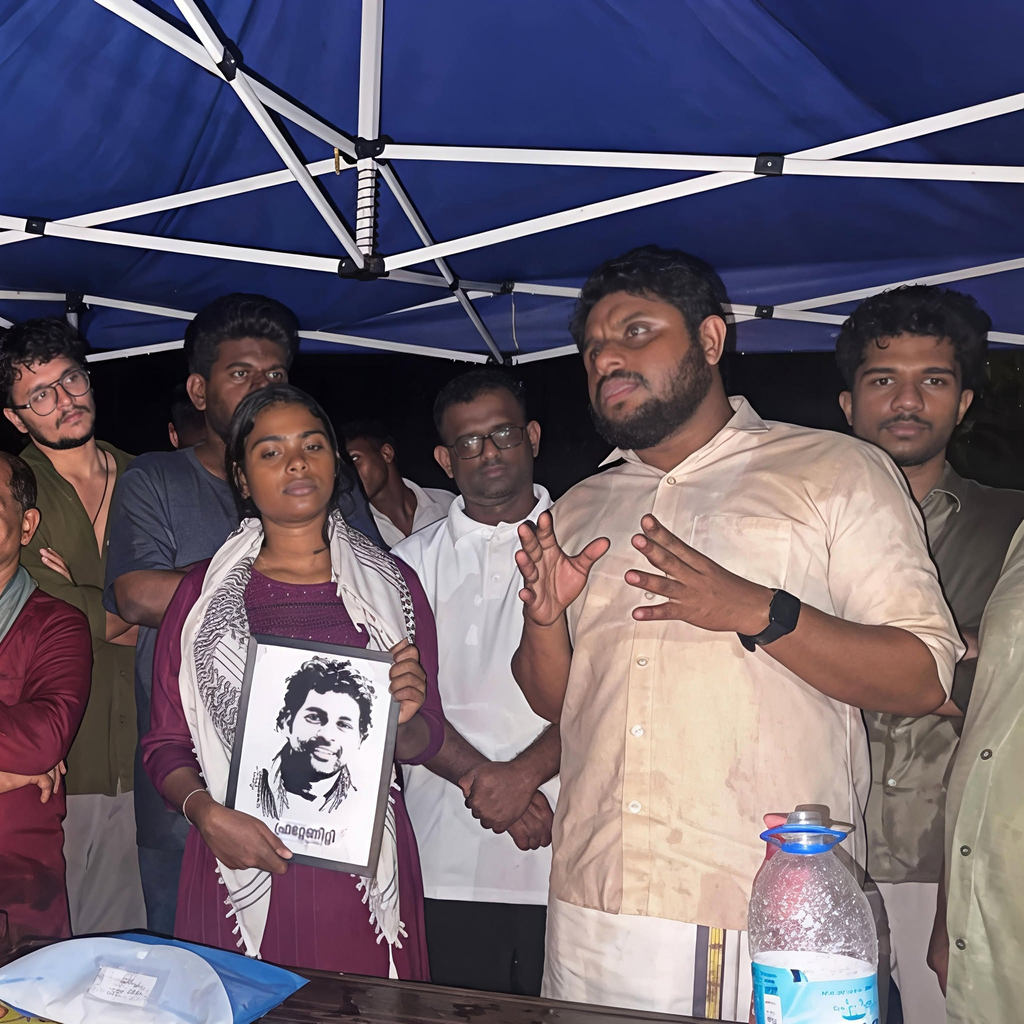
Power Inside a Campus
The problem is not simply that particular administrators fail to act. It is that the university, as an institution, has an interest in preserving its own legitimacy. Structural accountability would require admitting that discrimination is not an administrative error but is embedded in the production of knowledge, governance, and everyday campus life. That is precisely what institutions seek to avoid.
Power in the university is therefore not located only in the Vice-Chancellor’s office or disciplinary committees. It circulates through what appears to be ordinary and neutral: the language of merit, disciplinary procedures, surveillance, hostel regulations, faculty hierarchies, curriculum, and administrative discretion. These mechanisms determine who is considered a “good student,” who becomes visible as a problem, and whose testimony is considered credible. In this sense, power works productively—it produces compliant subjects while simultaneously producing the Dalit, Muslim, or politically dissenting student as the institutional “other.”
That is why the institutional response is so repetitive: first denial, then individualisation of blame, then forgetting. Structural accountability would expose that the problem is not one official’s misconduct but the normal functioning of the institution itself. The proposed Rohith Vemula Act attempts to interrupt this cycle. It shifts accountability from identifying a few guilty individuals to examining the institutional conditions that repeatedly reproduce exclusion, humiliation, and caste discrimination.
To the Students
To every Dalit, Adivasi, Bahujan, and Muslim student who reads this with fear in their heart, they need to believe, with conviction, in one thing: you are not the problem. The institution may make you feel alone, invisible, or undeserving, but your existence is not an interruption to the university, it is part of its unfinished promise.
Rohith Vemula once wrote that his birth was his fatal accident. Our struggle is to ensure that no student ever has to write those words again. Do not mistake loneliness for defeat. Every right available today was born because someone, somewhere, refused to remain silent. Your voice carries histories much older than the institutions that try to discipline it. The proposed Rohith Vemula Act is not only a demand for justice after death. It is a demand for life with dignity. No student should have to choose between education and self-respect, between survival and speaking the truth. Irrespective of whether you are able to be fearless or not, you should not, at any cost, carry your fear alone.
When institutions isolate us, we need to organise. When they ask us to forget, we need to remember. When they reduce us to statistics, we need to speak each other’s names. Our movement begins from a simple conviction: no student should disappear, no student should be humiliated, and no student should die because of the circumstances of their birth. Until that becomes true, we will continue to study, organise, remember, and resist—together.